Darkglass Adam
Darkglass Adam delivers unmatched flexibility and pro-level features for bassists seeking both power and precision.
★★★★★ 4.9/5 · 12 buyer reviews · 7 min read · updated 2026-10-07 · Tested by Cal Whitaker
Darkglass Adam: Digital Powerhouse for Bassists
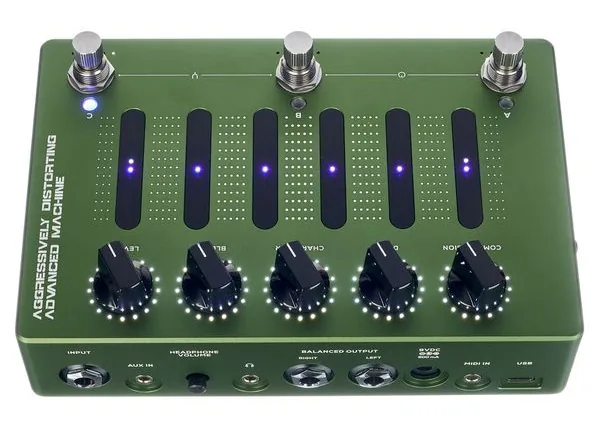
Since its release in December 2020, the Darkglass Adam (Aggressively Distorting Advanced Machine) has set a new bar for bass pedal versatility. With a street price around $515, this unit fuses an overdrive, multi-path signal processing platform, touch EQ, cab simulation, full-featured audio interface, and MIDI control. As Darkglass's flagship pedal, it's designed for players who want everything in one solid case, whether on stage, in the studio, or practicing at home on headphones.
Build and Physical Layout
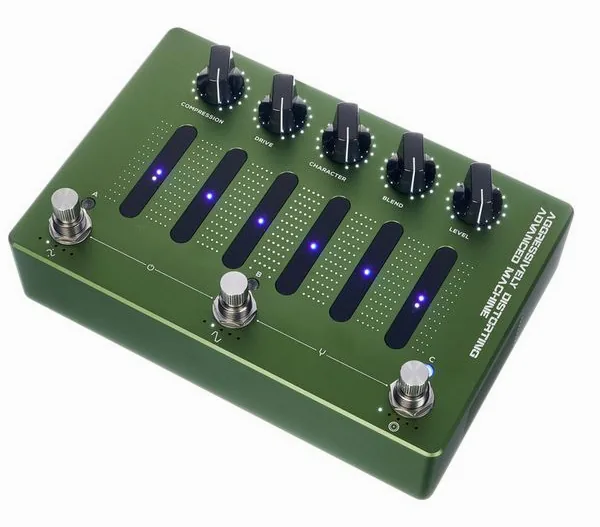
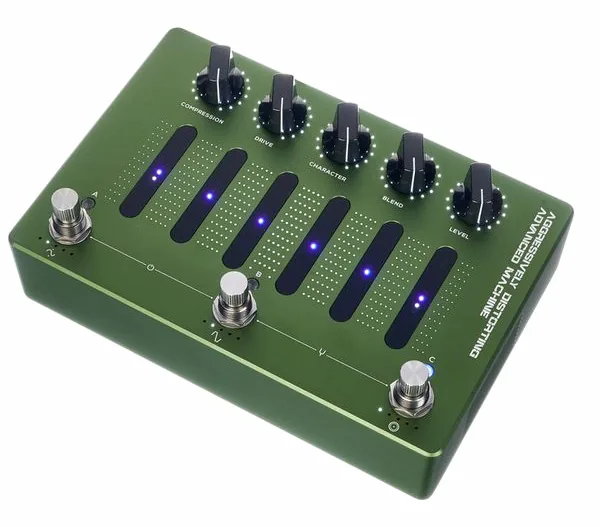
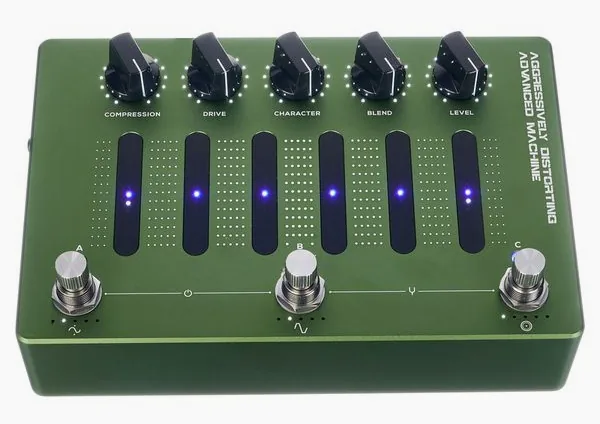
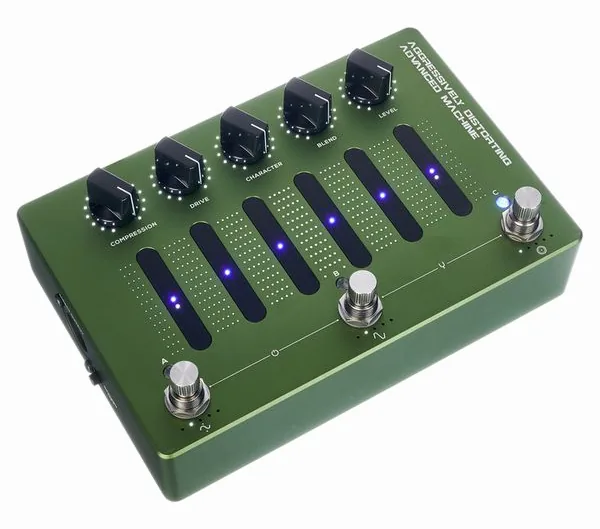
The Adam's enclosure is crafted from rugged metal, with controls that feel secure, not prone to accidental tweaks. Three footswitches double up as rotary knobs, allowing you to store and recall parameter snapshots (compression, drive, cab IR, EQ, and signal path) with a twist. The touch-sensitive six-band equalizer sits at the heart of the top panel, replacing traditional sliders with a flush, minimal interface. Footswitch/rotary integration saves pedalboard space but may take some acclimation, especially for fast changes live.
Connection options cover virtually every gig and studio scenario:
- Instrument input (quarter-inch/6.3 mm jack)
- XLR balanced DI with ground lift
- Doubled balanced outputs (2x quarter-inch/6.3 mm jack)
- Headphone out (eighth-inch/3.5 mm)
- AUX in (eighth-inch/3.5 mm)
- USB-C for audio interface duties
- MIDI in (eighth-inch/3.5 mm TRS Type B)
The power requirement is 9 V DC at 500 mA; you'll need a robust supply, as none is included.
Signal Flow and Effects Architecture
Adam's internal routing uses a parallel chain. The incoming bass signal hits a compressor, then splits, one path remains clean and passes through a fixed multiband compressor, while the other path is processed with selectable distortion types and impulse response (IR) speaker modeling. A blend control recombines those signals before they hit the touch-screen EQ and outputs. Every major chain block is recallable via the footswitch/rotary encoders.
The compression circuit offers both a global "one-knob" control and five quickly switchable preset ratios. Detailed attack and release tuning is available through the Darkglass Suite desktop/mobile app. Field experience and multiple user reports confirm the compression is smooth and musical, though the fixed multiband style on the clean path applies a noticeable boost under 100 Hz, great for cut, less ideal if you want minimal low-end shaping. The blend knob gives you enough control to dial back this effect.
The distortion architecture serves up five distinct flavors, ranging from saturated distortion to searing fuzz. You won't find subtle, "warm" low-gain breakup here; instead, Adam specializes in modern high-gain sounds. Still, you can sneak low amounts in via blending for more versatility. Character and blend controls help shift the voicing and how dirty the tone gets. Distortion can be bypassed completely for pure clean applications.
Cab Sim and Audio Interface Functions
IR speaker simulation is arguably Adam's standout innovation. The stock pedal loads up to five IR presets, but the Darkglass Suite app opens up a massive library, including models inspired by classic Mesa Boogie, Orange, Eden, Bergantino, and others. You can choose mic style, position, and tweak further according to taste or instrument. IR loading is fast, and each preset can remember a specific cab/mic combo for instant recall.
As an audio interface, Adam connects via USB-C and offers two-channel operation. This means you can record both dry and processed bass simultaneously, ideal for flexible re-amping or straight-to-DAW workflow. Reports from long-term users highlight latency-free monitoring and solid integration on both Mac and PC platforms.
Touch EQ and App Integration
The capacitive six-band touch EQ lets you sculpt post-blend tones onscreen, saving physical space and button clutter. The thinness of the strip can be finicky; those with smaller fingertips sometimes need an extra tap, but after brief familiarization, operation is intuitive. All other deep functions, including routing, IR management, and MIDI mapping, live within the Darkglass Suite application, which syncs quickly over USB or Bluetooth and is available on desktop and mobile platforms.
Connectivity, MIDI, and Limitations
Adam shines in I/O, with dedicated outputs for studio, live, and practice use. The headphone out is strong and clean enough for daily practice, and the AUX in allows for backing track jamming. The MIDI input is non-standard, set for 3.5 mm TRS Type B, if you're running a traditional MIDI controller or footswitch, a compatible adapter is required. Three user memory slots exist on the pedal, so you can toggle between core setups in seconds. It also features a built-in tuner, which, while functional, sometimes struggles tracking ultra-low notes on extended-range basses.
Real-World Impressions: Pros and Cons
- Pros: Sturdy build, flagship tone quality, IR cab sim depth, full interface functionality, dual path with blend, and multiple outputs cover almost any conceivable scenario. Touch EQ and footswitch rotary shortcuts streamline operation after a moderate learning curve. The app is detailed, stable, and opens up even deeper customization.
- Cons: No analog overdrive, distortion is always modern/high-gain oriented. Compression, while excellent, can be heavy on lows in clean mode. Require a high-current power supply, not always friendly to compact boards. The touch EQ can be temperamental for very small hands. MIDI spec (TRS Type B) may add cabling headaches for some users. The built-in tuner could be more robust, especially for very low tunings.
Conclusion: A Complete Modern Bass Machine
The Darkglass Adam is not a beginner's pedal, it's a precision tool for players ready to invest in a consolidated, digitally-driven bass solution. If you cover a wide sonic range from vintage to ultra-modern, or need fast transitions between session, home, and stage work, Adam is among the most flexible packages available today. For many, it will replace an entire pedalboard. For others, it will offer a focused upgrade as a preamp, audio interface, or ultra-high-quality DI. Either way, Darkglass's engineering delivers a flagship experience worthy of serious attention.
Shipping and duties
The retailer ships from its warehouse in Germany. Prices are shown in US dollars and do not include import duties. Orders under roughly $800 usually clear US customs without duty; above that, a duty of a few percent may be collected on delivery. 30-day money-back and a 3-year warranty apply.
Scores by area
Where it shines, where it stumbles
What convinced me
- Extremely versatile with comprehensive distortion and clean options
- Sturdy metal chassis and high build quality
- Integrated audio interface, cabinet simulation, and Bluetooth control via app
- Six-band touch EQ, compressor, and blend controls for extensive sound shaping
- Multiple outputs and connectivity: XLR, USB-C, MIDI, headphone, aux
What bugged me
- Touchscreen EQ can be unresponsive or finicky for some users
- No true low-gain overdrive option, mainly high-gain distortions
- Requires high current power supply (500 mA) not included
- MIDI uses TRS Type B connector, requiring adapters for full preset access
- Tuner feature is unintuitive and unreliable for lower notes
Is it the right one for you?
Good pick if
Ideal for modern bassists, session players, and gigging musicians who require a compact yet powerful solution for effects, cab simulation, and direct recording. Also fits those seeking a single unit for home, studio, and live contexts, especially in metal, rock, and fusion styles.Look elsewhere if
Not suited for players needing true vintage or low-gain overdrive tones or those who prefer tactile, traditional controls over touch interfaces. Also may not appeal to bassists looking for plug-and-play simplicity or full compatibility with legacy MIDI equipment.Suggested level: Professional
Specifications
- Design
- Pedal
- Amp modeling
- Yes
- Drum computer
- No
- Incl. tuner
- Yes
- Expression pedal
- No
- Usb-port
- Yes
- Headphone connection
- Yes
- Midi interface
- Yes
- Line out
- Yes
- Digital output
- Yes
- Battery operation
- No
- Incl. power supply
- No
- Effect types
- Distortion, Interface
What other players say
Users praise the Adam for its unparalleled versatility, solid construction, and sound quality across genres from vintage clean to brutal fuzz. Integration of audio interface, cab simulation, and advanced routing is highly valued. Common issues include the touch EQ's responsiveness, non-standard MIDI connector, and lack of dedicated low-gain overdrive. Nonetheless, the combination of powerful features and robust design leads most to recommend it as a pedalboard replacement for serious bassists.
In 25 years of bass, I've never encountered such a flexible pedal/preamp/interface/DI.
Stunning sound, flexible settings, light weight, this pedal has everything I need!
Touch EQ is not always very responsive, and the tuner doesn't always read the lowest notes.
Up close
Watch and listen
Before you decide
Questions players ask
Can Darkglass Adam replace a traditional pedalboard for live and studio use?
Yes, many users find Adam versatile enough to serve as their sole effects and DI unit, covering distortion, preamp, cab sim, and interface needs in one compact box.
Is the pedal suitable for low-gain or vintage tones, or mainly modern high-gain sounds?
Adam excels in modern, high-gain tones but can deliver clean and some milder overdrive sounds via blending. However, it lacks dedicated low-gain, vintage-style drive settings.
How reliable and practical is the touch-based EQ interface?
The six-band EQ offers great flexibility, but the touch interface can be unresponsive for some users, requiring firm or precise contact, especially in live settings.
What power supply do I need to use Darkglass Adam?
It requires a 9V DC center-negative supply capable of delivering at least 500 mA. The power supply is not included; purchasing a compatible model is necessary.
Does the built-in tuner work well for extended range basses?
The tuner is functional for standard tuning but may struggle to register low notes, especially on instruments tuned below standard bass range.
The last word from the bench
Darkglass Adam stands out as a robust, highly adaptable solution for modern bass players, merging pedal, preamp, distortion, cab simulation, and audio interface into a single unit. The integration with the mobile and desktop suite, coupled with versatile signal routing and powerful sound shaping, caters to everything from home recording to live gigs. A few hardware quirks and learning curve exist, but its strengths consistently outweigh the drawbacks. It's a premium investment well worth it for demanding users.
Hanging next to it
Darkglass Adam
Today's price and delivery time are shown at the retailer.
 Guitar Gear Reviews