Walrus Audio Iron Horse V3
A powerful, flexible high-gain distortion pedal with unique clipping control, but volume leveling can be a hassle.
★★★★☆ 4.4/5 · 8 buyer reviews · 6 min read · updated 2026-10-06 · Tested by Cal Whitaker
Hands-On With the Walrus Audio Iron Horse V3
Walrus Audio's Iron Horse V3 enters the market as a high gain distortion pedal, proudly made in the USA, retailing at $199. Since its introduction in November 2021, it has generated buzz among players looking for a distortion that bridges classic flavors and aggressive modern tones, while providing a few unique tweaks that let it stand out on nuanced pedalboards. Here's a close look at its feature set and what those specs translate to under real-world playing.
Design and Build Quality
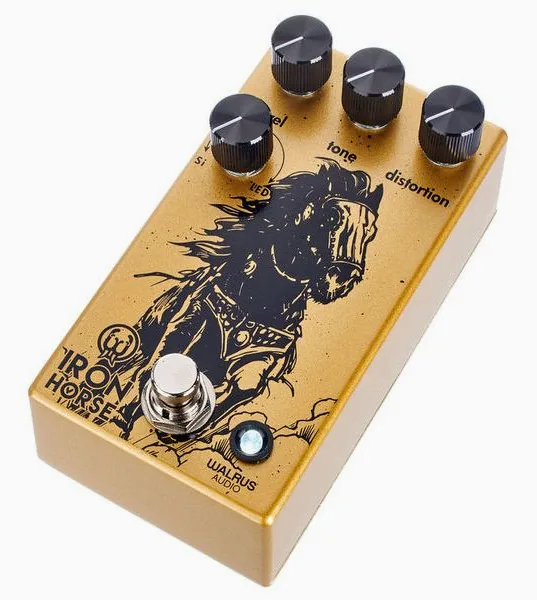
The enclosure for the Iron Horse V3 is robust, measuring 2.6 by 4.8 by 2 inches and weighing in at 9.5 ounces. The entire design feels substantial in hand. All controls turn with smooth resistance and maintain precise settings, except for an isolated comment about one loose control in the wild, rare for a Walrus Audio product, otherwise known for impeccable quality assurance. The pedal features top-mounted input and output jacks (standard 1/4-inch), a barrel power connector (5.5 x 2.1mm, center negative, 10 mA usage, 9V DC required), plus a silent switching footswitch for effect engagement and true bypass routing to avoid tone suck when not in use.
Controls and Features
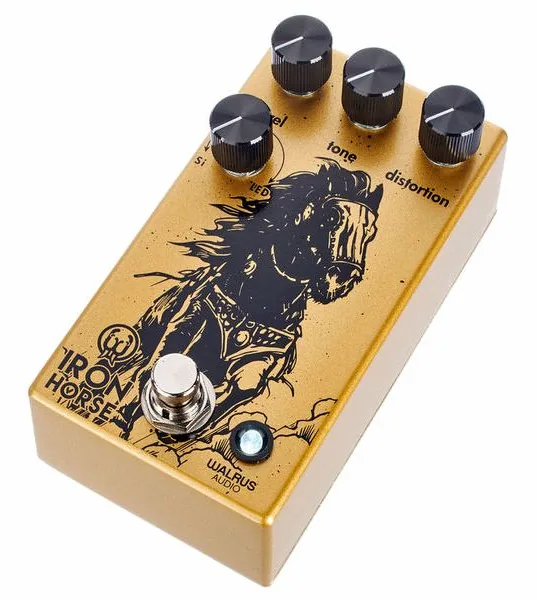
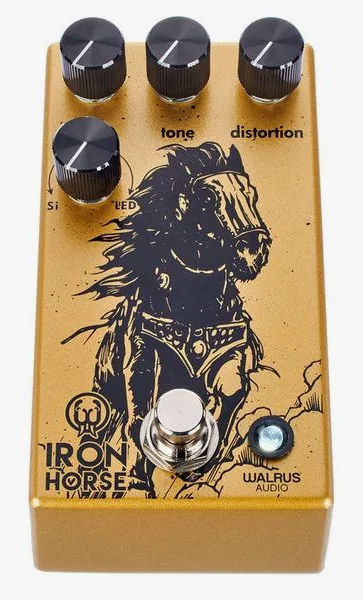
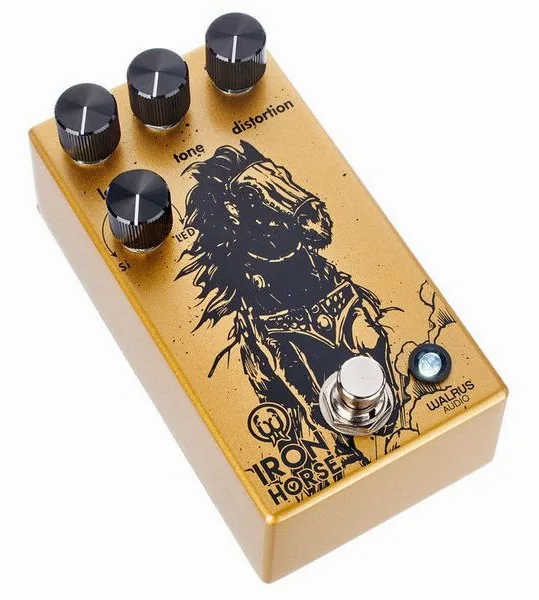
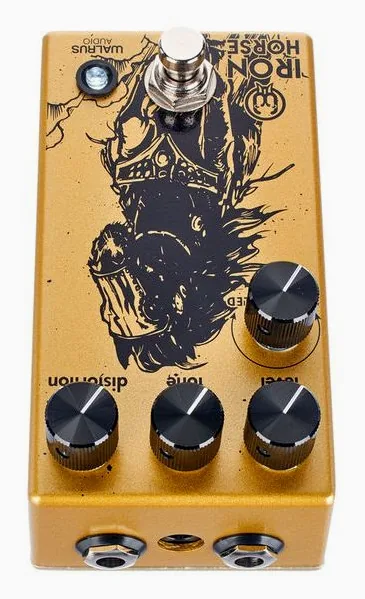
The Iron Horse V3's front panel consists of four main controls:
- Level: Sets the output volume. Users report the output can get very powerful, especially on the light-emitting diode clipping side, requiring frequent readjustment when exploring the blend control.
- Tone: Shapes overall voicing from darker, beefier sounds to fiercely bright, allowing this pedal to slot in well whether you're pushing a tube amp or relying on digital rigs.
- Distortion: Ranges from mild crunch to full-bore, saturated distortion. It keeps clarity even at higher settings, which many high-gain pedals struggle with.
- Si/LED Blend: This continuous blend moves from silicon diode clipping (more compressed and "scooped" in the midrange) to light-emitting diode clipping (louder, bolder, with mid emphasis, reminiscent of classic "Turbo" circuits). The pedal also includes a LED indicator for effect status.
Sound and Dynamic Response
The Iron Horse V3 covers a wide ground in terms of distortion character. With the blend control set toward the silicon side, there's a notable dip in midrange for an aggressive, biting top end and a firmness in the lows that approaches tight fuzz territory. Extra compression here lets it pair well with single coil pickups without becoming brittle. Leaning the control toward the light-emitting diode side, the signal becomes fatter and louder with higher headroom and more prominent mids. The gain here transforms the pedal from a crunchy edge-of-breakup up to a saturated, sustaining roar.
A recurring observation among users: the gain and output level do not stay constant across the blend. Adjusting from silicon to light-emitting diode can push the volume much higher, meaning the Level knob needs to be actively managed. This is the single most cited operational quirk, but for those who like to dial tones on the fly, it's a small trade-off for all the extra voices available.
Bass is kept tight, there's no loose flub, even under detuned or drop-tuned settings. Mids sit aggressively, especially on the light-emitting diode side, giving tones that will punch through a band mix. Treble remains clear yet never harsh. The dynamic response lives up to the claim: even with high gain, touch sensitivity and cleanup via guitar volume hold up well for a modern pedal. The Iron Horse V3 also wins praise for stacking smoothly with overdrive pedals, using its punch as either a boost or a foundation for more layered drive structures.
Application and Use Cases
Flexibility rates highly in field reports. Players comfortably achieve classic rock drive, stoner/doom grind, or even reach fuzz-adjacent saturation at extreme settings. It excels with single coil pickups, staying distinct without losing body. While it provides enough gain for metal, some consider its voicing warmer and more "tube-like" compared to ultra-modern, razor-sharp metal boxes. Home recordists and live players alike find the control layout accessible, with direct feedback from the tone and blend knobs.
Typical pedal settings often sit at moderate tone and distortion values for recording, then max out distortion for live amp-pushing chaos. The pedal's unique character and ability to morph between compressed scooped and big mid-focused distortions make it a secret weapon for guitarists wanting versatility. Rarely, some users experienced difficulty getting satisfying tones with certain amplifiers, highlighting the importance of synergy with your rig.
Final Verdict
The Walrus Audio Iron Horse V3 secures its position as a flagship high gain distortion by combining flexible clipping, robust build, and dynamic musically-voiced gain. Its control for blending between silicon and light-emitting diode voices, paired with responsive tone and distortion adjustment, opens up sonic options beyond typical "Rat-style" or "Turbo" circuits. The biggest operational note is the swing in output between clipping types, but with pedalboard experience, this is easy to manage on the fly. All told, the Iron Horse V3 is recommended for players needing a do-it-all distortion box that keeps up with both old school punch and modern sustain, with a care for touch and stacking potential. At $199, its value is matched by build, versatility, and nuanced tone that adapts to both classic and contemporary rock demands.
Shipping and duties
The retailer ships from its warehouse in Germany. Prices are shown in US dollars and do not include import duties. Orders under roughly $800 usually clear US customs without duty; above that, a duty of a few percent may be collected on delivery. 30-day money-back and a 3-year warranty apply.
Scores by area
Where it shines, where it stumbles
What convinced me
- Wide variety of distortion tones, from classic rock crunch to near-fuzz saturation
- Blendable Silicon and LED clipping for versatile sound shaping
- Stacks well with other overdrive pedals
- Highly dynamic response and sustain
- Excellent build quality and design
What bugged me
- Significant volume difference between Silicon and LED clipping requires constant adjustment
- Tall enclosure may not suit all pedalboards
- Some users found quality control issues or difficulty achieving usable sounds
Is it the right one for you?
Good pick if
Ideal for guitarists who want a versatile, high-gain distortion that can span classic rock tones to near-fuzz saturation. Suited for players who enjoy experimenting with different clipping options and like pairing pedals for layered sounds. Works particularly well for those using single coil pickups.Look elsewhere if
Not recommended for those frustrated by volume differences during sound adjustment or needing ultra-modern, tight metal tones. Also, players with very limited pedalboard space or those looking for absolute plug-and-play convenience may want to consider other options.Suggested level: Intermediate
Specifications
- Overdrive
- No
- Distortion
- Yes
- Fuzz
- No
- Metal
- Yes
What other players say
Most customers highlight the Iron Horse V3's versatility, particularly its ability to blend clipping types and produce both smooth and aggressive tones. Users found it performs well across various distortion levels, though some noted volume shifts when using the blend feature and occasional quality control issues. Its dynamic response and sustain are often praised, but a few struggled to achieve a satisfying sound on certain amplifiers.
Gain range on LED clipping side goes from discreetly crunchy to searingly saturated, but this pedal has a smoother midrange than many of the type.
LED clipping is so much bigger and louder than the silicon. You have to adjust the volume to compensate for every twist of the Si/LED blend knob.
Bought this pedal to have some distortion that could confidently enter Fuzz territory on my pedal board. This pedal does it beautifully.
Up close
Watch and listen
Questions players ask
Does the pedal cover both classic and modern distortion tones?
Yes, its wide gain range and blendable clipping allow for everything from classic rock crunch to saturated modern distortion, extending into fuzz territory.
Is it easy to dial in tones with the Silicon/LED blend?
Sound shaping is flexible, but be prepared to adjust the volume whenever you change the blend, as output levels vary noticeably.
Is the pedal suitable for metal and high-gain styles?
It delivers high-gain distortion and tight bass, but some users found it more organic and warm compared to ultra-modern metal pedals.
Is the pedal compatible with both single coil and humbucker pickups?
Yes, it works especially well with single coil pickups, offering detailed and responsive distortion.
Are there any build quality concerns?
Most users praised the build, but there have been isolated reports of loose knobs or issues out of the box.
The last word from the bench
The Walrus Audio Iron Horse V3 stands out with its mixable clipping options and a broad sonic palette that covers crunchy rock tones to aggressive saturation near fuzz. Its responsive dynamics, robust design, and compatibility with other pedals impress. However, the frequent need to adjust volume when blending clipping styles may frustrate some users. Overall, it's a strong pick for those seeking flexible, modern distortion with character.
Hanging next to it
Before you decide
Walrus Audio Iron Horse V3
Today's price and delivery time are shown at the retailer. Affiliate link, your price does not change.
 Guitar Gear Reviews