Walrus Audio ARP-87
The ARP-87 stands out with excellent build quality, versatile delay engines, and inspiring sounds in a compact format.
★★★★★ 4.7/5 · 62 buyer reviews · 7 min read · updated 2026-10-07 · Tested by Cal Whitaker
Overview and Build Quality
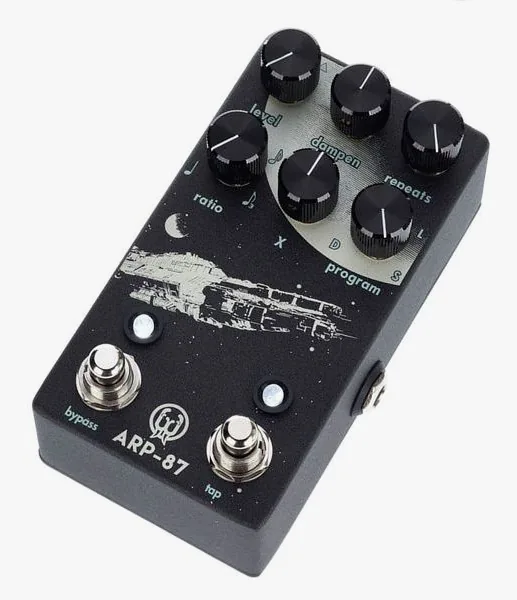
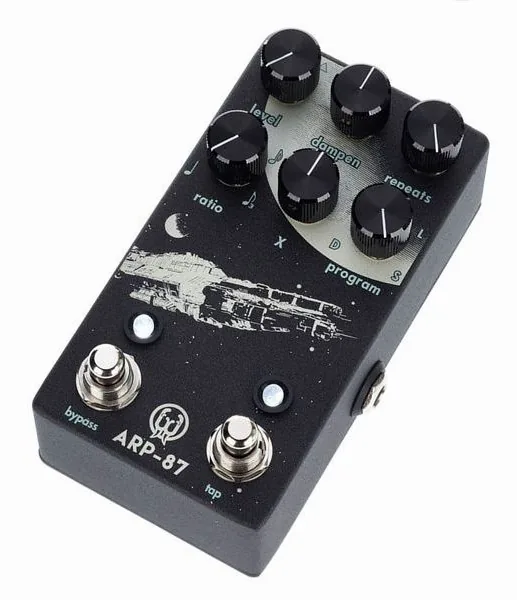
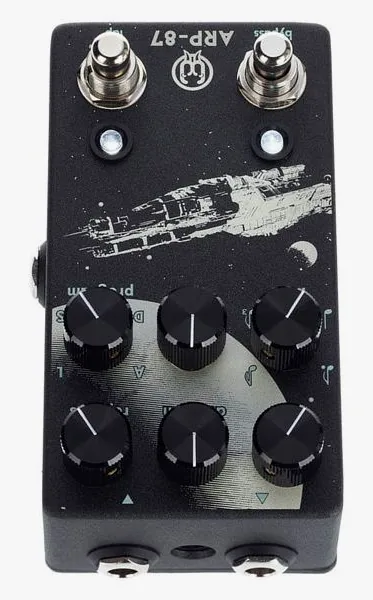
The Walrus Audio ARP-87 is a compact digital delay pedal offering a rich set of features in a modest enclosure. At 121 x 66 x 41 mm and weighing just 0.36 kg, it fits comfortably on pedalboards of any size, aided by the top-mounted input, output, and power jacks. The ARP-87's aluminum chassis feels solid, and the build quality earns high marks for durability, with sturdy switches and metal control knobs. Some users mention occasional minor issues with the foot switches, but overall, the construction is robust and reliable for live gigs and regular transport.
Modes and Sound Quality
This pedal stands out by providing four distinct delay voices: modern digital, analog-style, lo-fi, and slapback. Each brings a different character:
- Digital: Clear, precise repeats, retaining note definition even at higher feedback settings. Despite being digital, the sound maintains warmth and musicality, not veering into cold or sterile territory.
- Analog-Style: Modeled to emulate vintage analog delay, this mode produces darker, warmer echoes that blend smoothly into the background. The coloration is well-designed, adding texture without muddiness, and makes for organic, immersive soundscapes.
- Lo-Fi: This setting intentionally degrades the repeats, introducing a tape-like, atmospheric degradation that's ideal for ambient, experimental, or shoegaze-influenced music. The X control (modulation) changes how aggressive or subtle the lo-fi artifacts are, making this mode highly expressive.
- Slapback: Fast, short repeats perfect for rockabilly, surf, country, or quick rhythmic echoes. While simple in approach, it provides punch and immediacy for those genres.
Across all modes, the ARP-87 avoids tone loss or unwanted coloration of the dry signal. Using the Level (blend) knob, the effect is mixed in parallel, so the original instrument remains clear and intact. There's no bypass tonal shift, no added noise, and signal integrity is maintained.
Controls and Functional Design
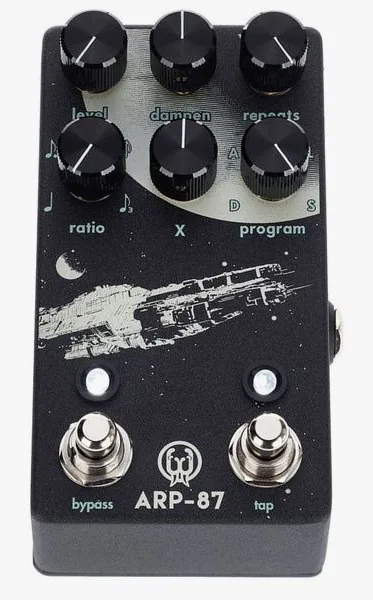
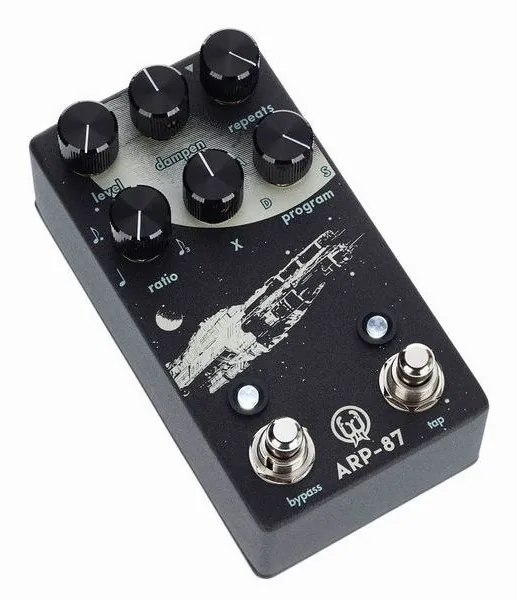
The ARP-87 forgoes a traditional delay time knob in favor of a tap-tempo foot switch, paired with a rotary selector for rhythmic subdivision (quarter notes, dotted eighth, eighth notes, and eighth note triplets). This approach streamlines tempo matching when playing live, although some users accustomed to manual time settings may find the absence of a dedicated time knob inconvenient.
Other controls are intuitive:
- Repeats: Sets the number of echoes. The range is practical; it doesn't self-oscillate as easily as some analog delays, so wild runaway feedback isn't its specialty, but musical, controlled repeats are easily dialed in.
- Level: Blends the repeated signal with the original.
- Dampen: A tone filter shaping the brightness of repeats (and a frequency filter in lo-fi mode), useful for placing the delay in front or behind your core tone in the mix.
- X (Modulation): Modifies the character and depth of pitch modulation or tape wobble, depending on the selected mode. At extreme settings, lush warbles and seasick movement are possible, especially in analog and lo-fi modes.
Parameter changes are smooth, and the pedal responds musically without harsh digital jumps or artifacts. The interface is packed but not unintuitive, with clear labeling and soft switches that are quiet and comfortable for live use.
Extra Features: Trails, Momentary, and External Tap
The ARP-87 provides a true bypass and a trails switching mode. In trails mode, when the pedal is disengaged, delay repeats decay naturally, preserving a seamless live performance. This feature is toggled by holding the bypass switch during power-up.
Both foot switches double as momentary controls. Holding the effect switch cranks the modulation to maximum or ramps up repeats, depending on state, useful for live dynamic shifts, creating infinite-sustain textures, or sudden atmospheric swells. The tap switch can also be assigned for infinite repeats. An external tap input is provided for those integrating with complex pedalboards or needing extra flexibility.
Use in Practice and On Stage
The ARP-87's sound is described as inspiring and versatile, appropriate for anything from subtle enhancement to more experimental or ambient work. It handles both guitar and synth sources well, and the note clarity under stacked distortion or in complex band mixes is consistently praised. The pedal's focus on musical integration, never overpowering, never sterile, makes it ideally suited for both modern and classic delay applications.
On small pedalboards, its size is a significant advantage. The lack of stereo output is a limitation for those with extensive setups, but for mono rigs, it presents no compromises in sonic performance. Users note the absence of presets or MIDI as minor drawbacks, but for most, the hands-on, analog-style workflow is part of its appeal. The artwork, LED visibility, and small bag/accessories are appreciated details, showing Walrus Audio's attention to presentation.
Conclusion
At a price of $195, the Walrus Audio ARP-87 delivers outstanding value for players wanting comprehensive delay functionality in a small format. With strong build quality, no-compromise audio, four useful delay engines, tap tempo with flexible subdivisions, and intelligent live-oriented features, it holds its own against larger, more expensive units. The lack of a traditional time knob and some occasional ergonomic quirks are the main tradeoffs. For musicians valuing distinctive delay textures with intuitive real-time control, the ARP-87 earns a clear recommendation.
Shipping and duties
The retailer ships from its warehouse in Germany. Prices are shown in US dollars and do not include import duties. Orders under roughly $800 usually clear US customs without duty; above that, a duty of a few percent may be collected on delivery. 30-day money-back and a 3-year warranty apply.
Scores by area
Where it shines, where it stumbles
What convinced me
- Extremely versatile with four distinct delay types and additional hidden modes
- Compact and robust enclosure with high-quality switches and metal knobs
- Excellent sound quality with organic, warm, and clear repeats across all modes
- Modulation and trails functions expand creative options
- No tonal coloration or loss of dry signal integrity
What bugged me
- No dedicated time control knob, tempo set only by tap, which some find limiting or confusing
- Mono only, lacks stereo output
- No built-in preset storage
- Some controls (mode, subdivision) lack detents and precise labeling
- Artwork may wear over time, though the enclosure is physically durable
Is it the right one for you?
Good pick if
Ideal for guitarists needing a compact, sturdy, and versatile delay with tap tempo for live or studio use. Perfect for those drawn to creative textures, ambient, atmospheric, analog warmth, or lo-fi grit, across a wide stylistic range. Players who value organic sound and modulation options will appreciate its depth.Look elsewhere if
Not for those who require stereo operation, onboard preset storage, or a classic rotary time control. Musicians expecting a straightforward, single-mode delay with minimal knobs, or those preferring ultra-clean or ultra-bright delay tones, may find the character and control scheme challenging.Suggested level: Intermediate
Specifications
- Analog
- No
- Delay time
- 1000 ms
- Tap feature
- Yes
- Battery operation
- No
- Psu included
- No
What other players say
Owners widely praise the ARP-87 for its flexibility, offering four main delay types and a hidden mode with modulation and trails that let guitarists tailor ambient or rhythmic textures. The construction is consistently rated as solid, with a compact and pedalboard-friendly build. The switch layout and lack of a dedicated time knob are noted as minor challenges, but most find the learning curve worthwhile for the pedal's range of sounds. The absence of stereo or preset features is a limitation for some, but the tonal quality, intuitive interface, and creative features attract both live and studio players seeking a characterful and dependable delay pedal.
Right out of the box, it sounds incredible, whether you want crystal-clear digital repeats, warm analog-style echoes, or something more textured and lo-fi.
It’s compact, easy to use, and packed with some seriously lush delay tones.
The four modes give you plenty of variety. I love it!
Up close
Watch and listen
Before you decide
Questions players ask
Does the ARP-87 offer stereo output?
No, the ARP-87 is a mono delay pedal and does not feature stereo outputs.
How do you set the delay time without a dedicated knob?
Delay time is set exclusively via the tap tempo footswitch or an external tap, with selectable subdivisions for rhythmic flexibility.
Are there any hidden or additional delay modes?
Yes, users report the existence of a hidden fifth delay mode accessible via a special control combination.
Can the pedal save presets or settings?
No, there are no preset saving capabilities on the ARP-87, all settings are manual.
What power supply does the ARP-87 require?
It requires a 9V DC power supply, drawing at least 100 mA; battery operation is not supported and a power adapter is not included.
The last word from the bench
Walrus Audio's ARP-87 delivers a remarkable palette of delay tones, from pristine digital to rich and textured analog or lo-fi, wrapped in a pedalboard-friendly and extremely robust enclosure. The feature set is practical for both stage and studio, with smart secondary functions and modulation controls providing creative depth. A few minor usability quirks don't diminish its overall value, but users who need stereo, preset saving, or a traditional time knob may need to look elsewhere. For those focused on sound character, reliability, and adaptable delay textures, it's a top choice in its class.
Hanging next to it
Walrus Audio ARP-87
Today's price and delivery time are shown at the retailer.
 Guitar Gear Reviews