Buying a Guitar Online Without Playing It First: A Checklist
Half of the guitars my students bring to their first lesson were ordered online, sight unseen. Some are great. A few had problems that would have been obvious in a store in thirty seconds. Buying without playing first is a reasonable way to shop as long as you read carefully, buy from a place that takes returns, and go over the instrument properly when it lands.
Before you order: the specs that matter
Pull up the full spec sheet and look for these, in this order.
- Scale length: 24.75 or 25.5 inches changes the feel more than almost anything.
- Nut width: 1.65 inches is standard; 1.69 or wider suits big hands and fingerpickers; 1.61 is narrow.
- Neck profile and thickness: “slim C,” “modern C,” “D,” and a thickness at the first fret if listed. Under .80 inches is thin, over .90 is chunky.
- Fretboard radius: 9.5 inches feels rounder and chord-friendly, 12 to 16 inches is flatter and better for low action and big bends.
- Fret size: medium jumbo is the safe middle. Jumbo frets feel scalloped to some people; vintage-small frets feel flat.
- Weight: if the listing gives one, anything above 9 pounds deserves a second thought.
- Bridge type: fixed bridges are easier to live with; floating tremolos need more setup and stay in tune only if set up well.
- Pickups and switching: how many, what type, and whether there is coil splitting.
If two of these are unknown, ask the retailer or look elsewhere. A store that cannot tell you the nut width has not looked at the guitar.
Reading the photos
Zoom in. You are looking for the following, and good stores show them.
- Fret ends: they should sit flush with the fretboard edge, no visible overhang.
- Nut: slots clean and even, no gaps between the nut and the neck.
- Neck joint: tight, no gap you could slide paper into.
- Finish: consistent color, no drips at the edges of the binding.
- Headstock angle and back of the neck: a straight line from headstock to heel with no visible hump at the body joint.
Stock photos tell you about the model. Photos of the actual unit tell you about your guitar, and some stores provide them on request.
The return policy is part of the price
Read the return policy before you look at the price. You want a window of at least two weeks, ideally 30 days, the ability to return for any reason, and a clear statement of who pays return shipping. A cheaper guitar with a final-sale policy is a gamble; a slightly pricier one with a no-questions return period is insurance. If the order is coming from abroad, the guide on ordering gear from overseas covers the extra wrinkles.
The first hour: inspection
Let the case sit closed at room temperature for a few hours if it came in from the cold. Then:
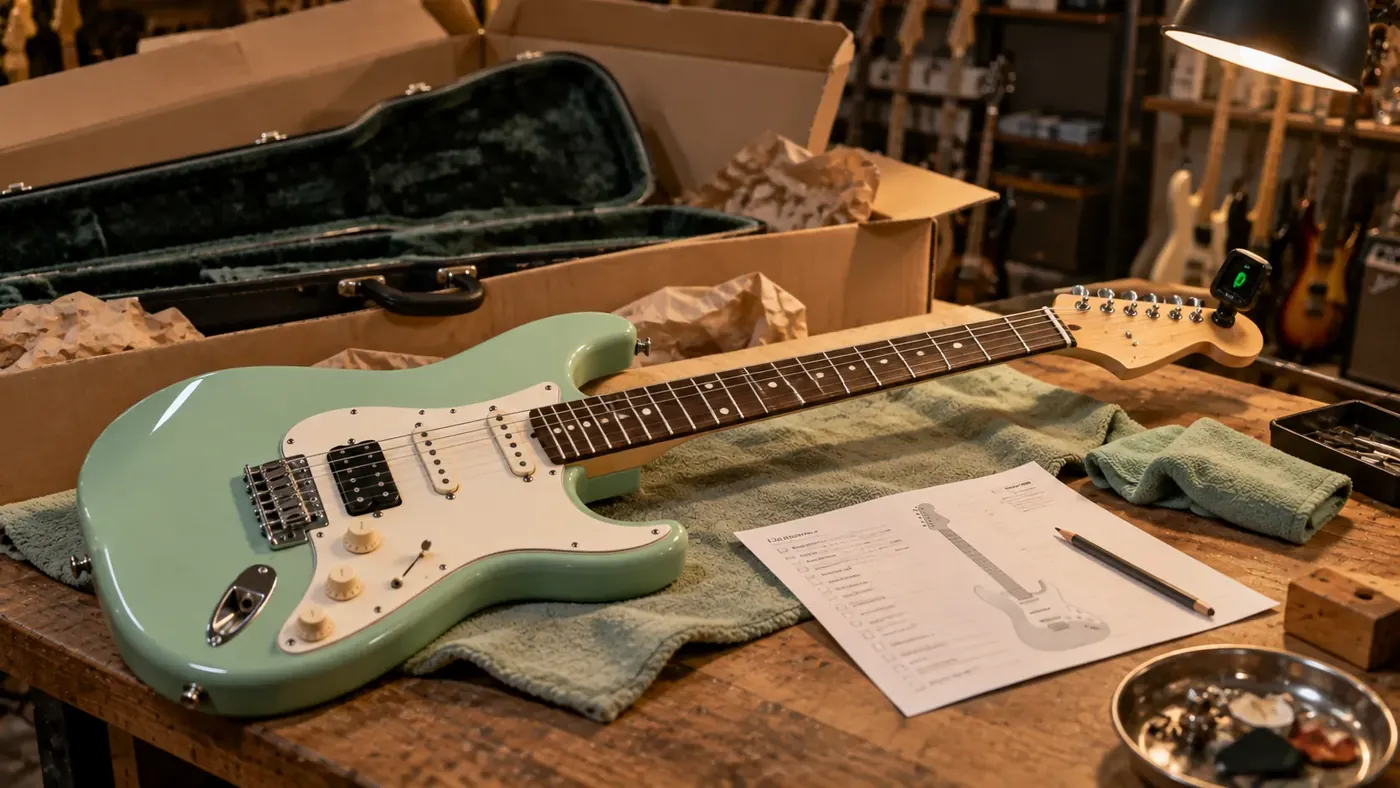
- Look it over for shipping damage before you tune it. Photograph anything you find.
- Tune to pitch and play every fret on every string, listening for buzzes and dead notes.
- Sight down the neck from the headstock. A slight forward bow is normal; a twist or a hump at the body is not.
- Run a finger along both fretboard edges. Sharp fret ends are common on new guitars that have dried out and are a quick fix, but note them.
- Check the 12th fret harmonic against the fretted note on each string. Way off is a setup issue; slightly off is normal.
- Wiggle the tuners, the jack, and the knobs. Anything loose gets tightened or noted.
- Plug in and try every pickup position and every knob. Crackling pots and dead switch positions do happen.
Decide within the return window
Give it a week of real playing, then decide. Minor setup issues are normal and cheap to fix; the guide on setup basics covers most of them. A twisted neck, a high fret, a cracked nut, or electronics that fail are reasons to send it back, and you should not feel bad about doing so.
I have bought instruments this way for years without a bad experience, because I read the specs, bought from stores that stand behind their guitars, and checked everything the day it arrived. Do those three things and buying online is as safe as buying across a counter.
Off the bench: gear that fits this guide
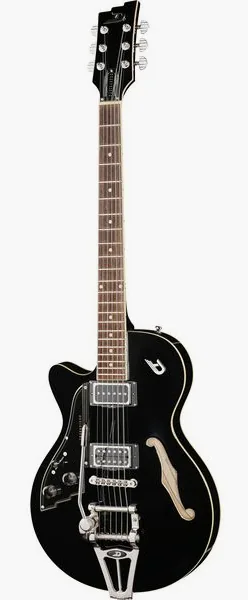 Duesenberg Starplayer TV Deep Black LH Duesenberg · $2,855 Guitars 9.0
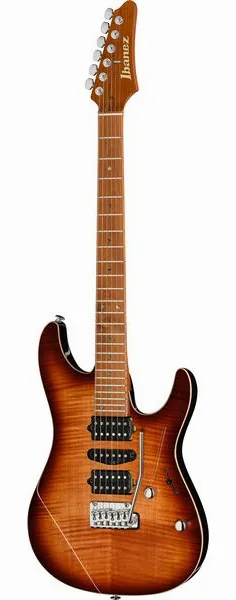 Ibanez AZ2407F-BSR Ibanez · $2,099 Guitars 8.9
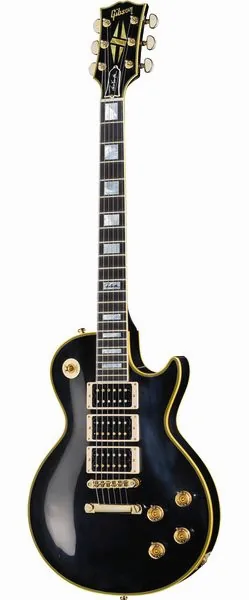 Gibson Les Paul Custom Peter Frampton Gibson · $5,999 Guitars 8.9
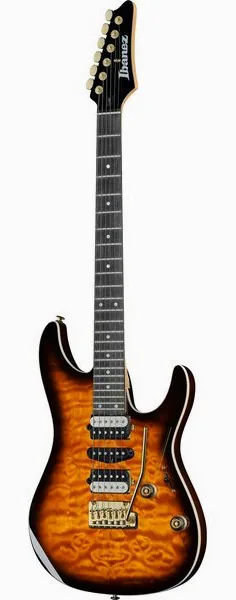 Ibanez AZ47P1QM-DEB Ibanez · $1,290 Guitars 8.9
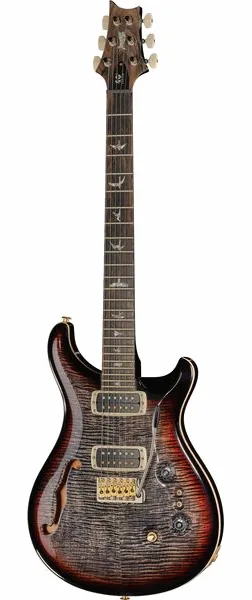 PRS 40th Custom 24-08 Semi Ltd TCB PRS · $5,999 Guitars 8.9
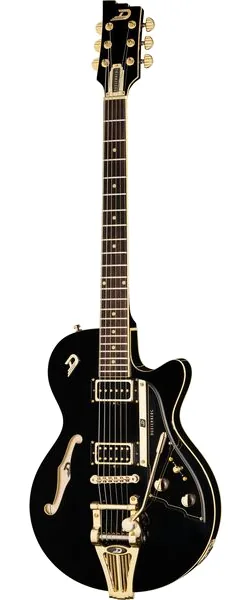 Duesenberg Starplayer TV Thomann Edition Duesenberg · $2,444 Guitars 8.9
 Guitar Gear Reviews