Electro Harmonix Nano POG
The Electro Harmonix Nano POG delivers flawless tracking and unique octave textures in a sturdy, pedalboard-friendly format.
★★★★★ 4.7/5 · 62 buyer reviews · 7 min read · updated 2026-10-07 · Tested by Cal Whitaker
Electro Harmonix Nano POG: Polyphony and Practicality in a Compact Octaver
When it comes to octave pedals, few names carry more weight than the POG series from Electro Harmonix. The Nano POG distills the concept into a compact enclosure, promising precise polyphony, flexible tone shaping, and pedalboard-friendly dimensions, at a list price of $195. What sets it apart from both its siblings and competing octavers? Let's dive into the technical and real-world performance to see where this pedal excels and where it finds its limits.
Design and Controls: Minimal and Effective
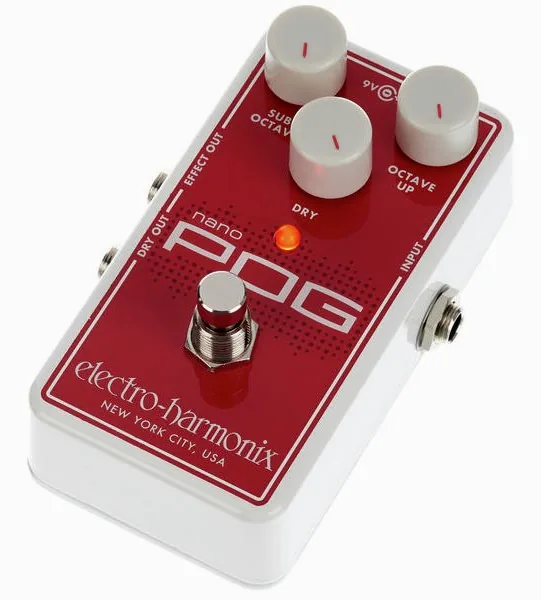
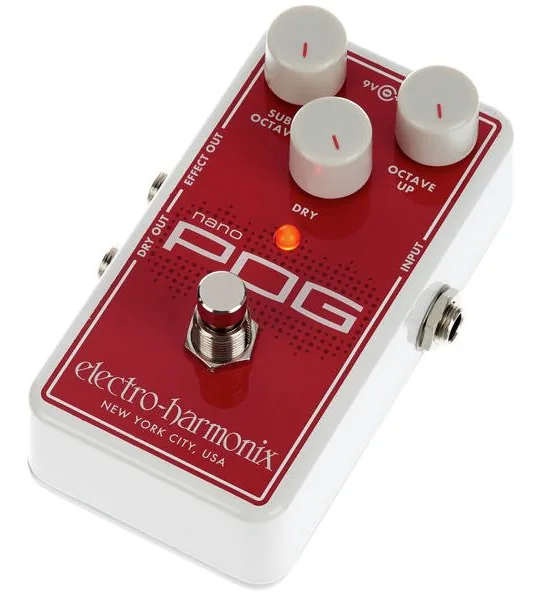
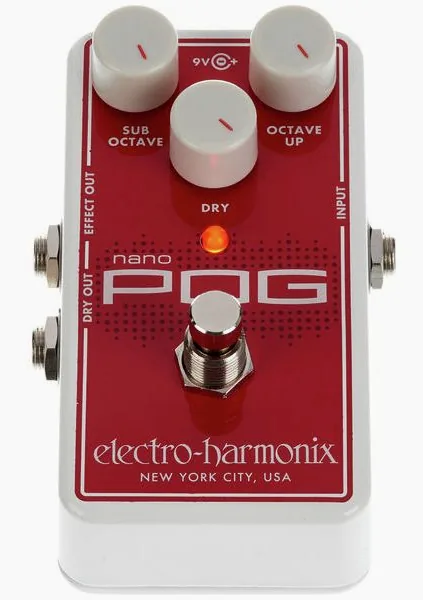
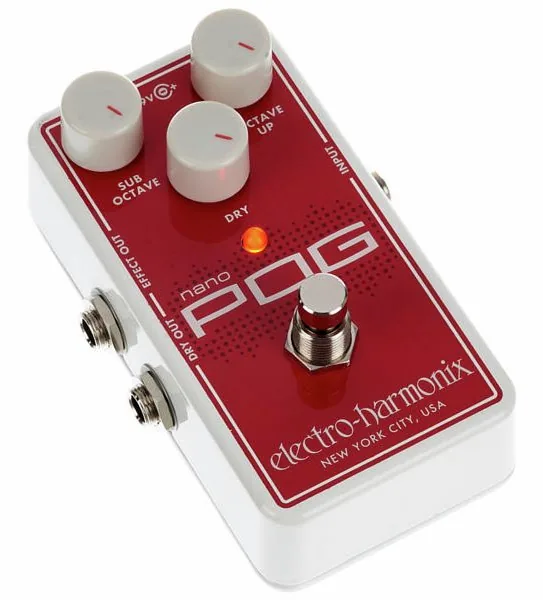
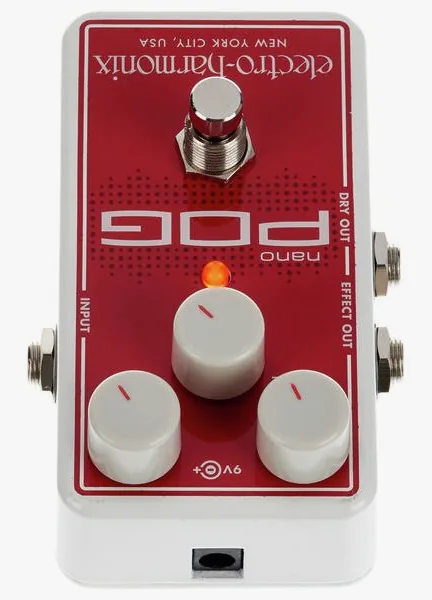
The Nano POG continues the familiar Electro Harmonix design ethic with a solid metal chassis, a subdued but attractive finish, and a robust feel in the hand. Measuring just 65 mm wide, 110 mm deep, and 57 mm tall, it's space-saving enough for even the most crowded pedalboards. Three rotary controls on top, Sub Octave, Octave Up, and Dry, set the mix between your clean signal, an octave below, and an octave above. This straightforward layout makes for a short learning curve: blend as much of each range as you want, and that's it. An included power supply and a quiet, soft-action footswitch round out the basic feature set.
- Inputs/Outputs: Standard input, effect output, and a dedicated dry output for splitting your signal.
- Bypass system: The Nano POG is buffered, which keeps signal integrity over long cable runs and across large boards.
- Construction: The die-cast metal housing feels highly durable, many users describe it simply as "tank-like."
- Power: Accepts the provided adapter or standard 9V pedalboard power.
Polyphonic Tracking: Subtle Digital Flair, Strong Performance
The core strength of the Nano POG is its polyphonic tracking. Unlike older analog octave pedals, you can play chords, double stops, or quick passages, and the Nano POG will keep up, most of the time, with minimal discernible delay. Players consistently praise it for handling single notes, complex chords, and even bass frequencies (down to A on a five-string bass) exceptionally well. Compared to analog-style octave shifters, the sound is clear but unmistakably digital, emulating a twelve-string, producing organ-like layers, or turning a guitar into a pseudo-bass.
Real-world experience varies depending on how hard you push the pedal. The lower octave delivers rounded, full bass that doesn't get muddy unless you stack multiple pedals or crank it excessively. The upper octave is described as "glassy" or "crystalline", ideal for synth textures and 12-string-style shimmer but can sound synthetic or harsh when isolated or maxed out. Importantly, the dry mix lets you preserve the fundamental character of your instrument, blending in the octaves only as needed for subtle reinforcement or full-on effect.
Sound Characteristics: Digital, Clean, Adaptable
Sonically, the Nano POG is not attempting to be an analog octaver. The up and down octaves are both processed digitally, aiming for tight pitch accuracy and modern, synth-like textures. Fans of ultra-natural doubling or vintage octave fuzz may find it too clean or "clinical," while those after clarity and layered sounds will appreciate its precision and lack of glitch.
- The Sub Octave offers substantial low end, great for simulating bass on a guitar or thickening leads. Extreme settings can produce "mud" on older amps or wide open speakers, but in most contexts the note definition is strong.
- The Octave Up produces a bright, almost bell-like upper layer. When mixed subtly with the dry signal, it creates a rich, stereo-like spread, especially when processed with reverb or modulation.
- The Dry Output enables creative parallel processing, send the effected signal to one amp or PA system, and dry to another, or combine for complex layered sounds.
Some bassists and guitarists mention very slight latency or "soft" attack on the octaves, especially when playing extremely fast passages or dense chords. Not everyone hears it, but those ultra-sensitive to tracking speed may prefer to keep their dry signal dominant in the mix.
Versatility and Use Cases
The Nano POG is not just for traditional octave doubling. It excels at creating thick solo guitar sounds, approximating deep bass with a guitar, adding synth-organ textures for ambient or cinematic playing, and even as a special effect in combination with fuzz, phaser, or delay. It works just as well with single coils, humbuckers, or bass pickups.
Setup is intuitive, and the pedal integrates well in the signal chain, before dirt for clean note separation, or after for wilder blended effects. The included power supply is a practical touch, but some users recommend using isolated power for the cleanest results, especially with large pedalboards.
Strengths and Shortcomings
- Build: Exceptional; rugged and reliable, with a genuinely quiet, soft-touch footswitch.
- Sound Tracking: Highly accurate polyphony, particularly up to the limits of guitar and bass ranges.
- Tonal Control: Limited, Blending only, no tone shaping for each octave. Some would appreciate more control over the timbre.
- Price: Not inexpensive, but justified by performance and build, though some competitors offer more features per dollar.
- Digital Flavor: Very clean, with a clear digital signature. If you prefer analog warmth or analog tracking quirks, this may not satisfy.
Conclusion: Efficient, Powerful Octaver for Modern Boards
The Electro Harmonix Nano POG lives up to its reputation as a pedalboard staple. Its polyphonic tracking, flexible blending, and bulletproof construction make it highly practical for players who demand precise octave effects in a small footprint. While it's not the cheapest octaver and won't fully satisfy those looking for analog feel, its reliability, ease of use, and overall versatility make it a perennial favorite among working musicians and experimenters alike. For anyone seeking a modern, studio-ready octave effect with minimal fuss, the Nano POG is a safe and rewarding bet.
Shipping and duties
The retailer ships from its warehouse in Germany. Prices are shown in US dollars and do not include import duties. Orders under roughly $800 usually clear US customs without duty; above that, a duty of a few percent may be collected on delivery. 30-day money-back and a 3-year warranty apply.
Scores by area
Where it shines, where it stumbles
What convinced me
- Exceptionally accurate polyphonic tracking for both single notes and chords
- Compact, rugged construction conserves pedalboard space
- Simple, intuitive controls for Sub Octave, Upper Octave, and Clean signal levels
- Very low-noise operation and soft-silent footswitch
- Versatile usage for guitar, bass, keys, and creative sound design
What bugged me
- Distinctly digital character on both sub and upper octaves may not appeal to analog purists
- No sound shaping (tone/EQ) controls for octaves
- Some users perceive minor latency or aliasing with dense or fast chordal input
- High price point compared to simpler analog octave pedals
- Certain edge use-cases on extreme bass notes may challenge tracking
Is it the right one for you?
Good pick if
Ideal for guitarists, bassists, and multi-instrumentalists who want precise, polyphonic octave effects without sacrificing pedalboard real estate. Suited to players seeking reliable, noise-free operation for studio, live, or experimental use. A smart choice for those integrating octave pedals with fuzz, delay, or reverb for synth or organ-like tones.Look elsewhere if
Not recommended for players devoted to analog octave pedal warmth or those seeking extensive sound shaping and EQ options. Less appealing for strict budget seekers or those requiring seamless natural bass emulation in heavy chordal playing below low A.Suggested level: Intermediate
Specifications
- Effect types
- Octaver
- Control
- Sub Octave, Octave Up, Dry
- Connectors
- Input, Dry Out, Effect Out, DC In
- Dimensions (wxdxh)
- 65 x 110 x 57 mm
What other players say
Customer feedback consistently highlights the Nano POG's exceptionally accurate tracking, rugged build, and flexible blending of octave up, down, and clean levels. Users love its ease of use, suitability for both guitar and bass, and wide creative potential, though some note its digital sonic profile and wish for more sound-shaping controls. It is especially valued for live work due to its reliability, compactness, and quiet switching. A minority of users mention it is expensive for its feature set or express preference for more analog, organic octave sounds.
The octave up and down, and dry signal, can all be blended to give you the desired sound and output level. I was surprised just how much the octave up can actually add.
The tracking is absolutely FLAWLESS. You can't make it struggle. It'll easily handle anything down to A on a bass guitar on the sub octave.
Very cool pedal, das lower and higher octave to the tone. Works very well even with chords and low tuning (i use it on bass tuned to low G# in my band Weesp).
Up close
Watch and listen
Before you decide
Questions players ask
Does the Nano POG track chords as well as single notes?
Yes, the pedal handles chords very reliably with clean tracking, although very complex or tightly voiced chords can occasionally introduce minor digital artifacts.
Can I use the Nano POG with bass guitar?
Absolutely, many users report excellent results on both guitar and bass, with tracking remaining tight even on lower strings, though sub-octave tracking may falter below low A.
Does it color your clean signal or introduce unwanted noise?
The bypass is quiet and transparent, with no noticeable tonal coloration or hum when disengaged. The effect itself is very low noise, aside from its intentionally digital tonal character.
Can I further shape the tone of the octaves (add warmth, cut highs, etc.)?
No, controls are strictly for level balance between sub octave, upper octave, and clean sound. There is no built-in EQ or filter for the octave voices.
Is the included power supply necessary, or can I use standard power?
While it accepts standard 9V center-negative power, some users report the pedal is sensitive to non-isolated supplies; the provided adapter is recommended for noise-free operation.
The last word from the bench
The Nano POG stands out for its consistently clean tracking and flexible blending of sub octave, upper octave, and natural tones. It's celebrated for its compact design, high build quality, and broad range of practical and creative applications on guitar, bass, and keys. Although its digital sonic character and absence of tone controls won't please every purist, its sheer reliability and ease of use make it a top choice for players demanding flawless polyphony and immediate results. Best for those seeking polyphonic octave effects in a compact package, but less suited to fans of classic analog warmth.
Hanging next to it
Electro Harmonix Nano POG
Today's price and delivery time are shown at the retailer.
 Guitar Gear Reviews