 Guitar Gear Reviews
Universal Audio OX Amp Top Box
The Universal Audio OX Amp Top Box stands out for studio-grade sound, creative flexibility, and ease of use, but falters on price and some technical limitations.
★★★★★ 4.8/5 · 107 buyer reviews · 8 min read · updated 2026-09-22 · Tested by Cal Whitaker
Shipping and duties
The retailer ships from its warehouse in Germany. Prices are shown in US dollars and do not include import duties. Orders under roughly $800 usually clear US customs without duty; above that, a duty of a few percent may be collected on delivery. 30-day money-back and a 3-year warranty apply.
Scores by area
Where it shines, where it stumbles
What convinced me
- Audio quality rivals professional studio setups, realistic cabinet and microphone emulations with dynamic speaker modeling
- Highly effective for silent recording and practice without compromising the genuine tube amplifier feel
- Intuitive interface and workflow, both on the unit and via the WiFi app (Mac, iPad, Windows 10)
- Robust, high-end build quality using thick metal, sturdy controls, and a distinctive retro look
- Extensive tonal flexibility, covering a broad spectrum of speaker cabinets and microphones without overwhelming option paralysis
What bugged me
- Very high price point compared to competitors offering similar core features
- Limited attenuator performance, sound can become muffled or lose dynamics at higher attenuation levels
- WiFi connectivity can be unreliable, no USB or MIDI for real-time control, and the unused USB ports offer little utility
- No XLR outputs or the ability to import/export third-party impulse responses
- Preset access limited on the front panel and cumbersome backup/restore process
Is it the right one for you?
Good pick if
Ideal for guitarists needing silent recording from tube amps, producers seeking studio-level cabinet and microphone emulation, and professionals who value authentic amp response with minimal fuss. Also suits musicians who work primarily in home studios or need consistent live FOH output where mic'ing is impractical.Look elsewhere if
Not recommended for those needing flexible live rig control (MIDI/XLR), users who want to load third-party IRs, those seeking only an attenuator with superior transparency at high reduction, or buyers on a tight budget. If you require regular mobile use, the large footprint could be a drawback.Suggested level: Professional
Specifications
- Impedance
- 4, 8, 16
- Noise supression
- No
- Di interface
- Yes
- Speaker simulation
- Yes
- Dummy load (usable without cabinet)
- Yes
What other players say
Customer feedback consistently praises the OX for its authentic cabinet and microphone simulations, high build quality, and ease of achieving great recorded guitar tones even at very low volumes. Users highlight the seamless integration of the app and the hardware as a workflow gain in both home and professional studio environments. The main points of criticism center on connection reliability (WiFi only), the steep purchase price, limited functionality or flexibility as a pure attenuator, absence of MIDI and USB workflow, and the inability to use custom impulse responses or export presets. Overall sentiment is very positive among those who prioritize studio-grade sound over technical expandability.
The sound and feel were miles better than anything digital I’d previously tried.
Speaker and microphone simulation, as well as the built-in effects are excellent, but the box is missing a balanced line out.
WiFi connectivity is highly unstable, it's really annoying to keep reconnecting the app.
Up close
Watch and listen
Questions players ask
Can I use my own impulse responses (IRs) with the OX Amp Top Box?
No, the OX only uses Universal Audio's built-in physical modeling for cabinet and microphone emulation. Importing external IRs is not supported.
How reliable is the WiFi connectivity for preset management and control?
WiFi works for most, but users frequently report connection drops, setup issues, and incompatibility with some networks. There is no wired network or USB control alternative.
Does the attenuator maintain tone quality at all volume levels?
Tone quality is well preserved on the highest (least attenuated) settings, but muffling and loss of high end occur at stronger attenuation levels. For pure attenuator needs, some prefer dedicated solutions.
Is the OX suitable for live use as well as studio recording?
It is usable for live FOH outputs and studio recording, but limitations like lack of MIDI for rig switching, no onboard XLR outs, and effect output restrictions may hinder flexibility on stage.
What kind of updates and support does Universal Audio provide for the OX?
Firmware updates and new content have been slow, with the most recent major update in 2019. Some users feel Universal Audio no longer prioritizes development for this unit.
Universal Audio OX Amp Top Box: Technical Overview
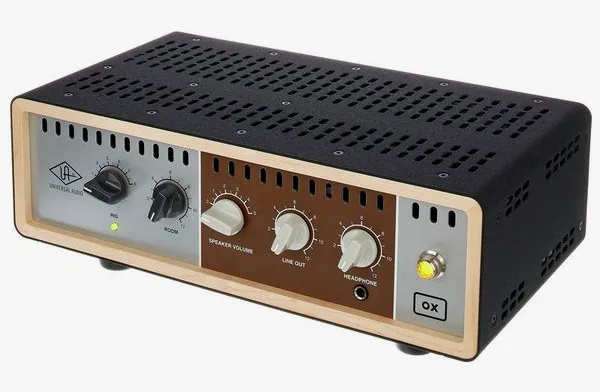
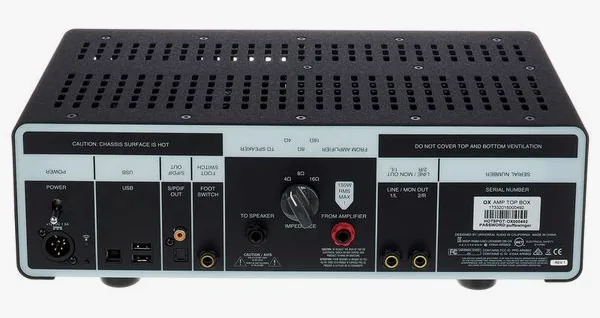
The Universal Audio OX Amp Top Box is a premium analog reactive load box and speaker simulator designed for guitarists using tube amplifiers who want studio-level tone at any volume. Retailing for $1359, the OX combines amp attenuation, speaker and microphone emulation, onboard effects, and digital/analog outputs into a single large, robust unit. It has selectable impedance (4, 8, 16 ohms), a maximum power handling of 150 watts, connectivity via balanced 1/4-inch line output, S/PDIF digital output, and a dedicated 6.3 mm headphone jack. The OX works standalone (without a speaker cabinet) and can be tweaked via WiFi using the mobile or desktop app for Windows 10 or macOS Sierra/High Sierra.
Features and Real-World Use
- Reactive Load Box: The heart of the OX is its analog reactive load, allowing tube amps, up to 150W, to run at their tonal sweet spots without driving a traditional cabinet or disturbing the neighbors. The OX handles attenuation in five steps. Users praise its ability to retain natural tube amp feel when recording direct or playing silently with headphones. The real magic, though, comes from Universal Audio's unique approach to physical speaker and mic modeling, eschewing the static feel of impulse response files (IRs) in favor of dynamic speaker behavior, including membrane resonance and the interaction between amp and load.
- Speaker and Mic Simulation: OX's flagship feature is UA Dynamic Speaker Modeling, which covers a range of classic and boutique cabinet types, plus a curated selection of microphones. The absence of custom IR loading is divisive: many users embrace the pre-selected "sweet spots" on offer, which simplify the process and deliver exceptional realism with minimal tweaking. Room microphone simulation, with an easy-to-use dedicated knob, is singled out as a standout, adding three-dimensional depth to the direct sound. The effects section features real UA EQ, compression, classic plate reverb, and delay. Collectively, these elements produce what many owners identify as "record-ready" sound without the need for a traditional studio setup.
- Attenuation Performance: Used as an attenuator feeding a real speaker cabinet, the OX is less convincing. Many reviewers report noticeable loss of high frequencies and upper midrange detail at deep attenuation settings. The stepped attenuator offers only five volume levels, which some find restrictive in dialling in an exact loudness. For home use, the cab simulation outputs are preferred over the physical attenuated cabinet output.
- Connectivity and Workflow: Line and headphone outputs deliver both simulated and dry signals. Users appreciate the S/PDIF digital out, but note it is limited to 44.1 kHz, lacks external clock sync, and only outputs a stereo signal, limiting mix flexibility. No USB audio, no MIDI control, and the unit's onboard USB ports are functionally reserved for firmware updates. The OX is controlled via WiFi (integrated hotspot or client mode). While initial setup is straightforward for many, a significant number of users encounter stability issues, especially when trying to use WiFi networks and with device discovery across operating systems. There is no iPhone app, only iPad and desktop, leading to further workflow friction for some users.
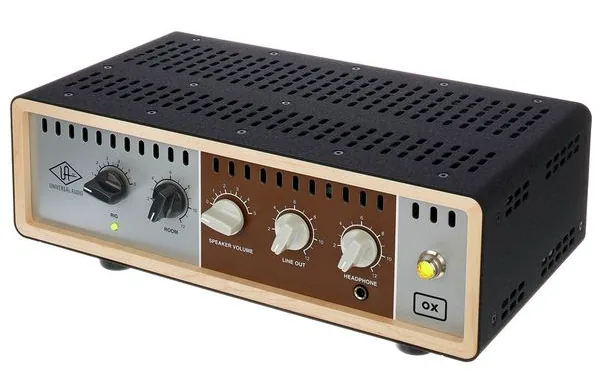
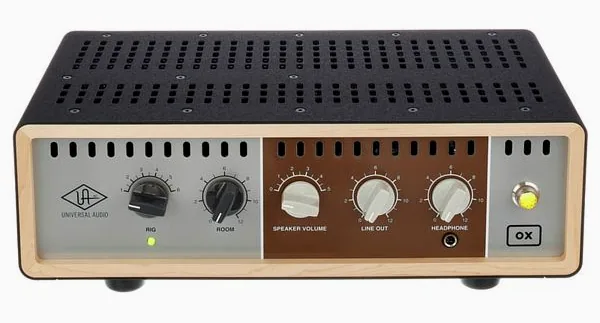
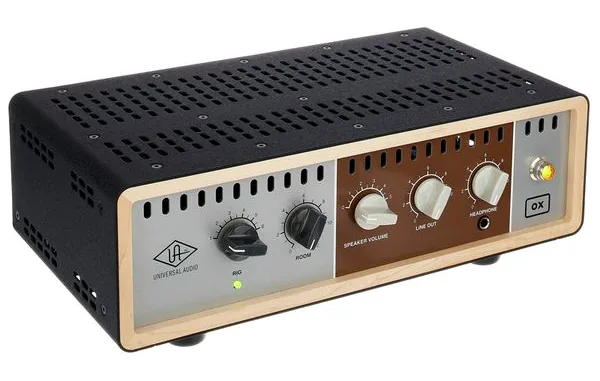
- Construction and Design: Physically, the OX impresses with its thick metal chassis and vintage-inspired design. It's heavier and larger than most competitors and, while robust, this compromises portability. The front panel layout is simple and direct, with clearly labeled controls for quick rig switching, effect levels, and output volumes.
Strengths
- Cabinet and Microphone Modeling: Highly realistic, with deep dimensionality and excellent "room" feel.
- Plug-and-play Studio Sound: Delivers convincing cranked amp sounds at any volume, without the need for microphones or acoustically treated rooms.
- Build Quality: Substantial, durable enclosure and intuitive, professional aesthetic.
- Onboard Effects: Integrated EQ, compression, reverb, and delay are studio-grade in quality.
- App Integration: Modern interface for preset management and quick deep-editing via WiFi (when it works).
Real-World Limitations
- Attenuator Shortcomings: At moderate to heavy attenuation, the sound through speakers gets dark and lacks presence.
- Connectivity: WiFi control is often unstable. No USB audio, no MIDI, and the USB ports cannot be used for direct audio or control.
- Output Flexibility: Only supports stereo output over S/PDIF (44.1 kHz), and lacks XLR outputs.
- No Custom IR Import: Users can't add their own cabinet impulses or export user presets, restricting long-term flexibility.
- App and Firmware Support: Updates are infrequent, and compatibility is limited to relatively recent OS versions.
- Price and Size: Significantly more expensive and physically larger than other options on the market.
Summary: Sound, Simplicity, and Caveats
The Universal Audio OX Amp Top Box stands apart for its uncompromising sound quality in the worlds of silent recording and DI amp tones. If your priority is nailing the definitive cranked-amp studio tone without compromises, OX delivers with minimal setup and fast, musical results. For headphone practice, quick tracking, and studio or FOH scenarios where every nuance of your amp matters, OX remains hard to beat. However, as an attenuator for live cabinet use, its performance trails alternatives, especially under heavy attenuation. Workflow is streamlined when the app and WiFi cooperate, but the lack of modern connectivity, no MIDI, no USB audio, and no custom IRs, limits its place in some modern rigs. The price is steep, and chassis size may put off players in need of portability.
If you demand the most dynamic DI and silent amp feel available, the OX is in a class of its own. If flexibility, live switching, or "everything in one box" is your goal, better-suited and more affordable options exist. The OX excels when used for what it's designed to do: transform your favorite tube amp into a world-class direct recording solution, with minimal distraction and maximum fidelity.
The last word from the bench
Universal Audio's OX Amp Top Box delivers exceptionally realistic and versatile cabinet/microphone emulation, making it ideal for home studios and silent recording. The build quality, intuitive interface, and overall sound are top-tier, closely matching mic'd tube amps in professional settings. However, shortcomings like the unreliable WiFi-only connection, limited attenuator performance, no external IR loading, and a steep price tag may deter some users, especially with strong competition offering more value. If sound and workflow are paramount and you can afford it, the OX remains a benchmark solution.
Hanging next to it
Before you decide
Universal Audio OX Amp Top Box
Today's price and delivery time are shown at the retailer. Affiliate link, your price does not change.