 Guitar Gear Reviews
Kemper Profiler Rack MK 2
Kemper Profiler Rack MK 2 refines user experience and workflow, but its core profiling tech and sound have not taken a major leap forward.
★★★★☆ 4.4/5 · 5 buyer reviews · 7 min read · updated 2026-09-22 · Tested by Cal Whitaker
Shipping and duties
The retailer ships from its warehouse in Germany. Prices are shown in US dollars and do not include import duties. Orders under roughly $800 usually clear US customs without duty; above that, a duty of a few percent may be collected on delivery. 30-day money-back and a 3-year warranty apply.
Scores by area
Where it shines, where it stumbles
What convinced me
- Extremely versatile amp modeling with extensive integrated effects
- Faster boot-up and more responsive interface than earlier version
- Eight-channel USB audio provides seamless multitrack recording and re-amping
- Notably lighter 19-inch rack unit, convenient for both studio and live
- Improved software editor enables easier, deeper parameter control
What bugged me
- Insignificant hardware upgrades compared to older version
- Capture and profiling technology trails behind leading competitors
- Screen remains outdated and unchanged
- Some users report shriller voicing and lacking frequency range
- High price point with limited breakthrough features
Is it the right one for you?
Good pick if
Ideal for Kemper enthusiasts seeking better workflow, gigging musicians who require a reliable and portable rack unit, and home studio owners needing direct multitrack USB recording. Those prioritizing flexibility and comprehensive effects will also benefit.Look elsewhere if
Not for users expecting a leap forward in amp profiling realism or hardware innovation. Those seeking state-of-the-art amp capture technology, or who already own a Kemper MK I and demand only the latest sound advances, should consider alternatives.Suggested level: Professional
Specifications
- Design
- 19"
- Tube(s)
- No
- Amp modeling
- Yes
- Effects
- Yes
- Headphone output
- Yes
- Direct out
- Yes
- Midi interface
- Yes
- Integrated expression pedal
- No
- Connections for pedals or switches
- Yes
- Aux-input
- Yes
- Integrated tuner
- Yes
- Usb-port
- Yes
- Drum-computer
- No
- Incl. tuner
- Yes
What other players say
Customer feedback is polarized: some long-time Kemper loyalists appreciate improved workflow, quick booting, and continued software updates. Others criticize the MK 2 for minor hardware revisions, lack of innovation in the core profiling technology, and argue that new competitors offer truer amp captures. Overall, users praise its versatility and recording features but are divided on whether the price jump is justified, especially for those upgrading from the previous version.
I can't fault the latest Kemper Profiler, it's everything I want in a 'sound engine' for guitar and bass.
MK2 also have some great doubling effects for distorted stereo guitar. Kemper seem to have delivered with the 'MKII'.
I feel insulted as a customer who owns the MKI, Player and now the MKII. This update could have been an email, literally.
Up close
Watch and listen
Questions players ask
What are the main advantages of the MK 2 versus the original Kemper Profiler?
MK 2 delivers faster boot times, improved responsiveness, expanded USB audio for multitrack recording, and more effects slots, all in a lighter chassis.
Does the Kemper Profiler Rack MK 2 offer significant sound improvements over the MK 1?
Sound differences are modest; some users notice slightly different voicing, but the core profiling technology remains the same, and competitors may now offer superior realism.
Is the Kemper Profiler Rack MK 2 worth upgrading for existing Kemper users?
If workflow improvements, a better software editor, and lighter weight matter most, the upgrade is justified. For purely tonal improvements, the change is less compelling.
Does the MK 2 integrate seamlessly with DAWs for recording and re-amping?
Yes, the eight-channel USB audio feature makes it easy to record and re-amp without external interfaces, ideal for modern studio setups.
Is the device still competitive with other amp modelers released recently?
While highly versatile and user-friendly, MK 2's profiling tech is now outclassed in realism by some competitors, making it a solid, but not groundbreaking, option in 2026.
Kemper Profiler Rack MK 2: Hands-on Test and Review
The Kemper Profiler Rack MK 2 arrives in 2025 with high expectations and a price tag of $1,359. Marketed as an evolution of the original, the MK2 targets guitarists and bassists seeking a flexible sound engine with modern workflow integrations. The rack format and 19-inch design remain, while Kemper touts more effects slots, USB audio for multitrack recording, and faster operation. But does this update justify its cost, especially against rivals that have surged ahead in capture technology?
Hardware and Design Updates
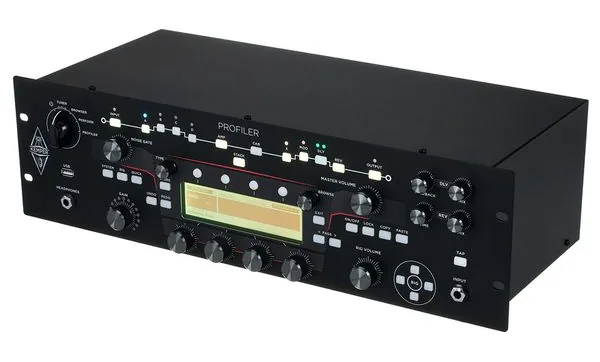
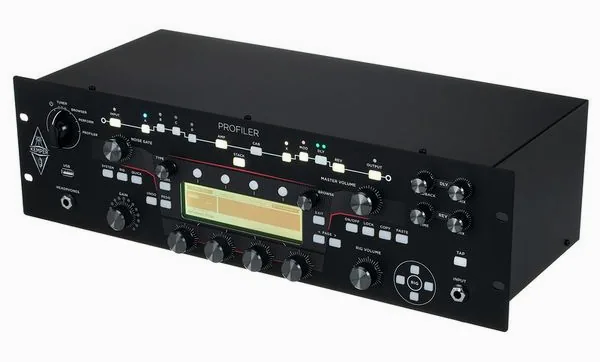
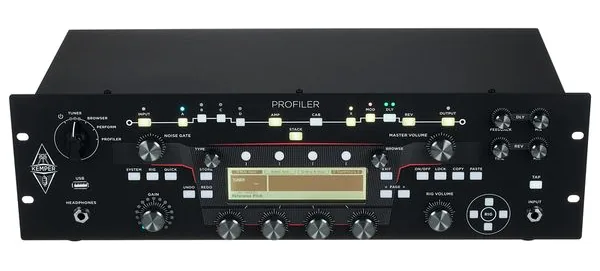
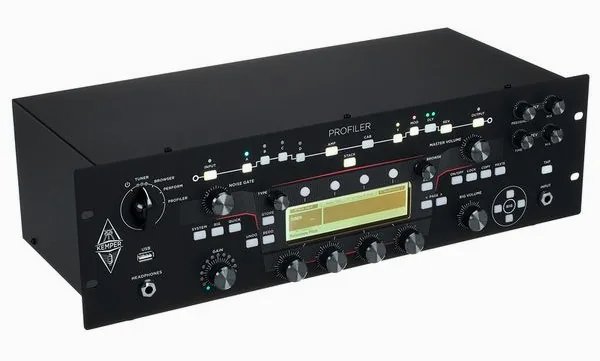
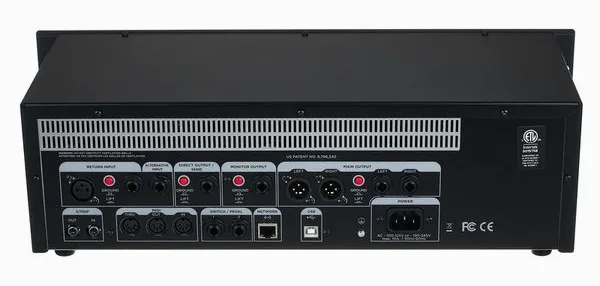
Physically, the MK2 cuts down on weight, making it noticeably easier to rack and transport compared to its predecessor. The outer chassis retains the familiar Kemper industrial look. All connectivity is preserved or improved: you get XLR and quarter-inch main outputs, monitor and direct out, stereo headphone output, auxiliary input, MIDI in/out/thru, and two USB ports (type A and B). The panel layout is function-driven, with dedicated push buttons for input, pre and post effects, amplifier section, stack, cabinet, output, system menus, performance navigation, and a complete selection of ground lift switches for direct outputs, ideal for eliminating hum in studio and stage environments.
The display, unchanged since the previous generation, draws criticism for feeling dated, but it remains readable and functional. The rotary mode selector (on/tuner/browser/performance/profiler) allows quick access to main modes. Kemper continues to resist the move to touch displays or larger screen real estate, which some may see as out of step with newer competitors.
Performance and User Experience
The boot time on the MK2 is notably faster than the MK I, with quicker preset changes and snappier interface response, especially in performance mode. For gigging musicians, this improvement means less waiting during set changes and more reliable operation under pressure.
The MK2's most immediate addition is seven new effects slots, before and after the amplifier section. These benefit players needing elaborate signal chains or intricate stereo effects setups. Doubling effects for distorted stereo guitars, in particular, are more convincing and lush than previous implementations. However, effects are still managed by turning dedicated hardware knobs for each parameter, maintaining a tactile approach rather than a menu-heavy workflow.
The looper extension now allows up to two minutes of recording, and loading times for loops are slashed, a welcome boost for improvisers and solo performers.
Sound Quality and Profiling Engine
At its core, the MK2 still runs the classic Kemper profiling process. There are no major changes to the capture algorithm or hardware, which means that the essential tone, amp, cabinet, and microphone simulation, is familiar territory for existing users. Some reviewers feel V2 profiles sound a little brighter, but overall, frequency coverage has not caught up to newer profiling technologies. Rival platforms such as ToneX, NAM, and Quad Cortex have set a higher bar for dynamic response and realism, the Kemper MK2's signature sound remains "close" but not as three-dimensional or as full-range by comparison.
- Effects: Integrated effects are extensive and studio-grade, with everything from delays and reverbs to modulation and dynamics covered. Their quality is consistent and capable of replacing separate pedal chains for most users.
- Profiling workflow: Profiling remains intuitive for existing users, but still requires a specific amp/cab/room setup for the capture process. The result is a snapshot of the source rig rather than the deeper dynamic modeling found in some newer units.
- Output options: USB audio lets you record up to eight channels directly into your audio workstation, very useful for multitrack re-amping and wet/dry split routing. SPDIF and direct line out cater to both digital and analog studio setups.
Software Integration
The software editor for the MK2 is now much more stable and responsive. Parameter changes over USB happen instantly, encouraging deeper dives into tweaking and preset management. For many, the editor's improved functionality is the single biggest workflow advance, especially for studio users who value rapid auditioning and archiving of different signal chains.
User Feedback and Market Position
Longtime Kemper users report that, apart from reliability and the new workflow enhancements, this update feels incremental. Some are disappointed by the lack of a significant leap in profiling realism, especially given aggressive competition offering new capture methods at lower price points. The MK2 is, for many, a buy for the loyalist who prioritizes the established Kemper tones and signal chain flexibility, as well as the steady cadence of software updates the brand is known for. On the other hand, studio players demanding the most lifelike amp feel may find stronger candidates elsewhere.
Conclusion: Who Is the MK2 For?
The Kemper Profiler Rack MK 2 offers tangible usability improvements, faster operation, extended looping time, more effects slots, and seamless eight-channel USB audio. It continues to deliver its established palette of convincing amps and effects in a robust package with wide connectivity. If you are invested in the Kemper ecosystem, the MK2 maintains your workflow and builds on long-term reliability. However, those seeking a radical jump in amp profiling realism or a more cutting-edge interface will need to look at newer competitors. The MK2 is evolutionary, not revolutionary, but remains a serious tool for professional racks and studios where rock-solid operation and flexible signal routing count the most.
The last word from the bench
The MK 2 offers clear improvements in responsiveness, user interface, and connectivity, making daily use more enjoyable for dedicated Kemper users. However, the fundamental profiling and audio technology is largely unchanged and no longer leads the market. The screen remains dated, and sound quality, though still very good, is beginning to feel surpassed by newer, more authentic modelers. It's best suited for loyalists or those deeply invested in the Kemper ecosystem, but new buyers should weigh it carefully against advancing competitors.
Hanging next to it
Before you decide
Kemper Profiler Rack MK 2
Today's price and delivery time are shown at the retailer. Affiliate link, your price does not change.