Poly Effects Ample Amp & Cab Sim
The Poly Effects Ample offers a broad palette of classic amp tones in a compact, touch-operated unit, excelling at clean and edge-of-breakup sounds. Its unconventional interface and limited high-gain versatility restrict it to niche use-cases.
★★★★☆ 3.5/5 · 3 buyer reviews · 7 min read · updated 2026-10-07 · Tested by Cal Whitaker
Poly Effects Ample Amp & Cab Sim: Overview
The Poly Effects Ample Amp & Cab Sim enters the scene as a compact floor-based amp modeler aimed at guitarists and bassists wanting a versatile palette of classic and modern amplifier tones in a streamlined package. Priced at $291 and manufactured in Australia, it promises 56 modeled amplifiers, stereo routing, and integrated cabinet simulation, all accessed through a touchscreen control system and assignable footswitches, without requiring external software or an app.
Features and Controls
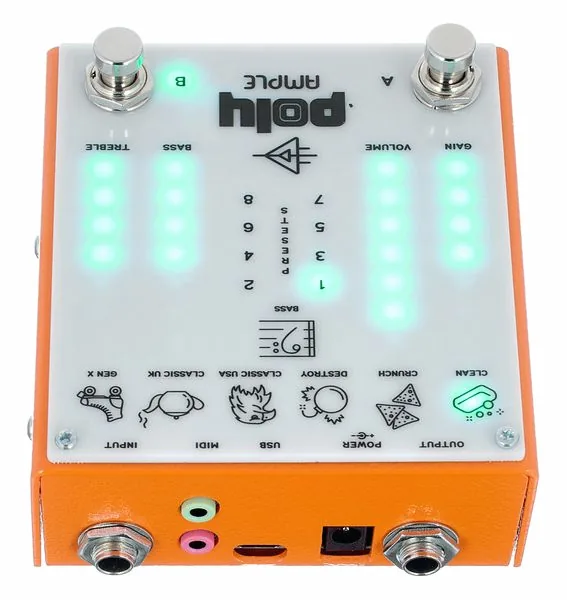
This compact unit houses 56 classic amplifier models spanning clean, crunch, high gain, vintage British, vintage American, boutique, and bass categories. A unique aspect is the ability to assign a different amplifier model to the left and right output channels, supporting stereo and bi-amp setups out of the box. Each channel's cabinet simulation is fixed to its amp model (not interchangeable), but can be switched off if you prefer a direct amp sound or use your own impulse response downstream.
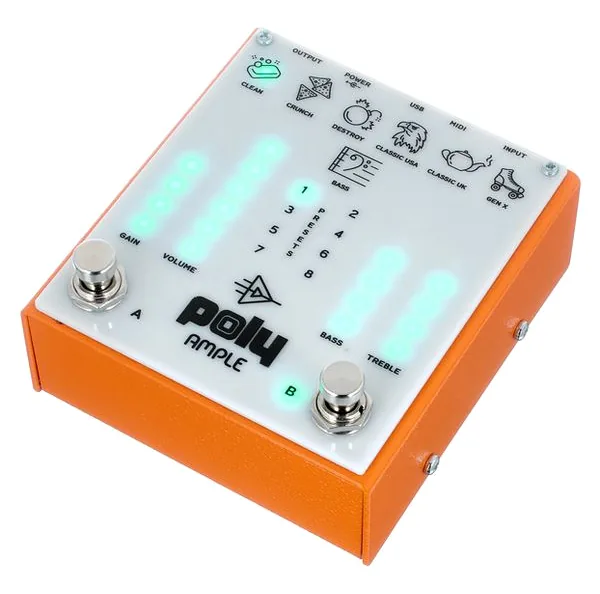
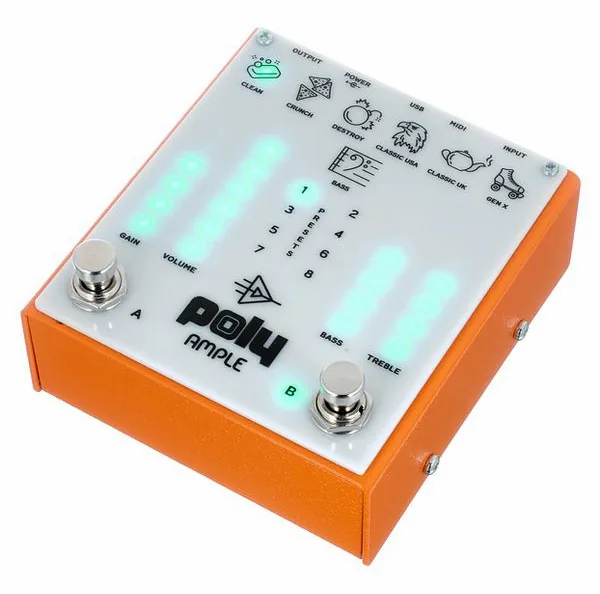
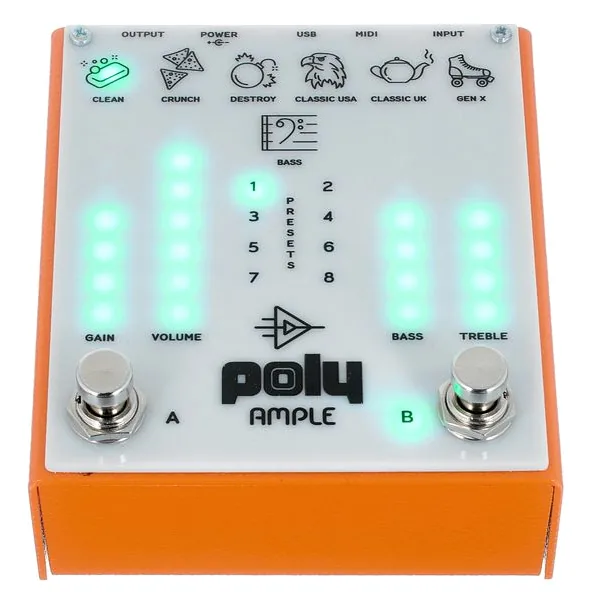
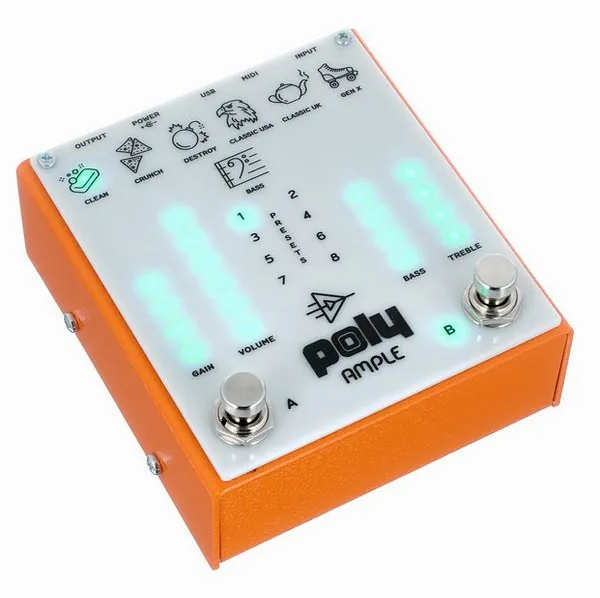
Physical controls are almost entirely digital, based around a touchscreen interface. Parameters like gain (labeled luminance), volume and boost, bass, mid, treble, and a room reverb (recorded in St Albans Cathedral) are adjusted using LED touch sliders. Pressure-sensitive zones select amp categories, presets, and split routing. Two footswitches operate as channel bypasses, amp selectors, or preset advance options. MIDI and USB connectivity allow further integration with complex rigs.
- Headphone and direct outputs: Connect straight to monitors or in-ears with no other gear required.
- USB-C and MIDI support: Manage patches or automation from external gear.
- Compact design: At just 400g and 102 x 112 x 60 mm, it fits most pedalboards.
Sound Quality and Feel
In practice, user feedback shows strong points and some notable trade-offs. The Ample delivers clean, slightly driven, and edge-of-breakup sounds with clarity and compression. These tones carry well through direct outputs. Lower gain and crunchy patches stand out for transparency and dynamic response, especially for players who value clean articulation or subtle edge.
For higher gain and distortion-centric sounds, opinions split. Some find the amp models ("SLO", for example) lack true punch and sustain compared to well-known hardware and plugin alternatives. Achieving saturated tones often means maxing out gain and boost, yet some amps still deliver less drive than their real-world inspirations. With certain input pedals (overdrives or boosts), the Ample can be picky, in some cases lacking the analog feel some expect, likely due to fully digital input stages. However, response and latency remain tight, and the included Schaffer Replica boost receives specific praise for smoothing transients.
The included reverb is sizable and unique, though not everyone finds it up to the standard of other high-end options. With no option for loading custom impulse responses for the cabinets, flexibility is more limited than on competitors such as Kemper or higher-end Universal Audio pedals. All the same, for everyday stage or practice use, the core amp sounds are widely considered usable and characterful, with some reviewers noting a variety of personalities, especially across blues and "edge of breakup" models.
User Experience and Workflow
The touch-based interface receives mixed feedback. It's easy to grasp with a glance at the manual, and storing or recalling presets is quick: simply touch a control, stomp a footswitch, or use MIDI. However, critical parameters like gain or mid are sometimes on a secondary layer, making on-the-fly tweaks less direct than with physical knobs. The lack of rotary pots or assignable quick-access controls can be a drawback for live use, especially where rapid changes are needed.
The 4096-step LED sliders do make it easy to see your parameter positions, even under stage lights. Preset changes can lag by about one to two seconds, which, combined with footswitches that only scroll presets one direction, can hamper usability during a song. Saving and organizing amp/preset combinations is somewhat rigid: only one preset can be saved per amp model, and editing must be done on-device. No desktop editor, external impulse loading, or meaningful firmware updates (beyond bug fixes) are supported.
Build and Connectivity
The housing is solid, though some users comment that power and USB jacks lack physical reinforcement, raising long-term reliability concerns for heavy gigging. Power draw is moderate (500mA at 9V DC, center negative), but no adapter is included. MIDI is handled with mini-stereo jacks, compact, but possibly requiring adapters for traditional setups. Input and output jacks are standard quarter-inch stereo.
Noise and Reliability
A few reviews note background noise, including some hiss and a low-frequency hum (~100 Hz), not easily solved by changing power supplies. In guitar and bass signal chains, this is generally not a dealbreaker, but noise-sensitive users, or those planning to use ultra-high-gain or studio applications, should take note.
Summary: Who is the Ample For?
The Poly Effects Ample Amp & Cab Sim targets players who want an all-in-one amp modeling solution that's easy to transport, genuinely compact, and quick to set up. Its real strengths are clean, jangly, and modestly driven tones, and its stereo/bi-amp routing option. Where it falls short is in heavy gain textures and deep editing/reconfiguration, areas where more expensive or mature platforms (like Kemper, Fractal, or Universal Audio) offer broader customization.
- Best for: Players after a portable, stage-capable amp/cab modeler for direct sound, especially those who value clean and edge-of-breakup tones.
- Not ideal for: Those requiring heavy, saturated distortion, deep cab swapping, or software-based patch editing.
- Verdict: A unique, creatively designed compact amp modeler with a focus on immediacy and clean/classic tones, but with room for polish and deeper pro-level features.
Shipping and duties
The retailer ships from its warehouse in Germany. Prices are shown in US dollars and do not include import duties. Orders under roughly $800 usually clear US customs without duty; above that, a duty of a few percent may be collected on delivery. 30-day money-back and a 3-year warranty apply.
Scores by area
Where it shines, where it stumbles
What convinced me
- Impressive range of classic amplifier models in a compact design
- Intuitive touch interface with visual LED sliders for easy adjustments
- Enables independent amplifier assignment for left/right channels (bi-amp support)
- Responsive dynamics for clean and low-gain tones with no perceptible latency
- Direct headphone output and simplified preset recall functionality
What bugged me
- Gain reserves limited on most amplifier models; high-gain tones require extra tweaks
- Cabinet simulation uses static impulse responses, can feel less organic than premium alternatives
- Noticeable background noise and occasional hum present regardless of power supply
- Only one preset per amplifier model can be saved
- No editor software, external cabinet impulse support, or foreseeable firmware expansions
Is it the right one for you?
Good pick if
Ideal for guitarists and bassists seeking a compact, easy-to-use amp and cab simulator for clean and edge-of-breakup tones on pedalboards or desktop setups. Best suited for live, rehearsal, and silent practice settings where tactile control and advanced editing are less critical.Look elsewhere if
Not recommended for users needing deep preset management, extensive high-gain options, or full-featured editing and external IR loading. Those requiring instant preset switching or zero background noise should look toward more established professional modellers.Suggested level: Intermediate
Specifications
- Design
- Floor Effect
- Tube(s)
- No
- Amp modeling
- Yes
- Effects
- No
- Headphone output
- Yes
- Direct out
- Yes
- Midi interface
- Yes
- Integrated expression pedal
- No
- Connections for pedals or switches
- No
- Aux-input
- No
- Integrated tuner
- No
- Usb-port
- Yes
- Drum-computer
- No
- Midi connector(s)
- Yes
What other players say
Customer feedback highlights the Ample's compactness, wide amp selection, and intuitive visual controls as key strengths, especially for adding clean and low-gain amp tones to a pedalboard setup. Criticisms center on limited gain, preset flexibility, background noise, lack of external impulse support, and slower interface responsiveness compared to established modeling units. Most were satisfied as long as they prioritized clean sounds and compactness over deep editing or high-gain performance.
The captures sound good, are dynamically playable and have no noticeable latency.
The highlight is really the clean and lightly driven sounds, they're very present and compress nicely.
You can only save one preset per amp. For the price, it doesn't quite convince me.
Up close
Watch and listen
Before you decide
Questions players ask
Does the Ample support loading third-party impulse responses or custom cabinet sims?
No, the Ample only supports its internal static cabinet impulse responses and does not allow loading external IRs or swapping the built-in cabinets.
Can I save multiple presets per amplifier model?
You can only save one preset per amplifier model; more flexible preset management is not currently supported.
Is the interface difficult to use compared to pedals with physical knobs?
The touch interface and LED sliders are intuitive after a short learning period, but lack the tactile feedback of physical knobs. Advanced settings require navigating secondary menus.
How does the Ample handle high-gain amp sounds and external overdrive pedals?
Many high-gain amp models have limited distortion and require engaging the boost control. Some external overdrive pedals may not pair well, with better results from specific boost types.
Are there latency or switching delays for live performance?
There is minimal audio latency, but preset switching has a 1, 2 second lag that can hinder rapid changes during a song.
The last word from the bench
Poly Effects Ample impresses with its array of vintage and modern amp models, especially for clean and low-gain players seeking pedalboard convenience. The touch interface is unique and functional, though less tactile than traditional knobs. High-gain users may find the distortion and dynamic feel less convincing, and there are operational quirks and noise issues to consider at this price point. The unit stands out for its low latency and creative features, but is best for users prioritizing compactness and clean-to-mildly driven tones.
Hanging next to it
Poly Effects Ample Amp & Cab Sim
Today's price and delivery time are shown at the retailer.
 Guitar Gear Reviews