Neural DSP Quad Cortex
The Neural DSP Quad Cortex offers industry-leading portability, flexibility, and capture technology that's ideal for demanding players, but key workflow and feature gaps remain for its price range.
★★★★★ 4.7/5 · 367 buyer reviews · 9 min read · updated 2026-10-07 · Tested by Cal Whitaker
Overview and Technical Layout
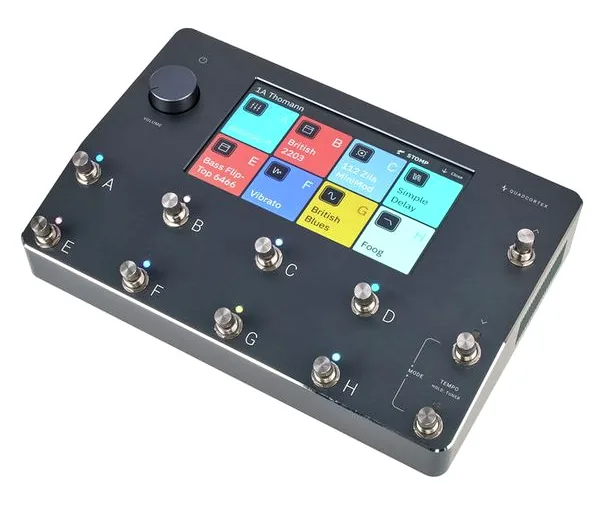
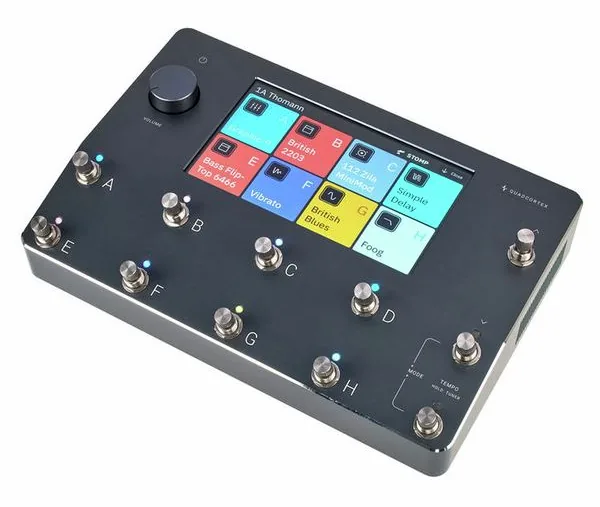
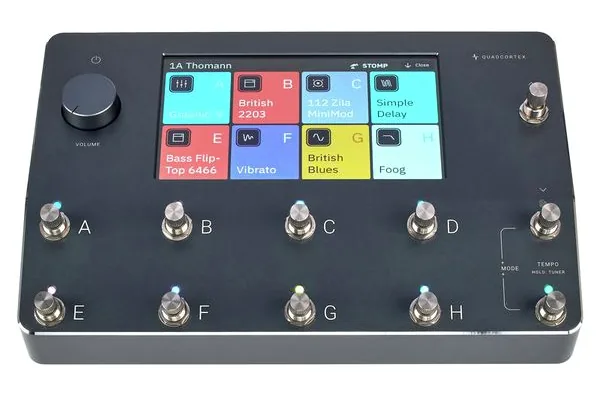
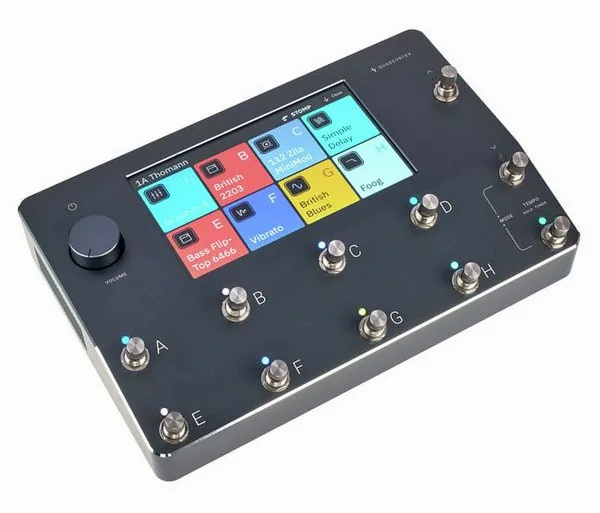
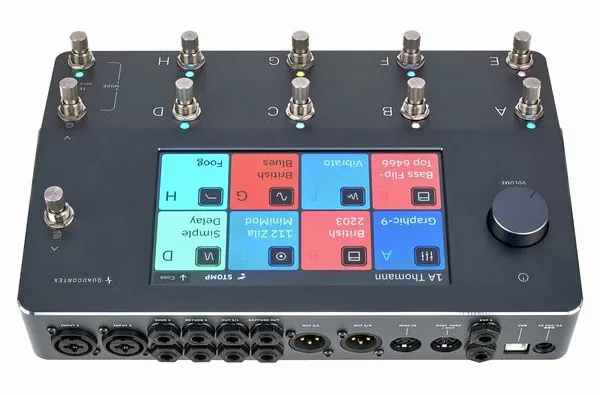
The Neural DSP Quad Cortex, released in April 2021, competes at the very top tier of all-in-one amp modeling and effects units. It is a floorboard format processor featuring a dedicated 2 GHz quad-core SHARC digital signal processor. At a glance: the unit measures 290 x 191 x 48 mm, weighs in at 1.98 kg, runs on a supplied 12 V DC power adapter, and boasts robust aluminum chassis construction. This compact form factor still packs two combination microphone/XLR-1/4" inputs (with switchable input impedance and phantom power for condenser microphones), four analog outputs (two XLR, two 1/4" stereo jacks), dual effects loops, MIDI in/out, an auxiliary input, and a USB Type-B port. There is no built-in expression pedal, but two 1/4" expression inputs are ready for external controllers. A 7" touch display dominates the user interface, alongside eleven combination footswitches/rotary encoders, giving tactile navigation as well as instant stompbox-style switching.
Modeling and Capture Capabilities
At its core, the Quad Cortex uses two approaches: classic algorithmic amp models (Superior Modeling Technology) and "neural capture" profiling. The built-in amp and cabinet models (over 1000 impulse responses for cabinets) are complemented by a growing catalog of neural captures, which aim to simulate the dynamic response of individual amps, pedals, or even complex signal chains. Unique to the Quad Cortex is its ability to create these captures directly, with no additional hardware required, the user simply follows the on-screen guidance to profile their favorite gear. Results are not perfect carbon copies, but feedback from experienced users shows that captured drive pedals and amps come extremely close, accurately reflecting the original unit's tone and response. Captures and presets can be shared via WiFi through the Cortex Cloud, where users and artists upload their own presets.
Workflow and Usability
The main strengths highlighted by seasoned players are speed and ease of workflow. The touch interface reacts quickly and allows for drag-and-drop signal chain editing, while the rotary footswitches streamline editing on the fly. Creating a sound from scratch is straightforward, either by loading amp/cab models or your own (or community-sourced) captures. Routing is highly flexible: complex setups with multiple instruments and processing chains are easy to configure, whether for live, studio recording, headphone practice, or hybrid scenarios. Many professionals appreciate the direct recording workflow, freeing them from both computer-based plugins and the hassle of transport and miking traditional gear. The built-in tuner, headphone output, MIDI support, and USB audio interface (Windows and macOS) round out real-world utility.
Operational Highlights
- Plug-and-play usable presets right out of the box, no "demo" bloat, just practical sounds for clean, crunch, and high-gain work.
- Signal path editing is intuitive on both the unit and the (now available) desktop editor.
- Quality over quantity: effects selection is not huge, but sound quality is excellent, rivaling high-end dedicated pedals for modulation and time effects. Pitch-shifting is competitive, though not as fully developed as on some rivals.
- Scene mode allows seamless switching between multiple parameters, with no audio gaps and programmable spillover for delay/reverb tails, essential for live use.
Sound Quality and Feel
Across a range of instruments and professional scenarios, the Quad Cortex is consistently praised for its "amp-like" response, playing dynamics, picking attack, and volume knob behavior satisfy tone purists. The tonal character of the connected guitar and pickups comes through with minimal coloring. Some power users prefer the neural captures to the pre-loaded models, especially when seeking the last bit of realism and touch sensitivity, but the consensus is that even the stock models are on par with or surpass classic digital units, if not always the top-end competition in every scenario. The impulse-response-based cabinet simulation has very high resolution and flexibility in mic placement, contributing to a polished, mix-ready output whether in-ear, on studio monitors, or through front-of-house.
Build Quality and Durability
The aluminum chassis exudes a sense of studio-grade equipment, and, in practice, the unit travels well, fitting into a backpack and weighing less than many laptops. That said, the included power supply is a common sticking point. Many users find it too lightweight, with a thin cable that seems vulnerable to damage. At this price bracket, a higher-grade power supply and a locking connector would be warranted. The unit's footswitches are sturdy, although closely spaced, possibly problematic for players with larger feet or in hectic live environments. The touch screen is responsive, but a handful of users wish for greater adjustability in screen brightness for dark stage settings.
Connectivity
- Dual combo inputs with switchable impedance and phantom power give real flexibility for guitars, basses, microphones, and line-level sources.
- Two stereo effects loops make it easy to integrate external pedals.
- MIDI in, out, and thru, plus comprehensive routing options and programmable assignments.
- Integrated WiFi module for firmware updates and cloud access, though some complain about the organizational state of the preset library and the requirement to download content before auditioning.
- USB interface offers audio over USB, though on Windows, some users report unresolved issues with direct monitoring latency or audio quality.
Software and Updates
The early absence of a desktop editor was a frustration for many, but Neural DSP addressed this in 2023. Firmware updates continue to deliver new features, models, and bug fixes, though some promised features (such as full plugin integration or a more feature-rich looper) are still missing. The community is highly active, with sound designers and users sharing a vast number of captures and presets. However, organizational tools on the cloud and within the device could use refinement.
Drawbacks and Limitations
- The thin, non-locking power supply is a repeated complaint, especially for gigging musicians.
- Relatively small onboard effects collection compared to some rivals, most basics are covered, but dedicated time/modulation effects units (from brands like Eventide or Strymon) may still have the edge.
- No built-in expression pedal, extra purchase may be necessary for wah/volume effects.
- Looper feature is minimal, with no built-in metronome or jam tracks.
- Some workflow points, like preset management and bank reordering, are less convenient than on Helix or Fractal units.
- USB connection is still Type B (instead of modern USB C).
Summary: Who Is It For?
The Neural DSP Quad Cortex is undeniably at the forefront of amp and effect modeling technology. For professional guitarists, gigging players who want a travel-light, stage-proof rig, and home studio producers looking for workflow efficiency and superb sound, it provides tremendous value. If you prioritize rapid, intuitive editing and hyper-realistic amp captures, the Quad Cortex shines. The current roadmap and community suggest the platform will continue to improve, though if you need a full suite of creative utilities (like a feature-rich looper or a massive catalog of quirky effects), you'll still want to supplement with external gear. Build quality, aside from some external accessories like the power supply, matches the price. Sound quality is on par with the leading hardware modelers, and the unit's flexibility is unmatched. For guitarists serious about great tones and a clean workflow, the Quad Cortex is a main contender, a platform designed to evolve and deliver, not just today but for the foreseeable future.
Shipping and duties
The retailer ships from its warehouse in Germany. Prices are shown in US dollars and do not include import duties. Orders under roughly $800 usually clear US customs without duty; above that, a duty of a few percent may be collected on delivery. 30-day money-back and a 3-year warranty apply.
Scores by area
Where it shines, where it stumbles
What convinced me
- Extremely versatile floorboard amp modeler and multi-effect unit with robust SHARC quad-core DSP power
- Intuitive, responsive multi-touch 7-inch display and rotary footswitches for easy editing
- "Neural capture" feature accurately simulates amps and pedals, offering nearly indistinguishable replications
- Solid, portable aluminum housing and lightweight design, ideal for both studio and stage use
- Flexible routing with numerous inputs/outputs (dual XLR/jack combi, stereo FX loops, multiple line and headphone outs, MIDI, USB, expression pedal support)
What bugged me
- Power supply is considered fragile and not on par with the quality of the unit
- No built-in expression pedal
- Looper and creative on-board features (metronome, drum machine) are basic or absent
- PC/Mac desktop editor/support launched relatively late and remains incomplete in some aspects
- Limited number of effects compared to leading competitors, with some core modulation and spatial effects missing or less refined than Fractal/Helix/Eventide
Is it the right one for you?
Good pick if
Ideal for professional and semi-professional guitarists or bassists seeking a powerful all-in-one modeling unit for studio, live, or home use. Those working with both classic and custom gear who value fast workflow, wireless preset management, and high portability will appreciate its feature set. Suits users comfortable with technology and firmware evolution.Look elsewhere if
Not recommended for players wanting an all-in-one unit with a vast effect library, ultra-deep amp parameter control, or a finished plug-and-play experience out of the box. Those needing a rugged stage unit with integrated expression pedal, highly refined onboard creative tools, or unhappy with evolving firmware might prefer more mature alternatives.Suggested level: Professional
Specifications
- Design
- Floorboard
- Tube(s)
- No
- Amp modeling
- Yes
- Effects
- Yes
- Headphone output
- Yes
- Direct out
- Yes
- Midi interface
- Yes
- Integrated expression pedal
- No
- Connections for pedals or switches
- Yes
- Aux-input
- Yes
- Integrated tuner
- Yes
- Usb-port
- Yes
- Drum-computer
- No
- Incl. tuner
- Yes
What other players say
Customer feedback spotlights its easy-to-use interface, refined capture technology, dynamic amp sounds, and portable build. Many praise its immediate readiness and rich factory presets, with flexibility and connectivity standing among its highlights. However, dissatisfaction with the unfinished state of promised features, desktop software delays, limited effect selection, and persistent issues like power supply durability are recurring critiques. Comparisons place it ahead on workflow but occasionally behind on sound realism or advanced effect options relative to Helix, Kemper, or Fractal competitors. The active software/firmware development and community are positives, but pro players expect more for the price.
Straight out of the box this device amazed me with the tones it is capable of putting out. The sounds feel more ''tubelike'' to me when compared to the Helix.
The neural capture is super simple and does not require any extra gear. The reproduction isn’t a perfect clone, but it’s really close.
No NDSP plugins support yet, except for Gojira and Plini. This was a promise NDSP made many years ago and to this day, is a serious let down.
Up close
Watch and listen
Before you decide
Questions players ask
Does the Quad Cortex work standalone or need a computer?
It is fully standalone and does not require a computer to operate. Editing, saving, and preset management can all be performed on the touchscreen or through its Wi-Fi-connected cloud ecosystem.
Can you add your own amp and pedal captures?
Yes, the neural capture system allows you to analyze and reproduce both amps and pedals, enabling personal gear replication. User captures are also available for download from the cloud community.
How does it compare to the Helix, Kemper, or Fractal Audio units?
The Quad Cortex offers faster workflow, better portability, and more flexible routing compared to many rivals, but lags in available effects, deep parameter access, and some legacy workflow conveniences.
Is the unit suitable for both studio and live use?
Absolutely. Its audio interface capabilities, robust input/output sits, and touring-friendly build make it viable in the studio and on stage. However, a reliable DI or monitoring solution, and care with the unit's finish are recommended for heavy gig use.
Are software/firmware features and plugin support fully developed?
The core features are stable and regularly updated, but not all promised functions (such as full plugin integration and advanced desktop editing) are present as of this review. Users should check current firmware notes for the latest developments.
The last word from the bench
Neural DSP's Quad Cortex stands out for its innovative capture technology, pristine sound, and comprehensive connectivity, making it a serious contender for both live and studio environments. Its intuitive hardware, embedded Wi-Fi, and active user community position it ahead in ease of use and versatility. However, the still-developing ecosystem, missing or late features, and lack of a truly finished desktop editor keep it from absolute dominance. For pro users prioritizing sound flexibility and modern workflow, it's a top-tier option, though others should weigh its ongoing maturation.
Hanging next to it
Neural DSP Quad Cortex
Today's price and delivery time are shown at the retailer.
 Guitar Gear Reviews