MXR M87 Bass Compressor
A professional-grade compressor pedal offering remarkable sonic transparency, deep control, and excellent build, though it's not the easiest to master or the most reliable in the long run.
★★★★★ 4.7/5 · 118 buyer reviews · 7 min read · updated 2026-10-07 · Tested by Cal Whitaker
MXR M87 Bass Compressor: Detailed Control for Demanding Players
The MXR M87 Bass Compressor enters a crowded market offering a level of hands-on compression tuning that is rarely seen in compact pedals. Since its launch, bassists and even some guitarists have gravitated toward the M87 for its transparency, robust build, and adaptability. At just under $200, it sits at a professional price point, but a look beneath the hood and at real-world feedback shows why it remains a staple on pedalboards.
Feature Overview and Build Quality
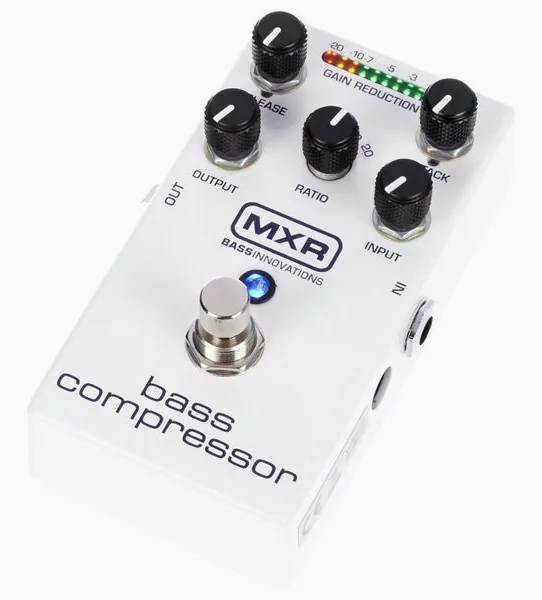
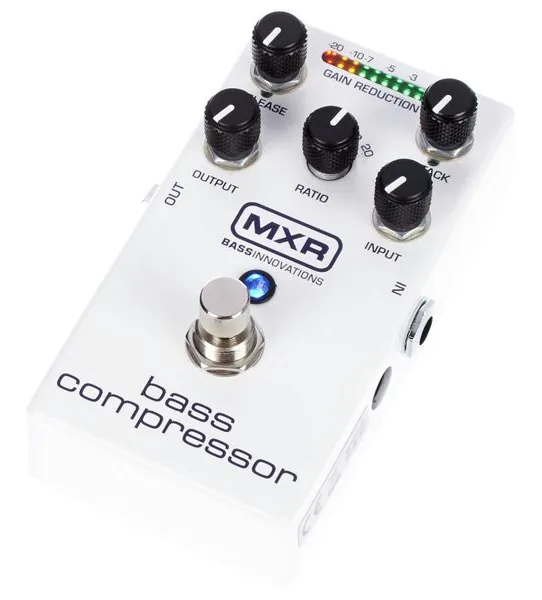
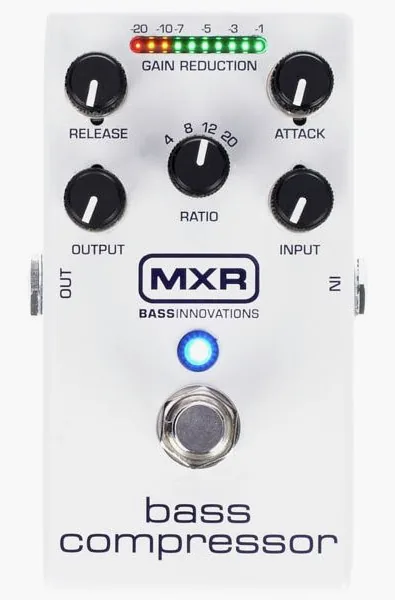
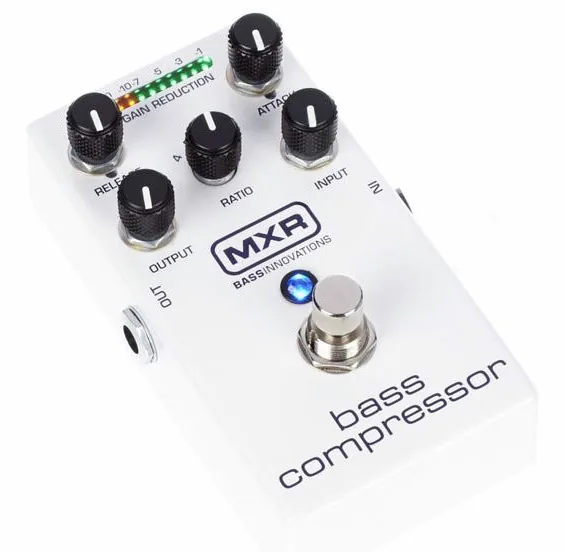
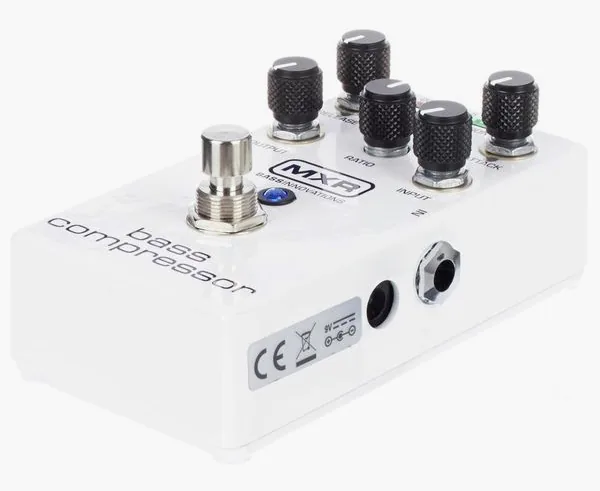
Aimed specifically at electric bass, the M87 is housed in a sturdy metal enclosure and features Constant Headroom Technology, which prioritizes clear, uncolored tone even at higher input levels. It operates off a standard 9V battery or the Dunlop ECB-003 power adapter (not supplied). Five compact control knobs, output, input, attack, release, and ratio, provide precise tweaking potential. The unit includes a true bypass switch and two LED displays: one for pedal status and one ten-segment chain to show realtime gain reduction.
- Controls: Output, input, attack (20 microseconds to 800 microseconds), release, and compression ratio (4:1, 8:1, 12:1, 20:1).
- Visual feedback: Ten-segment LED meter for gain reduction, status light for on/off.
- Construction: Heavy-duty metal chassis, reliably protecting the internals during gigging and travel.
- Power: Runs on standard 9V battery or regulated adapter, battery compartment requires a screwdriver to access.
Compression, Tone, and Transparency
Where the M87 stands out is in its transparency. With well-set parameters, the pedal operates in the background, gently leveling playing dynamics without compromising the natural timbre of your bass. Several users note that the effect is only truly evident when the pedal is suddenly disengaged, translating to professional-level subtlety. Those seeking overt "squeeze" or pumping effects may need to experiment with more aggressive settings or consider another pedal altogether.
Attack and release controls are notably flexible for a pedal format. The attack parameter allows for both very fast and quite slow response, shaping whether the compressor clamps onto the note instantly (for slap or funk, or to control aggressive fingerstyle), or lets the transient through for a punchier or more expressive sound. The release control widens the expressive range, from super tight to smooth and sustained. The ratio switch jumps rapidly between moderate (4:1) to extreme (20:1) limiting, but some advanced users wish for more granular adjustment here.
Metering and Usability
The gain reduction LED strip deserves special mention for its real-world utility. Many owners report that visualizing compression in real-time accelerates the fine-tuning process, turning guesswork into objective changes. However, the control layout can take some getting used to, especially as input and attack reside on the right, output and release on the left. Some also mention that the small size of the knobs makes precise adjustments challenging for larger hands, and reproducing settings on the fly is less intuitive due to the lack of visible graduations.
For those new to studio-grade compression parameters, the learning curve is real. However, once you have found your settings, the pedal responds faithfully session after session. The pedal emits minimal noise, and there's no audible click or pop when engaging/disengaging, critical for live players and recording.
Versatility and Applications
Although designed for bass, the M87 has proven itself on electric and acoustic guitars in a variety of genres. Its wide frequency response (20 Hz to 20 kHz) allows anything from fat, glued-in-place funk bass to bright, percussive country guitars. In band settings, the pedal brings out missing punch in weaker pickups or helps even the level swings inherent in playing techniques like slapping, tapping, or expressive fingerstyle. That said, some find the pedal a little clinical, favoring transparent consistency over warmth.
Real-world reliability is generally solid. The pedal holds up through gig stress, pedalboard abuse, and years of rehearsals. There are scattered reports of units developing delayed start-up issues (LEDs taking minutes to extinguish, with reduced output until stabilizing), but these appear to be rare, and the three-year warranty from major retailers is valued.
Comparison and Value
Compared to more basic compression pedals (such as "one knob" designs), the M87 delivers a suite of features more reminiscent of studio rack units than typical stompboxes. Despite competing options like the Keeley Bassist (noted for simplicity and ruggedness), the M87 wins for sheer control and the educational benefit of a visual metering strip. The lack of a dedicated threshold control is remedied by the input/output arrangement, but may take a minute to adapt to for those used to studio hardware or digital plug-ins.
Summary: Who is the MXR M87 For?
If you are looking for transparent, flexible compression that can elevate your bass (or guitar) to polished, consistent output, the MXR M87 is a leading choice. It rewards players who want comprehensive parameter control and aren't afraid to tweak. While not the cheapest pedal, the features and build justify the investment, and even pros with experience on studio compressors find it meets their expectations. Beginners may face a steep learning curve, but once dialed in, the M87 becomes a mainstay on any serious musician's board.
- Strengths: Complete parameter control, high transparency, versatile for multiple instruments, rugged build, LED meter for clarity.
- Possible drawbacks: Steep learning curve, knobs can feel small, occasional quality control concerns, AC adapter not included.
Verdict: The MXR M87 Bass Compressor brings near-studio-grade compression to a compact pedal. For those willing to explore its extensive tweaks, tonal consistency and dynamic control are within easy reach.
Shipping and duties
The retailer ships from its warehouse in Germany. Prices are shown in US dollars and do not include import duties. Orders under roughly $800 usually clear US customs without duty; above that, a duty of a few percent may be collected on delivery. 30-day money-back and a 3-year warranty apply.
Scores by area
Where it shines, where it stumbles
What convinced me
- Extremely robust metal build and long-term durability for both studio and stage
- Highly transparent compression, preserving the original tone with near-zero noise
- Exceptional control with dedicated knobs for attack, release, input, output, and four selectable ratios
- Versatile for a wide range of instruments: electric bass, electric guitar, acoustic guitar, and even synthesizers
- Clear 10-segment LED gain reduction display simplifies live adjustments and learning compression behavior
What bugged me
- Learning curve can be steep due to comprehensive controls, especially for beginners
- Ratio settings are limited to four values, which restricts fine-tuning at high compression
- Some reports of hardware failures after prolonged use, raising concerns on long-term reliability
- No power adapter included despite the high price, and battery compartment requires a screwdriver
- Absence of printed, detailed instructions in the box makes initial setup harder
Is it the right one for you?
Good pick if
Ideal for advanced bassists or guitarists who desire fine-grained control over dynamics and tone shaping. Perfect for studio musicians, session players, or anyone seeking professional-grade compression with minimal tone coloring and real-time visual feedback. Also suits those with complex pedalboards needing a versatile, robust unit.Look elsewhere if
Not recommended for beginners unfamiliar with compressors or those seeking a quick 'plug and play' solution. If you need hassle-free operation, maximum reliability over many years, or expect drastic effect coloration, alternatives may better fit your needs.Suggested level: Intermediate
What other players say
Customer reviews highlight the M87's solid construction, transparent sound, and in-depth control options that appeal to demanding players. Many appreciate its versatility for both live and studio contexts, and the LED display is praised for enabling precise setup. Some, however, find the controls daunting at first and criticize the omission of a printed manual or included power supply. Reliability is sometimes questioned due to multiple reports of failures after extended use. On balance, most users find it significantly improves their instrument's consistency, especially for challenging techniques or level balancing.
The M87 does exactly what it's supposed to and does it very well!
It took me a while to get the hang of it, even after reading the manual.
Very durable metal jacket, nice LED lighting showing how exactly your dynamics are corrected by the M87.
Up close
Watch and listen
Before you decide
Questions players ask
Is the MXR M87 suitable for beginners who have never used a compressor before?
The M87 is best suited for players with some understanding of compression; its detailed controls can overwhelm beginners, despite being thoroughly documented online.
Can the MXR M87 be used with electric guitars and other instruments, or is it just for bass?
While designed for bass, the M87's full frequency response and transparent processing make it equally effective for electric guitars, acoustic guitars, and synthesizers.
How quiet is the pedal in operation? Does it introduce noise or color the tone?
Reviews confirm the M87 is extremely quiet with almost no audible noise or tone coloration, even at high compression settings.
What are the most common issues reported by long-term users?
Some users report component failures after two or more years, such as malfunctioning LED meters or loss of output, though experiences are mixed.
Does it come with a power adapter, and what power options are available?
No adapter is included; the M87 can run on a 9V battery (requiring a screwdriver for battery changes) or an optional Dunlop ECB-003 AC adapter.
The last word from the bench
The MXR M87 Bass Compressor stands out for its high build quality, transparent sound, and extensive control over compression parameters, making it ideal for those who need detailed tone shaping. Its LED gain reduction meter brings studio-style feedback to any pedalboard, and its versatility makes it work for multiple instruments and genres. However, the pedal's learning curve, limited ratio options, and some recurring reliability issues suggest it's best suited for informed users. For those willing to invest time and attention, the M87 will become an essential, professional tool.
Hanging next to it

MXR M87 Bass Compressor
Today's price and delivery time are shown at the retailer.
 Guitar Gear Reviews