Mooer E7 Polyphonic Guitar Synth.
Compact, affordable synth pedal with quirky digital sounds, best for experimenting and ambient layers, less suited for advanced synth enthusiasts.
★★★★☆ 3.9/5 · 28 buyer reviews · 7 min read · updated 2026-10-07 · Tested by Cal Whitaker
Mooer E7 Polyphonic Guitar Synth Test: Synth Sounds for Your Pedalboard
The Mooer E7 Polyphonic Guitar Synth offers guitarists and bassists a compact, budget-friendly introduction to synth effects. Positioned at a competitive price point of $96, this compact effects pedal packs seven selectable presets, adjustable arpeggiator for each sound, and individually tweakable parameters into a robust, space-saving metal chassis. With its focus on simplicity and economic creativity, does the E7 deliver meaningful musical value, or is it best left to the niche of synth-curious players?
Specs and Core Features
- Polyphonic synth effects pedal for guitar or bass
- Seven factory presets; all have adjustable parameters
- Each preset features an arpeggiator that can be turned on or off
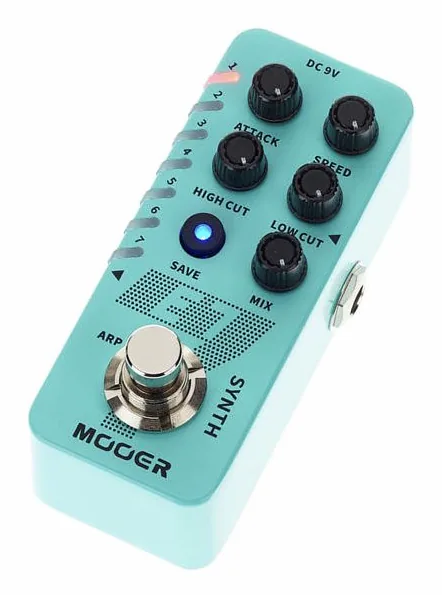
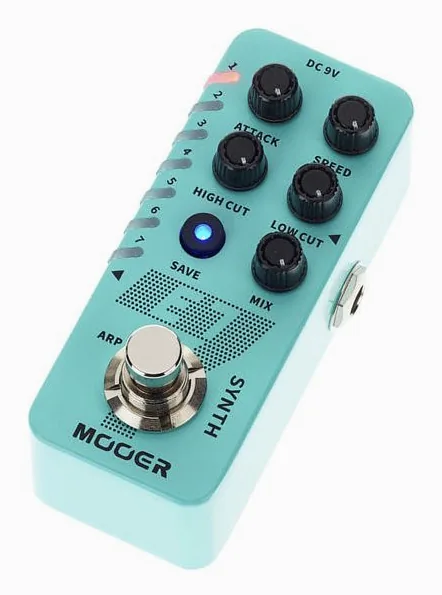
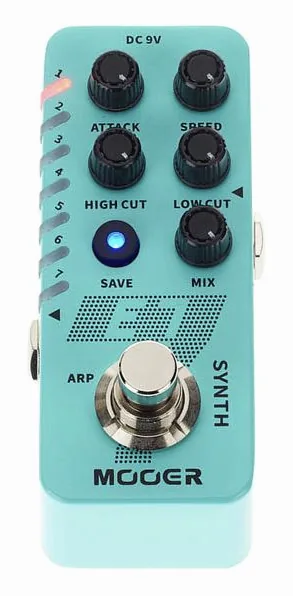
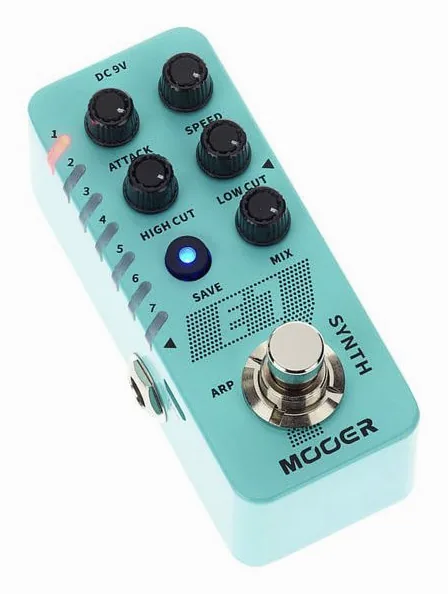
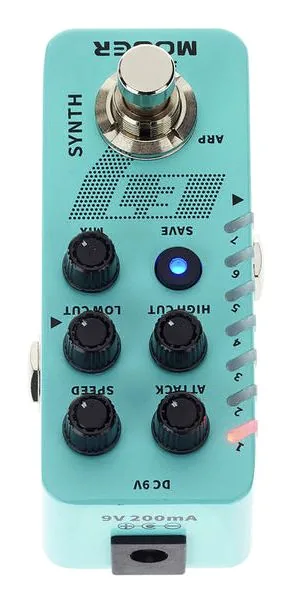
- Dedicated controls: attack, speed (arpeggiator rate), high frequency cut, low frequency cut, mix, and a save button
- True bypass switching with status LEDs
- 6.3 mm mono jack input and output
- Firmware can be updated via USB
- Requires a 9V DC power supply, 200 mA minimum (not included)
- Measures 93.5 x 42 x 52 mm and weighs 155 grams
First Impressions and Construction
The E7's sturdy all-metal case ensures durability on the road or in the home studio. The pedal's footprint is minimal, making it a practical addition to cramped pedalboards, especially for players who want synth textures without sacrificing valuable space. All controls are accessible on the top panel, though the compact size means the knobs are quite close together. This could be a challenge for players with larger hands, especially during live adjustments.
The pedal's bypass switch is reliable and the LED status indicators help keep track of both effect engagement and parameter changes. One minor inconvenience is that mode changes (for instance, switching between arpeggiator and simple synth) cannot be accomplished with a quick tap from a shoe, you will often need to use your hand, which may slow down workflow during a set.
Sound and Usability
Each of the seven available presets delivers a different flavor of synth-inspired tone, from classic sweep effects to ambient pad layers. While the foundational sound of each preset is fixed, users can shape these with the onboard controls. High and low frequency cut allow for quick sculpting of the tone, while the mix knob blends the dry string signal with the effect, a practical feature for maintaining note definition in more experimental sounds.
The arpeggiator is a standout feature. With individual speed controls, you can infuse rhythmic motion into your lines. Preset switching is fast, but parameter editing and storing your custom sounds require a bit of rehearsal, long presses and short taps on the "save" button operate different functions.
Tracking quality is a mixed bag. The E7 recognizes single notes in the middle and upper ranges swiftly, but struggles with lower pitches or fast, complex chords. As a result, the synth effect may lag behind the player's performance, especially for aggressive rhythm work or bass register riffs. For studio work and atmospheric layers, this is less of an issue. In a live context, especially for guitarists and bassists who want real-time, rhythmically tight synth effects, the E7's latency limits its versatility.
Range of Application
The E7 is most effective when paired with other effects. In a chain with delays, reverbs, or modulation, the synth textures multiply your sonic palette. Some reviewers use the E7 mainly in the studio to sketch song ideas or as a second "layer" in the effects loop, blending ambient swells or arpeggiated textures behind a band mix. The pedal is not a direct replacement for classic synthesizer pedals from more established brands, but for subtle flavor, intros, or solo enhancement, the results can impress. The pedal's tonal identity leans toward modern, digital effects, users frequently describe the sounds as "toy-like," but also note that with careful mix control and equalization, the sounds can be made to sit well in a full band context.
Limitations and Audience
- The synth palette is fixed to seven core sounds; these cannot be deeply edited or replaced, only shaped with onboard controls
- No MIDI or external control input, everything is handled onboard via manual knob action
- Live mode changes aren't ergonomic for quick foot access
- Some users encountered issues with tracking and occasional build quality inconsistencies
This pedal is best suited for experimenting guitarists or bassists looking to add digital variety to their repertoire, but not as a primary synth replacement. The learning curve is moderate: manual consultation helps, but basic operation is intuitive.
Verdict: Value in Context
Within its price bracket, the Mooer E7 Polyphonic Guitar Synth offers unique synth sounds in a remarkably small and sturdy package. It excels as an idea generator or for adding ambient backgrounds. Its straightforward controls, true bypass circuit, and firmware upgradability give it an edge for tinkerers and the synth-curious. However, limited sound sculpting, latency in certain contexts, and non-ergonomic live control keep it from being a "must-have" for all players. For those keen to experiment without investing heavily, the E7 remains a compact, inspirational, and affordable stepping stone into the realm of guitar synthesis.
Shipping and duties
The retailer ships from its warehouse in Germany. Prices are shown in US dollars and do not include import duties. Orders under roughly $800 usually clear US customs without duty; above that, a duty of a few percent may be collected on delivery. 30-day money-back and a 3-year warranty apply.
Scores by area
Where it shines, where it stumbles
What convinced me
- Solid metal construction and extremely compact size for easy integration into any pedalboard
- Wide range of digital synth sounds including arpeggiator and customizable presets
- Affordable entry into guitar synth effects with no need for a MIDI pickup
- Versatile for both guitar and bass with interesting ambient capabilities
- User-friendly layout with essential controls and true bypass
What bugged me
- Limited editing depth and preset variety; sound palette is not very broad
- Tracking can be slow, especially on chords or lower notes, making timing challenging in a band context
- Small knobs can be fiddly to adjust, particularly for quick changes during performance
- Mode switching cannot be done easily by foot without removing shoes
- Build quality concerns in some cases; occasional reports of device failure
Is it the right one for you?
Good pick if
Ideal for guitarists or bassists who want to experiment with synth effects without significant investment or pedalboard space commitment. Suits bedroom players, creative studio users, and those seeking specific ambient or retro flavors for fills and intros. Useful for musicians interested in basic synth textures rather than complex synthesis programming.Look elsewhere if
Not for advanced synthesizer users seeking deep programmability or very high-fidelity synth sounds. Ill-suited to players requiring hassle-free live operation, robust tracking for complex chords, or those who need versatile real-time control on stage.Suggested level: Beginner
Specifications
- Current consumption
- 200 mA
- Dimensions (l x w x h)
- 93.5 x 42 x 52 mm
- Weight
- 155 g
What other players say
Customer feedback emphasizes the Mooer E7's compact design, affordability, and ability to create inspiring digital synth textures, appealing especially to those new to synth effects. Many find the pedal fun and easy to integrate for atmospheric layers or experimentation, benefiting from presets and the arpeggiator. Limitations include relatively basic preset editing, tracking latency on chords or bass notes, small controls for live tweaking, and occasional quality concerns. Users describe the E7 as ideal for home studios, spontaneous creativity, or filling specific roles on a pedalboard, though it may not satisfy those wanting a more versatile or deeply programmable synth pedal.
This creates great digital effects for your guitar for very little money.
Tracking can be so-so depending on the preset; leaving some dry guitar helps a lot.
Very good when there is not much space on the pedalboard, feels solid because there is no plastic.
Up close
Watch and listen
Before you decide
Questions players ask
Can the Mooer E7 be used with both guitar and bass?
Yes, users report good results with both instruments, especially for ambient effects and experimental sounds, though tracking issues may be more noticeable with lower bass notes.
How flexible are the editing options and presets?
There are seven selectable presets, each with adjustable parameters such as attack, speed, high cut, and low cut. However, deep sound design is limited, and the presets themselves can't be heavily modified.
Does the pedal require a MIDI pickup to process the guitar signal?
No, the Mooer E7 processes standard instrument signals directly, so there is no need for additional pickups or MIDI gear.
Is it suitable for live performances?
It is compact and roadworthy, but switching modes or making adjustments quickly is tricky; some users find the knobs too small and real-time operation is limited, particularly for precise live use.
How reliable is the Mooer E7's build quality?
Most find the metal housing sturdy, but a few users have reported faults or failures early in the pedal's life, so reliability may vary.
The last word from the bench
The Mooer E7 Polyphonic Guitar Synth is a fun and cost-effective tool for adding digital synth textures to guitar or bass. Its small footprint and easy setup appeal to those with limited space or budget, while the selection of factory presets offers enough variety for basic experimentation and live use. The tracking and limited sound editing are drawbacks for more demanding users, but for those new to synth effects, it's a practical entry point. It excels in creative studio setups or as an additional color on a pedalboard, as long as realistic expectations are set.
Hanging next to it
Mooer E7 Polyphonic Guitar Synth.
Today's price and delivery time are shown at the retailer.
 Guitar Gear Reviews