Behringer FX2000 3D FX Processor
The Behringer FX2000 packs an impressive range of usable effects and strong connectivity into an affordable rack unit, but has a dated interface and a learning curve.
★★★★☆ 4.4/5 · 209 buyer reviews · 8 min read · updated 2026-10-06 · Tested by Cal Whitaker
Overview: What Is the Behringer FX2000 3D FX Processor?
The Behringer FX2000 3D FX Processor is a single rackspace (1U) stereo digital multi-effects processor offering a wide range of studio and live sound capabilities at a very accessible price point. With 71 effect algorithms, 100 presets, full MIDI integration, and both XLR and quarter-inch balanced inputs/outputs, the FX2000 is positioned as a versatile solution for musicians, engineers, and producers working on a budget. Its legacy spans over a decade and it continues to find favor in rehearsal spaces, home studios, and for live sound reinforcement.
Main Specifications
- Form factor: 19-inch rackmount (44 x 482.6 x 204.4 mm), 2 kg
- A/D and D/A conversion: 24-bit, with 64x (A/D) and 128x (D/A) oversampling
- Effects: 71 algorithms including reverberation, echo, pitch shifting, modulation, dynamic, psychoacoustic, and EQ; 11 effect combinations (serial or parallel)
- Parameters: Up to 7 adjustable per effect, plus a 2-band equalizer
- Memory: 100 factory presets, 100 user presets, patch storage and recall via MIDI
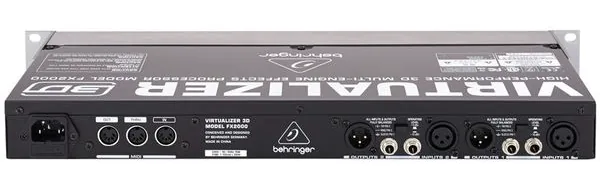
- Connectivity: balanced XLR and quarter-inch (6.3 mm) jacks (in/out)
- MIDI: Yes, for effect selection, parameter control, and SysEx dump
- Bypass: Hardware button for instant effect defeat
Build Quality and Hardware Experience
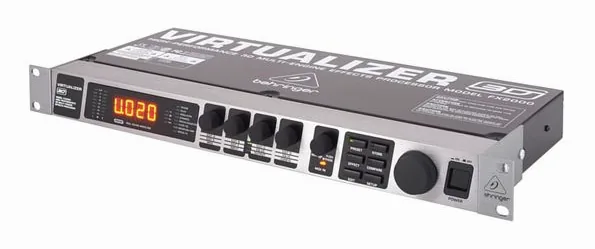
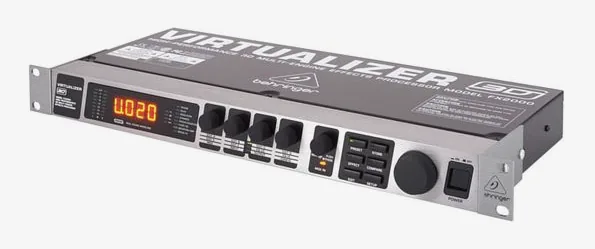
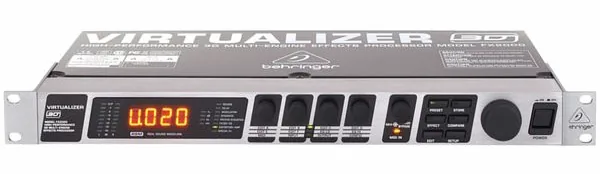
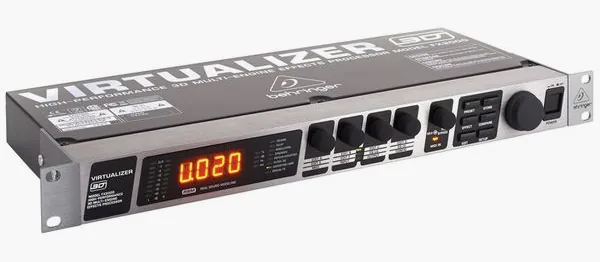
The FX2000's chassis is constructed from robust metal, delivering a solid and reliable feel for portable or permanently installed racks. However, numerous users consistently flag the rack ears' sharp corners, recommending a touch with a file to avoid cuts during installation. The control knobs and buttons are made of plastic, with a perceptible wobble, but most users report no issues even after years of use. Connections are tight and reliable, and the 19-inch footprint accommodates densely-packed setups. The display is a basic four-digit segment array, which, while entirely functional, reminds of older generations of digital gear and does not allow custom patch naming, something to bear in mind if you build a large library of user presets.
Connectivity and Integration
Balanced connections via both XLR and quarter-inch jacks support integration with mixers, audio interfaces, and sound systems. The unit lacks microphone and footswitch inputs, this is not a "plug your mic straight in" box. Instead, it excels as an insert, an auxiliary on a console, or in an FX send/return chain. MIDI implementation is comprehensive, with support for program changes, parameter editing, preset dumps, and (for those who dig into advanced configuration) even bank switching via control change commands. However, the documentation can be cryptic, and unlocking the device's full MIDI potential may require reference to forums or user-discovered guides rather than relying solely on the included manual.
Effect Algorithms and Sound Quality
Behringer touts 71 new effect algorithms, including authentic amp emulation and 3D stereo imaging. Core effects, reverberation, echo, chorus, flanger, phaser, pitch shifter, and compression, are widely considered the highlights. Their sound, while not reaching the refinement of high-end dedicated units, is more than usable; reverberation and delay are praised for being "good for the price," offering enough realism and control for both live and studio situations.
The extensive list also includes distortion, amp and speaker simulation, dynamic tools (compressor, expander, limiter, de-esser), stereo image enhancers, EQs (both parametric and graphic), psychoacoustic enhancers, vocoder, lo-fi, and various novelty or gag effects. Many users note that while some of these creative effects can deliver fun or unusual results, they often lack polish, sometimes adding unwanted noise or sounding flat. The multi-band compressor is a rare find in this price segment, but its performance is basic, acceptable for "smoothing" vocals, but not a replacement for serious outboard dynamic control.
Adjusting up to seven parameters per effect offers considerable shaping possibilities, and a dedicated two-band equalizer is included for further sound customization on each patch. A useful feature is the ability to combine two effects, either serially or in parallel, expanding creative options.
Operation and User Experience
Out of the box, the FX2000 is ready to go with 100 presets. Editing is accomplished via front panel encoders, and most routine tasks, recall, parameter adjustment, quick compare, saving user patches, become second nature after initial familiarization. The display, though clear, limits navigation and labelling. Documentation is a persistent weak point, with many users finding the manual incomplete or confusing, especially for advanced functions like MIDI configuration or effect combinations. Fortunately, the unit's architecture is logical once you spend time with it. YouTube tutorials and community guides help bridge the documentation gap.
The bypass button works as expected, but reports indicate it is not "true" bypass, some sonic coloration remains when engaged. For quick A/B sound comparison, however, it is practical. Recall and saving functions are fast and stable, with patch changes via MIDI working as expected in most DAWs and live MIDI controllers. Storing and restoring user presets over MIDI is possible with the right third-party utilities (no bundled PC editor). Firmware and memory settings are volatile and some settings may need to be restored after power cycling, a minor but sometimes frustrating detail for live users.
Sound Quality, Applications, and Limitations
Sound quality is solidly "prosumer." Used with balanced cables and reasonable gain staging, noise and hum are barely perceptible at normal volumes. In extremely quiet passages, or when effects parameters are pushed to extremes, some hiss may be noticeable. Effects like reverberation, echo, and chorus shine on vocals, keys, and acoustic instruments, enriching the mix convincingly. Creative effects are more hit or miss; amp and speaker simulation and deeper modulation sound less convincing, and advanced users seeking "boutique" sound will find the FX2000 falls short.
There is no mic preamp, so this is not a direct vocal processor. The absence of a footswitch input could frustrate guitarists wanting instant stage control, but workaround via MIDI is available if your pedalboard supports it. Stereo operation is a real asset; the 3D imaging and ultra-wide processing can add impressive space to otherwise dry sources. The FX2000 is equally at home in live rigs, on synths, drum machines, and mix buses, or as an auxiliary send for individual channels. Its low cost also makes it attractive for experimental or redundant live setups where risking a more expensive unit would be prohibitive.
Conclusion: Performance vs. Price
The Behringer FX2000 offers a comprehensive collection of effects, reliable construction, and strong connectivity at an entry-level price. Its reverberation, echo, and chorus effects outperform expectations, and its flexibility with MIDI and routing (serial/parallel) is above the norm for its class. Flaws are notable, the lack of advanced editing software, basic display, patch labelling limitations, and a mixed bag of secondary effects, but at $96, the value is undeniable. If you need stellar studio quality or pristine bypass, look higher up the price ladder. For practical, flexible multi-effects in a home or small studio or for live sound on a budget, the FX2000 remains hard to beat.
Shipping and duties
The retailer ships from its warehouse in Germany. Prices are shown in US dollars and do not include import duties. Orders under roughly $800 usually clear US customs without duty; above that, a duty of a few percent may be collected on delivery. 30-day money-back and a 3-year warranty apply.
Scores by area
Where it shines, where it stumbles
What convinced me
- Wide range of built-in effects including reverb, delay, pitch shifting, wah, modulation, and amp simulation
- Flexible routing with selectable serial or parallel configurations and true stereo operation
- Sturdy metal enclosure with both balanced XLR and quarter-inch inputs and outputs
- Extensive MIDI capabilities for real-time control and preset management
- Up to 100 user presets in addition to 100 factory presets, all easily editable
What bugged me
- Complex menu system; steep learning curve for beginners
- Documentation is often incomplete, poorly translated, or inaccurate
- Some effects introduce noticeable noise or are considered non-essential
- Plastic knobs feel cheap and the front display is outdated and limited to four characters
- No footswitch capability and no built-in microphone input
Is it the right one for you?
Good pick if
Ideal for home studio owners, solo musicians, and performers looking for a versatile, budget audio processor. Well-suited to those needing a broad effect palette for vocals, guitars, synths, or general production. Recommended for anyone willing to spend time learning the interface and working within the unit's hardware limitations.Look elsewhere if
Not for advanced studio engineers or audiophiles expecting top-tier FX quality. Anyone demanding seamless, instant usability or intuitive controls should consider higher-end, more modern processors. Also not ideal for those who need footswitch control or built-in microphone preamps.Suggested level: Intermediate
Specifications
- 19" rack unit
- Yes
- Saveable effects
- Yes
- Midi-capable
- Yes
- Footswitch connection
- No
- Microphone input
- No
What other players say
Customer opinions highlight the FX2000 as an outstanding value for home studios and smaller live setups, praising its versatility, number of effects, and connectivity. Many appreciate the editable presets, usable reverbs, and solid metal build. On the downside, criticism focuses on the dated four-character display, the quality of some effects (revealing noise or being considered gimmicky), and incomplete or confusing documentation. The learning curve for menu navigation and MIDI integration is noted, but most users who invest time into the device find it flexible and reliable once set up. Overall, it's recommended for musicians and audio enthusiasts seeking multi-effects power at a low cost.
I dare you to find a more affordable multi-fx processor with such a wide selection of effects.
Not the best, but brings no hiss and can be really subtle if handled intelligently.
Sturdy metallic chassis… connectors are all of decent quality and fit nicely.
Up close
Watch and listen
Questions players ask
Does the Behringer FX2000 support saving custom effect presets?
Yes, it offers 100 user slots to store custom effect settings beyond the 100 factory presets. Each preset can be edited and saved for quick recall.
Can it be controlled via MIDI and recall presets remotely?
Full MIDI implementation is provided, allowing remote effect control and preset recall. Some advanced functions require MIDI for access, but not all settings are easily managed via PC without third-party tools.
Is the FX2000 suitable for guitar, vocals, synths, and live sound use?
Absolutely, users report good results with vocals, synthesizers, guitars, and in live sound setups. It handles stereo signals and can be integrated into racks or tabletop setups.
How is the sound quality compared to more expensive FX units?
Sound quality is generally seen as good for the price, with solid reverbs and delays. However, some advanced users find the reverb less inspiring than high-end units, and some effects may add noise, it's best for home/studio projects, demos, and live use rather than high-end recording.
Are there notable downsides or missing features?
Yes. Documentation is sparse, the interface is dated, and the unit lacks a footswitch input and a microphone input. The display is limited, and some effects or parameter management may require deeper MIDI knowledge.
The last word from the bench
If you need a budget-friendly and feature-packed multi-effects unit for the studio or stage, the Behringer FX2000 is hard to beat. Its value lies in flexibility, broad effect selection, and solid build for the price. The learning curve and dated display may frustrate some, and certain effects or editing limitations could be dealbreakers for advanced users. Still, it remains one of the best choices available below higher-end rack processor prices.
Hanging next to it
Before you decide
Behringer FX2000 3D FX Processor
Today's price and delivery time are shown at the retailer. Affiliate link, your price does not change.
 Guitar Gear Reviews