Friedman BE-OD
The Friedman BE-OD delivers genuine British amplifier punch, unmatched dynamic response, and exceptional versatility for rock and high-gain styles.
★★★★★ 4.7/5 · 145 buyer reviews · 8 min read · updated 2026-10-07 · Tested by Cal Whitaker
Overview: The Friedman BE-OD
The Friedman BE-OD is an overdrive pedal designed to capture the saturated tones of the legendary Friedman BE-100 tube amplifier, itself a hot-rodded take on classic British amp circuits. Released in 2016, this US-made pedal promises high-gain sounds and amp-like response, bringing studio and stadium-ready drive to any clean amplifier. At $185, the BE-OD aims to outclass typical overdrives with its flexible control set and authentic character.
Specifications and Features
- Type: Overdrive (no distortion or fuzz designation)
- True Bypass Switching for signal integrity
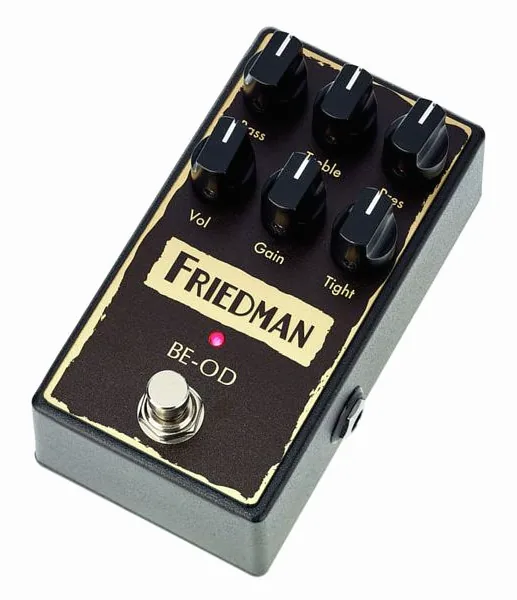
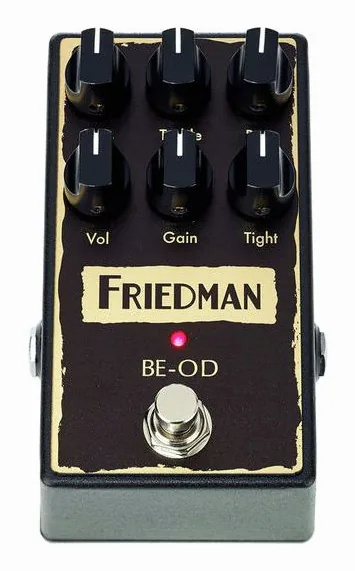
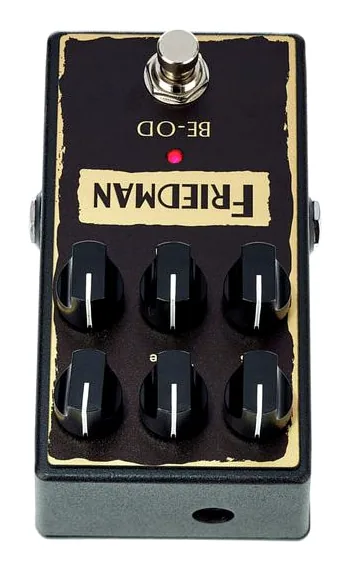
- Controls: Volume, Gain, Tight, Bass, Treble, Presence
- Power: 9V DC via standard coaxial connector (center negative, no battery operation, power supply not included)
- Construction: Made in the USA
- Special features: Internal trim pot for global gain reduction
Tone and Playability: Amp-Like in Every Way
What sets the BE-OD apart from typical overdrive pedals is its uncanny replication of a cranked, master-volume British tube amp, specifically, the kind of modded amplifiers made famous by late-1970s through 1990s hard rock icons. The BE-OD does not sound like a Tube Screamer or transparent boost: at even modest gain settings, it delivers rich, punchy drive with heavy saturation and a strong attack, directly reminiscent of JCM800 and hot-rodded JMP tones. The feel is raw, responsive, and touch-sensitive; palm-muted riffs have weight and clarity, while open chords remain articulate at all but the most extreme settings.
The immense gain range is both a selling point and, for some, a potential drawback. Even with Gain set low, there is plenty of drive on tap, enough for classic crunch, '80s rhythm parts, or searing leads. The sound stays defined and never gets muddy, largely thanks to the Tight and Presence controls, which sculpt the bass and top end after the main gain stages. The pedal excels at both classic rock and more contemporary hard rock or metal, provided you aren't after scooped midrange or ultra-compressed modern metal voicing.
Control Layout and Functionality
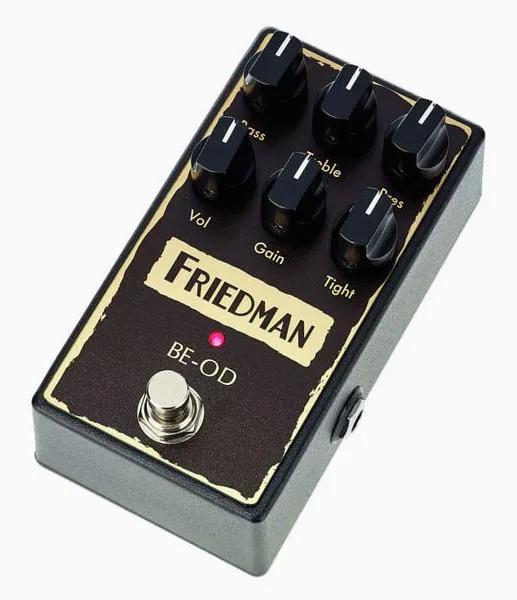
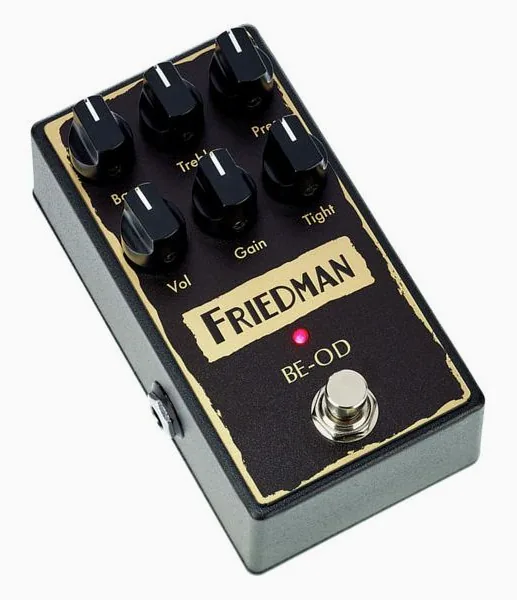
The BE-OD's six knob layout breaks out as follows:
- Volume: Sets output level; unity with most amps is around noon
- Gain: Sweeps from light crunch to heavy saturation; keeps tones tight and detailed throughout
- Bass/Treble: Traditional shelving EQ for low and high frequencies
- Presence: Adds or reduces upper treble for more or less bite, great for matching different amplifiers
- Tight: Adjusts low frequency tightness and punch with a pre-gain filter, letting you go from modern, dry chug to classic "looser" crunch
An internal trim pot lets you globally reduce the maximum gain, transforming the pedal into a more moderate overdrive and making it easier to dial in edge-of-breakup or heavier blues settings, though few users seem to keep it set much below half due to the pedal's intended voice.
Sonic Adaptability and Amp Pairing
The BE-OD is engineered to "revoice" clean amplifiers, giving everything from a Fender combo to a vintage British channel a surging stack sound with harmonics and drive reminiscent of Friedman's boutique heads. Reviews report excellent results into clean tube amps (Fender Blues Deluxe, Vox AC30, etc.), with the pedal able to transform a flat clean platform into an amp-like hard rock source. Even open-backed combos and midrange cabinets get "big stack energy" with a few knob tweaks. Rigs with classic Celestion or Heritage series speakers tend to benefit from the pedal's full low end and open high frequencies.
Thanks to its touch-response, the BE-OD reacts well to different guitars, single coils yield percussive, "spanky" modern drive, while humbuckers excel for thick leads. The pedal is highly sensitive to guitar volume and picking dynamics, cleaning up well when rolling down the instrument's volume control or easing off the pick attack. For many users, this dynamic response is as close to a genuine tube amp as you will find in a stompbox.
Strengths: Where the BE-OD Excels
- Dynamic, "amp-in-a-box" response
- Massive gain range; highly flexible for hard rock, classic metal and lead tones
- Presence and Tight controls offer wide tonal sculpting options
- Articulate, open sound at all settings, chords retain detail even at high gain
- Works with all types of guitars and amps; from bedroom to stage levels
- Internal trim pot adds further customization for gain structure
Weaknesses and Considerations
- No separate mid control, users may find the midrange too "scooped" for some live mixes
- High noise floor at extreme gain settings, especially on poor power supplies
- No battery operation; 9V DC supply required
- The amount of gain can be "too much" for players seeking low-gain blues or mild breakup
- Somewhat high low end, may need external EQ for mixing or tighter styles
Real World Feedback: What Musicians Say
Across hundreds of user reviews and field reports, certain qualities stand out. This pedal is repeatedly praised for nailing the classic overdriven amplifier experience, and for its "stack in a box" realism. Players with extensive boutique pedal experience regularly rank the BE-OD above most other drive units for hard rock and high-gain use, though some wish for an external mid EQ or slightly less bass in certain contexts. The internal gain trim is a standout feature for the tweaker crowd. Noise is present at high gain, but on par with vintage cranked tube amps, a tradeoff for such saturation. The construction is solid, though some wish the enclosure was thicker or that a power supply were included at this price point.
On the negative side, a handful of players report that the pedal can sound harsh or "buzzy" if paired poorly with bright amps or set with treble/presence too high. Fine adjustment is rewarded, and the pedal responds best in front of a truly clean amplifier. For those after a modern, compressed, scooped-metal voice, there are other dedicated distortion pedals better suited.
Conclusion: Who Should Buy the BE-OD?
The Friedman BE-OD delivers on its promise: fierce, articulate amp-style overdrive in a pedal format, with all the saturation you could ask for and broad adjustment across the drive spectrum. If you seek authentic British stack tones in a compact, gig-ready box, and your style leans toward rock, hard rock, or classic metal, this pedal is a top-tier pick. Players looking for subtle or edge-of-breakup OD sounds, or who require fine mid sculpting, may want to supplement with external EQ or consider alternatives. For its intended audience, though, the BE-OD is difficult to beat, rich, inspiring, and flexible enough for both stage and studio.
Shipping and duties
The retailer ships from its warehouse in Germany. Prices are shown in US dollars and do not include import duties. Orders under roughly $800 usually clear US customs without duty; above that, a duty of a few percent may be collected on delivery. 30-day money-back and a 3-year warranty apply.
Scores by area
Where it shines, where it stumbles
What convinced me
- Authentic British-style high-gain overdrive that convincingly captures classic amplifier dynamics
- Highly responsive controls, especially Presence and Tight, allowing fine-tuning for any amplifier
- Exceptional articulation, note definition, and dynamic response even at high gain
- Wide gain range, from gritty crunch to saturated modern lead tones
- Robust build quality and compact form factor
What bugged me
- No dedicated mid frequency control, requiring external solutions for some setups
- Higher inherent noise floor compared to low-gain overdrives
- Gain at minimum is still much higher than traditional overdrives, limiting low-gain and bluesy versatility
- Does not support battery power, power supply not included
- Feels less robust than some competitors given the price
Is it the right one for you?
Good pick if
Ideal for guitarists who want true British-voiced high-gain drive from their pedalboard, including modern and vintage rock, hard rock, and players seeking amp-like dynamics and tight articulation. Great for those using clean amps who want to recreate classic amplifier crunch without lugging a head or combo.Look elsewhere if
Not recommended for those seeking mild overdrive, transparent boosts, or traditional blues tones, as even its lowest settings deliver substantial saturation. Also less suitable for players sensitive to background noise or who require onboard control of mids without external EQ.Suggested level: Intermediate
Specifications
- Overdrive
- Yes
- Distortion
- No
- Fuzz
- No
- Metal
- No
What other players say
Customer reviews consistently praise the BE-OD for its authentic amp-like response, substantial gain range, and the ability to transform any clean amp into a powerful British drive machine. Many highlight its responsiveness to playing dynamics, the effectiveness of its unique controls, and its clear note definition even under heavy saturation. Some critique the noise floor at high gain and the lack of a mids control as minor drawbacks, but most agree it's a top-tier overdrive/distortion pedal that outshines much of the competition for modern and classic rock applications.
This is literally a Friedman BE-100 head under my feet.
Even at high gain the note clarity remains intact, when you play chords you can hear every single note.
The gain range is enormous; from classic rhythm crunch to searing modern lead, all amp-like.
Up close
Watch and listen
Before you decide
Questions players ask
Does the BE-OD work well with clean amplifier channels or only with amps that already distort?
The BE-OD is optimized for use with clean channels, turning any neutral amp into a convincing British high-gain setup. Many users prefer it as a primary drive source into clean platforms.
How much background noise should I expect, and can it be reduced?
There is a higher noise floor compared to low-gain pedals, especially at high gain settings. Using high-quality isolated power supplies and adjusting the internal gain trim can help lower noise.
Can I achieve low-gain blues or boost tones with the BE-OD?
Even at minimum settings, the pedal delivers substantial gain. For true low-gain blues or clean boosting, another pedal may be preferable, but controlled settings and external EQ can yield milder distortion.
How important are the Presence and Tight controls, and what do they do?
Presence affects brightness and upper harmonics, while Tight shapes the bass response before distortion. Both are crucial for matching your rig and preventing muddiness at high gain.
What genres and playing styles does the BE-OD suit best?
It's designed primarily for classic and modern rock, hard rock, and some metal. Players seeking dynamic, articulate lead and rhythm tones will especially benefit, but traditional blues or super-low-gain uses are less ideal.
The last word from the bench
The Friedman BE-OD stands out as one of the most authentic British high-gain overdrive pedals available, with a flexible gain structure, precise EQ controls, and signature Presence and Tight options. Its dynamic response and clarity at high gain levels rival boutique amplifiers, making it an excellent centerpiece for any serious pedalboard. However, the lack of a mids control and tendency for higher background noise are real trade-offs. Overall, this is a go-to pedal for those seeking modern and classic rock tones without compromise.
Hanging next to it
Friedman BE-OD
Today's price and delivery time are shown at the retailer.
 Guitar Gear Reviews