Fender 65 Deluxe Reverb
The Fender 65 Deluxe Reverb delivers classic tube-driven cleans and signature reverb in a portable combo, excelling as both a studio and gigging amp for discerning players.
★★★★★ 4.7/5 · 46 buyer reviews · 8 min read · updated 2026-10-07 · Tested by Cal Whitaker
Fender 65 Deluxe Reverb: Classic Tube Amp Character in a Modern Context
The Fender 65 Deluxe Reverb has achieved near-legendary status since its reissue debut in 2000, and with good reason. This all-tube combo amplifier offers 22 watts of RMS power from a pair of 6V6 power tubes, four 12AX7 and two 12AT7 preamp tubes, a real analog spring reverb, and a 12-inch Jensen C12K speaker, all packed into a sturdy, compact enclosure weighing just under 20 kg. Priced at $1850, it is squarely aimed at guitarists who want the authentic sound and feel of a classic 1960s Fender circuit without the unpredictable reliability and price tag of true vintage models.
Build, Controls, and Connectivity
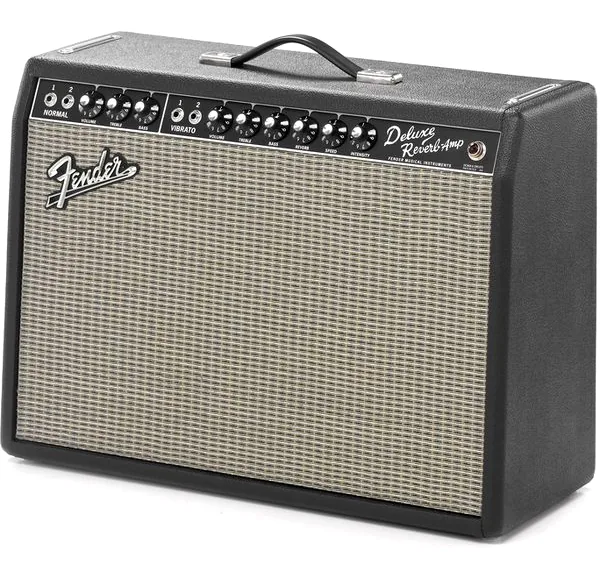
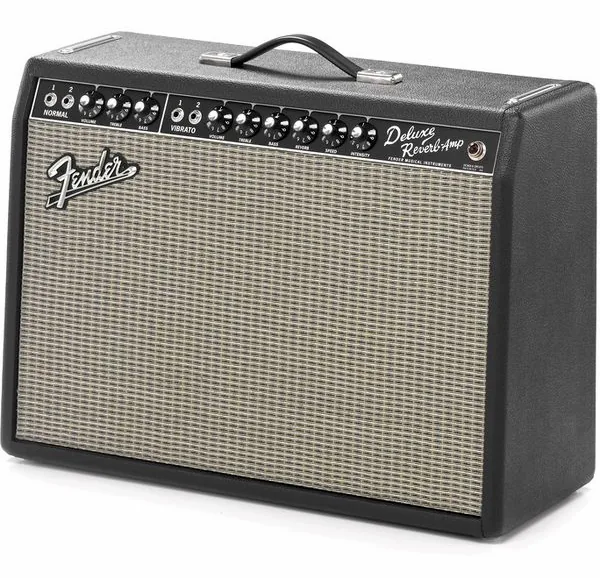
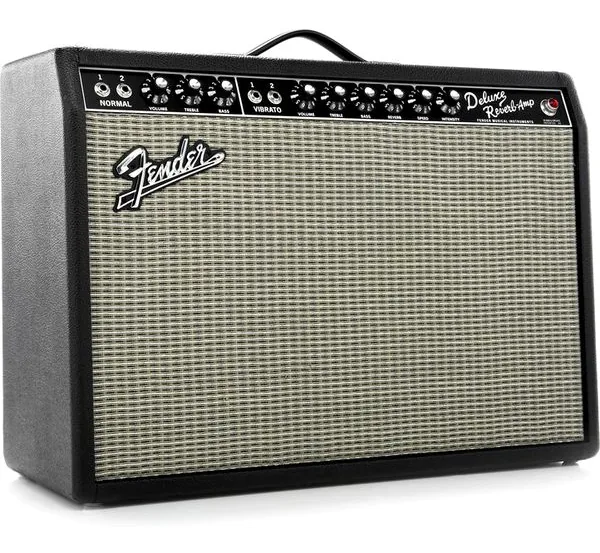
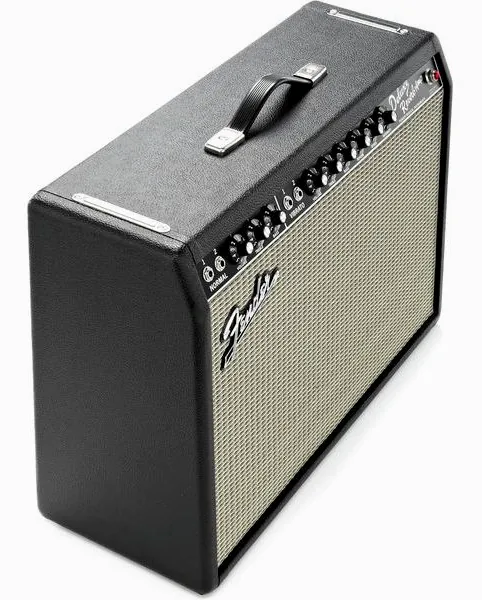
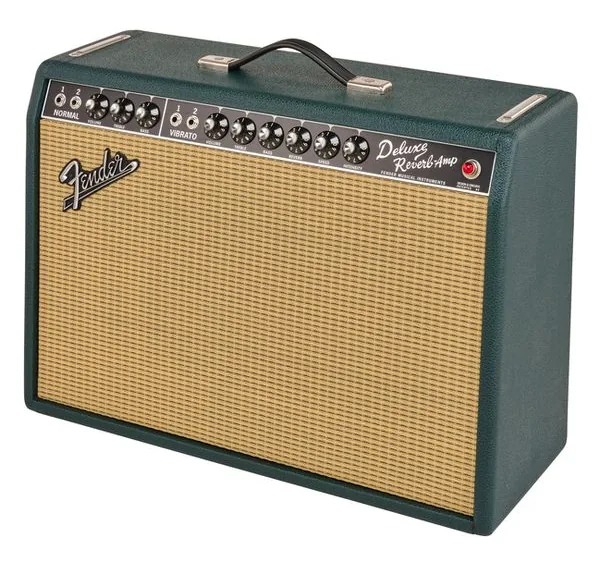
True to its roots, the 65 Deluxe Reverb retains a straightforward, no-gimmicks design. The amp features two discrete channels (Normal and the so-called Vibrato), each with its own pair of inputs. The control complement is deliberately minimal: each channel gets its own volume, treble, and bass knobs, while the Vibrato channel adds controls for reverb, vibrato speed, and vibrato intensity.
There are no modern features like an effects loop, direct out, headphone jack, or MIDI interface. There is a dedicated jack for the included two-button footswitch (to engage reverb and vibrato), as well as an external speaker output, but the amp notably lacks line-level outputs, which some studio-focused players may miss. The power and standby switches are mounted on the rear, in keeping with the original layout. A rugged cover is included for transport.
Sound: Iconic Fender Sparkle and Headroom
Plugging into the 65 Deluxe Reverb is immediately rewarding for anyone after the classic Fender "black panel" sound. With its 22-watt tube output, the amp stays clean up to about volume 3, 4, depending on the guitar and pickups. Past this point, natural tube compression kicks in, and by volume 5 and above, a gradual, harmonically-rich overdrive emerges, though the amp's true personality always leans toward pristine, bell-like cleans and fast, percussive attack. Lower output single-coil pickups (like those found in a Stratocaster or Jaguar) highlight the amp's shimmering top end, while humbuckers (as in a Les Paul or ES-335) yield full, rounded lows with clear articulation in the highs.
The spring reverb is a standout feature, delivering the lush, immersive character that made Fender amps a staple of countless classic records. Even with the control at modest levels (2, 3), the effect remains present and musical. However, some users note that the reverb gets overwhelming past 5, and sensitive players may wish for finer control over dwell and blend. The tube-driven vibrato (actually a tremolo effect) is warm, natural, and distinctly vintage, though certain units can exhibit audible ticking or slight noise at idle, a trade-off of staying true to the original circuit.
Pedal Platform and Flexibility
One of this amp's major strengths is its compatibility with pedals. The Normal channel (without additional circuitry in the path) is famed for taking overdrive, boost, wah, and delay effects exceptionally well, making the 65 Deluxe Reverb a foundation for any pedal-based setup. However, some users report that the Jensen loudspeaker and bright voicing make the amp slightly picky with distortion or fuzz pedals, sometimes yielding a sharp edge that requires careful pedal and EQ selection. Experimenting with equalization or swapping out the loudspeaker for an aftermarket alternative (e.g., a Celestion Alnico Blue) can yield smoother results for players who find the stock configuration too bright or "fizzy."
Unlike modern multi-channel amps, the 65 Deluxe Reverb does not offer a dedicated overdrive channel, master volume, or effects loop. Distortion is achieved organically by increasing the channel volume, and clean headroom is best preserved by keeping volume around 3, 4. In louder environments or with a band, miking the amp is common practice for retaining clarity at manageable stage volumes. At home, players often use attenuators or dummy loads in order to push the tubes harder without driving neighbors mad, a testament to how loud even a 22-watt tube amp can get.
Applications: Studio, Stage, and Home Use
- Studio: Thanks to its dynamic response and immediately familiar tone, the 65 Deluxe Reverb is a mainstay for recording, especially for classic pop, rock, blues, and country. The amp's sparkling cleans and natural compression fit beautifully under microphones, and a well-placed dynamic or ribbon mic will capture the full spectrum with little fuss.
- Stage: For small to medium gigs, the amp supplies plenty of volume on its own; in larger settings, it's ideally used with a microphone. Unlike heavy 100-watt "stack" amps, it remains easily portable at under 20 kg and with manageable dimensions.
- Home Practice: The amp can be surprisingly versatile at bedroom levels (especially with input 2 engaged), but note that to reach its signature gritty tube breakup, the volume must be pushed well beyond what is comfortable for most apartments. For true home use, an attenuator is strongly recommended.
Issues and Quality Control
While Fender's build quality is generally solid, some users report sporadic minor issues: noisy vibrato, popping relays, or rare reverb feedback at high settings. Though such quirks are common to vintage tube circuits and mostly resolved via warranty or service, the expectation at this price point is for stricter quality control. The amp does not include a pilot light on the footswitch, which some find inconvenient for confirming effect status on dimly lit stages.
Verdict: A Modern Standard with Vintage Integrity
The Fender 65 Deluxe Reverb offers a near-perfect reproduction of classic 1960s Fender sound in a reliable, gig- and studio-ready package. Its compact size, manageable weight, legendary clean tones, and iconic reverb/tremolo effects make it a reference point in the world of tube combos. Its limitations, absence of modern features like a direct out, effects loop, or master volume, are not accidental but reflect a design philosophy rooted in tradition. For players seeking modern versatility for high-gain, multi-genre, or home-only use (without attenuation), other amps may be better suited. But for anyone chasing authentic Fender clarity and dynamic response, this is as close as it gets without buying vintage. Highly recommended for blues, classic rock, country, soul, jazz, and as a pedal platform for nuanced players.
Shipping and duties
The retailer ships from its warehouse in Germany. Prices are shown in US dollars and do not include import duties. Orders under roughly $800 usually clear US customs without duty; above that, a duty of a few percent may be collected on delivery. 30-day money-back and a 3-year warranty apply.
Scores by area
Where it shines, where it stumbles
What convinced me
- Unmatched, classic clean sound with sparkling clarity and dynamic response
- Genuine tube spring reverb and tube vibrato with deep character
- Works exceptionally well with both single-coil and humbucker pickups
- Strong pedal platform for overdrive, delay, and modulation effects
- Versatile for studio, home, and live use due to manageable size and weight
What bugged me
- No effect loop, no recording output, and lacks a master volume control
- Can be too loud for home use without an attenuator; difficult to achieve tube breakup at low volumes
- Quality control issues reported (background noise, defective units)
- Key features like mid control and indicator lights on the footswitch are missing
- Jensen speaker and bright cap can sound harsh with certain overdrive/distortion pedals
Is it the right one for you?
Good pick if
Ideal for guitarists seeking legendary American clean tones, as well as session musicians and performers who need classic spring reverb and pedal-friendly dynamics. Works especially well for players focused on jazz, blues, country, rock, or studio recording, and those who value sonic authenticity over features.Look elsewhere if
Not suited for those requiring modern conveniences like master volume, effects loop, or versatile distortion channels. Players living in apartments or needing bedroom-level tube saturation will find its loudness challenging without extra gear. Heavy metal and high-gain enthusiasts will likely be disappointed.Suggested level: Intermediate
Specifications
- Power rating in w
- 22 W
- Speaker size
- 1x 12"
- Power amp tubes
- 6V6
- Channels
- 2
- Reverb
- Yes
- External fx loop
- No
- Recording output
- No
- Midi interface
- No
- Connection for external speaker
- No
- Headphone connection
- No
- Footswitch connection
- Yes
- Incl. footswitch
- Yes
- Weight in kg
- 19,1 kg
What other players say
Most customers praise the Fender 65 Deluxe Reverb for its stunning clean tones, revered spring reverb, and dynamic touch response. Users highlight its ability to work seamlessly with both single-coil and humbucker pickups, and its reputation as a superb pedal platform. The combo's manageable weight and size are appreciated, making it practical for both live and studio use. Criticism centers mainly on the lack of modern features (effect loop, master volume), occasional quality control issues, and the amp's volume being unsuitable for home use without an attenuator. Despite these, users consider it a benchmark for classic tube amp sound, with reliability and performance that justify the investment.
This amp with its manageable 22 W power gives shimmering, sparkling beautiful cleans even at bedroom level.
With a little tube rolling and maybe speaker change this does sound wonderful! Excellent amp, chimey Fender cleans with plenty of headroom.
The 'normal' channel seems to play nicely with pedal-fx such as overdrive, wah, etc. just run 'treble' and 'bass' at 6-7, sometimes there is too much high-end.
Up close
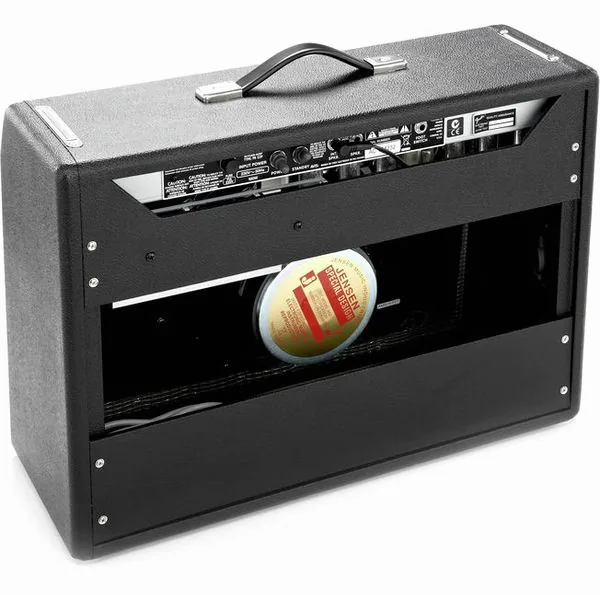
Watch and listen
Before you decide
Questions players ask
Is the Fender 65 Deluxe Reverb suitable for home practice?
It can be used at home, but it gets loud quickly. Achieving natural tube saturation typically requires higher volumes, so an attenuator or dummy load is recommended to maintain neighbor-friendly levels.
Does the amp handle pedals well?
Yes, it is known as an excellent pedal platform, especially for overdrive, delay, and modulation effects. However, some users report harshness with certain overdrive/distortion units, likely due to the bright cap and stock speaker.
Does it include modern features like an effect loop or direct out?
No, the design is intentionally minimalist to preserve vintage authenticity. It doesn't provide an effects loop, recording output, or master volume control.
Can the amp deliver high-gain or heavy distortion tones?
The amp excels at clean and mildly overdriven sounds. Heavy distortion isn't its forte; for those tones, external pedals or a different amp may be better suited.
How reliable is the build quality?
The cabinet and overall construction are generally robust, but there are recurring reports of quality control problems such as noise, faulty vibrato, and, in rare cases, premature tube or fuse failures.
The last word from the bench
The Fender 65 Deluxe Reverb remains an industry standard for its legendary clean tone, authentic spring reverb, and responsive dynamics. While it boasts exceptional versatility and is a favorite for both home and stage, its lack of modern features, occasional quality issues, and loudness limitations for home use might deter some users. If you demand pure, vintage-inspired tone and can accept its minimalism, it is hard to beat. Players seeking high-gain or extensive connectivity should look elsewhere.
Hanging next to it
Fender 65 Deluxe Reverb
Today's price and delivery time are shown at the retailer.
 Guitar Gear Reviews