Fairfield Circuitry Roger That
A bold, experimental pedal for artists seeking unique noise, fuzz, and distortion textures.
★★★★★ 5/5 · 6 buyer reviews · 6 min read · updated 2026-10-07 · Tested by Cal Whitaker
Overview: The Roger That Pedal As a Sonic Playground
The Roger That from Fairfield Circuitry brings together distortion, fuzz, and unpredictable noise in one compact package. Released in January 2023 and made in Canada, it's marketed not just as a conventional effects pedal, but as a tool for adventurous guitarists, synth players, and sonic experimenters. With a price set at $359, the Roger That pledges a niche but engaging experience for those who want to venture beyond classic and transparent drives.
Build and Connections
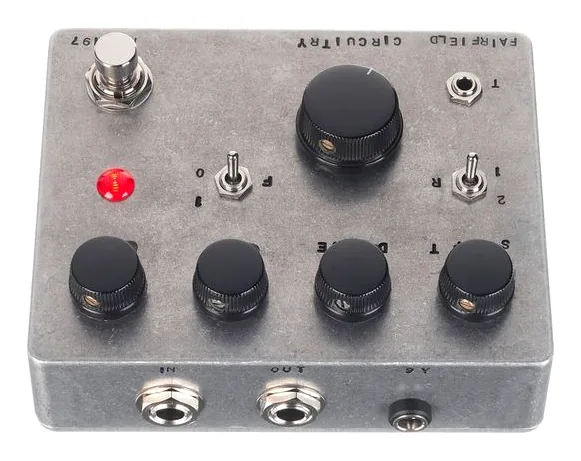
The pedal measures 119 x 97 x 48 mm, striking a balance between footprint and ease of use on most pedalboards. Its chassis is rugged, feeling solidly constructed and ready to handle the abuses of stage or studio life. Input and output are standard quarter-inch jacks, while tuning can be controlled externally via a 1/8 inch control voltage (CV) input, an unusual addition for an effects pedal. Power is supplied via a barrel connector (5.5 x 2.1 mm, center negative) at 9, 9.6 volts DC. Current draw is modest at 30 mA. There is no battery option, only external power supply, and the unit is true bypass when disengaged.
Controls and Interface
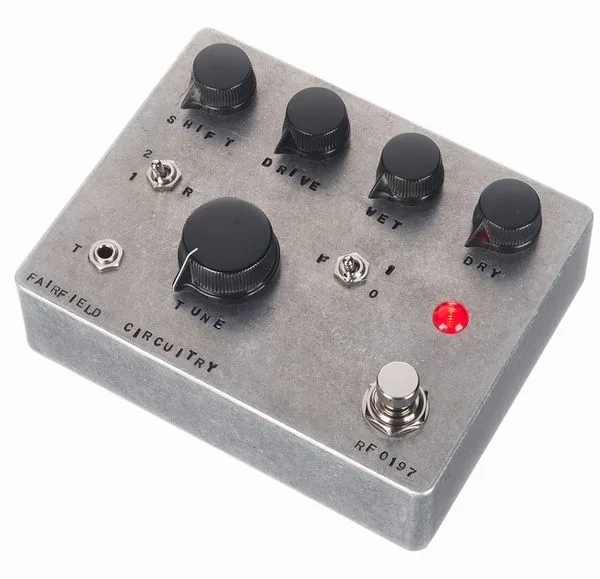
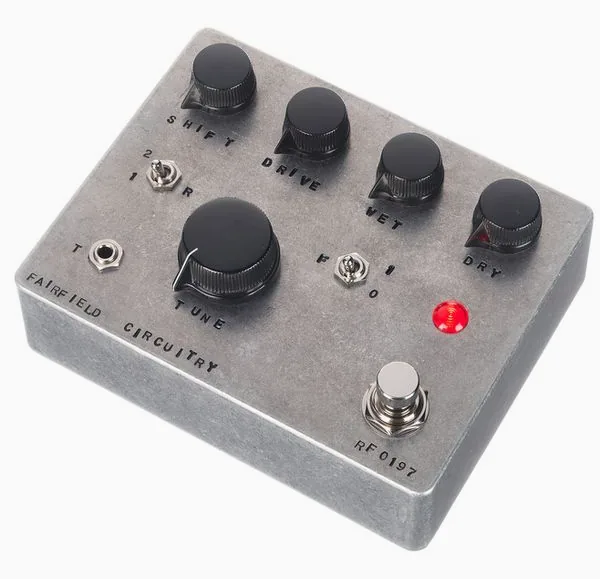
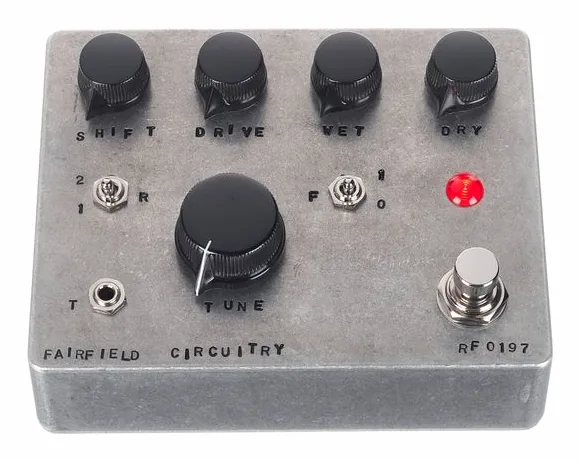
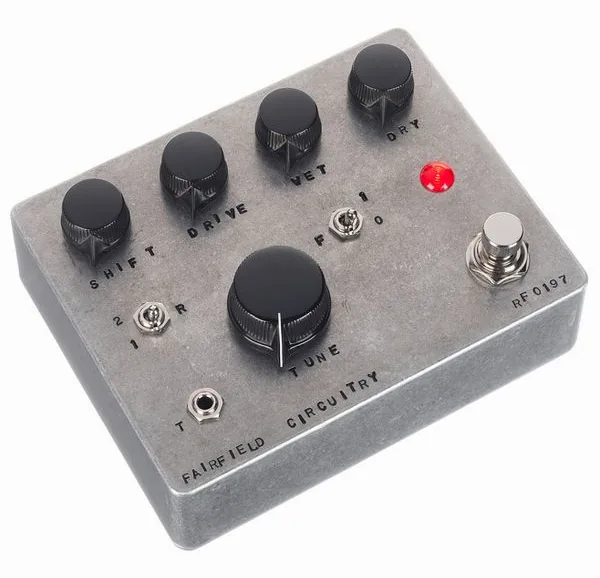
Control labels are minimal: Shift, Drive, Wet, Dry, and Tune. Two mini-switches expand the pedal's flexibility, one (labeled R) switches the tuning control between a normal and an extended range; the other (labeled F) applies or bypasses a voice filter to the wet signal. An LED indicates when the effect is active, and a true bypass mechanical footswitch rounds out the control set.
Feedback consistently highlights the absence of position markers or recall memory on the knobs. For some, this means documenting favorite settings with a photo is essential, especially if you rely on specific sounds during a show or session.
Sound and Tonal Range
Fairfield Circuitry characterizes the Roger That as living between distortion, fuzz, and the crackling static of an old transistor radio. This is not marketing hyperbole. In practice, the pedal veers from subtle harmonic enhancement and gently broken textures to completely unhinged, wild, radio-interference chaos. The "Tune" knob is central: sweeping through it often feels like searching for a station across a battered radio dial, with abrupt entries into noisy zones, harmonic surges, and percussive digital-sounding artifacts. The companion "Range" switch allows the Tune control to cover both a restrained, musical sweep and a far wider, more volatile arc.
- Subtle Settings: With "Drive" at midday or below and the "Wet/Dry" blend tailored to taste, the Roger That can function as a colored boost or mild distortion, adding brittle edges and sporadic sizzle. Subtle tuning shifts can tease out ghost notes and transient-enhancing oddities.
- Extreme Processing: Pushing "Drive" or engaging aggressive Tune ranges transforms everything into a noisy, broken signal, a thick, sawtoothy fuzz loaded with high-frequency artifacts and burbling radio noise. Switch in the voice filter for a distinctive band-limited, lo-fi presence reminiscent of megaphone vocals or chopped AM broadcasts.
- Expression and Interactivity: The pedal responds dramatically to instrument dynamics, playing style, and even cable swaps. Slight adjustments create massive changes in response, and it can jump from smooth overdrive to full-on sonic meltdown in moments.
This sensitivity is both the Roger That's greatest asset and its source of chaos. It invites improvisation and rewards hands-on exploration, but recalling a specific setting can be difficult without documentation.
Use Cases: Inspiration and Limitations
Players who thrive on noise, abstract soundscapes, or unpredictable elements in their signal chain will find the Roger That enormously rewarding. It is especially effective for:
- Synth or modular users wanting CV control over filter-like responses
- Experimental guitarists incorporating drones, sputtering swells, or abrupt frequency shifts
- Producers after creative reamping or outboard processing for non-traditional textures
The pedal is much less suited for anyone looking for a transparent overdrive, precise recall, or traditional modern metal tones. There is no battery operation, and the absence of any preset or digital memory reinforces the pedal's anti-conformist philosophy.
Field Experience and Reliability
User reports uniformly praise the build, citing robust construction and reliable performance. Many mention that the pedal transforms sound design into a game, once the basic control layout is understood, it rapidly becomes an intuitive tool for hours of sonic exploration. However, the lack of labeled markers and the impossibility of saving settings are recurring themes, so it pays to take notes or snap photos for live use.
Conclusion: For Noise Seekers, Not Traditionalists
The Fairfield Circuitry Roger That is an unapologetic tool for the curious and open-minded. Its real strength is not just in dirt and fuzz, but in its extreme sensitivity and level of creative interactivity. It won't suit every setup, but for players who treat effects pedals as instruments in their own right, it's a singular and powerful choice. The price, while non-trivial, reflects the unique approach and demanding build quality. If you are after new paths for your sound, the Roger That is both challenge and invitation.
Shipping and duties
The retailer ships from its warehouse in Germany. Prices are shown in US dollars and do not include import duties. Orders under roughly $800 usually clear US customs without duty; above that, a duty of a few percent may be collected on delivery. 30-day money-back and a 3-year warranty apply.
Scores by area
Where it shines, where it stumbles
What convinced me
- Extremely wide range of sounds, from subtle grit to intense noise and fuzz textures
- Highly interactive and creative controls encourage exploration and experimentation
- Robust construction with quality components, made in Canada
- True bypass helps maintain signal integrity
- Flexible enough for both subtle tone shaping and radical sonic manipulation
What bugged me
- No labeling or memory system for control positions makes recalling settings challenging
- No battery operation, requires external power supply
- May be overwhelming or chaotic for users seeking traditional effects
- Lacks an antenna for radio-like aesthetics (user humor)
- High price may prohibit owning multiples
Is it the right one for you?
Good pick if
Perfect for experimental musicians, sound designers, and those who thrive on manipulating noise and unconventional textures. Highly recommended for players looking for a broad palette of fuzz, distortion, and radio-inspired character, as well as improvisers eager to push boundaries. Creative studio artists will find its exploration potential rewarding.Look elsewhere if
Not suitable for players desiring traditional distortion or subtle, easily recalled effects. If you are uncomfortable with hands-on tweaking, unpredictable results, or need simple operation in live settings, this pedal may be a challenge.Suggested level: Intermediate
Specifications
- Overdrive
- No
- Distortion
- Yes
- Fuzz
- Yes
- Metal
- No
What other players say
Customers consistently praise the pedal for its exceptional flexibility, creative sound potential, and robust build quality. Many highlight its ability to deliver everything from subtle coloration to wild, inventive noise effects. Some users note the challenge of recalling complex settings, but agree the overall musicality and fun, hands-on experience outweigh this minor inconvenience.
A range of quite unusual sound effects, from gentle crackle to weird noise and fuzz effects.
Not easy to tame and reproduce settings for different effect options, but definitely a nice toy for sound tinkerers and an invitation to be creative.
If you like noise, this is the pedal for you. Idiosyncratic and full of character. Can be used as a bonkers distortion or even as a standalone drone/noise synth.
Up close
Watch and listen
Before you decide
Questions players ask
Can I use the Roger That for standard distortion or overdrive sounds?
While it excels at unique and experimental tones, the Roger That can also cover basic distortion and fuzz, but traditional overdrive tones are not its primary strength.
Does the pedal have any presets or memory for saving my favorite sounds?
No, the pedal does not have memory or preset functionality. It's highly manual, so capturing favorite settings requires taking a photo or making notes.
Is the pedal suitable for live performance?
It can be used live, but recalling exact sounds quickly is difficult due to unmarked controls. It's ideal for improvisational or experimental contexts.
Can the Roger That run on batteries?
No, it must be powered by a standard 9 to 9.6V DC center-negative adapter (not included).
Does it work well with both guitars and synthesizers?
Yes, its versatile input design and wide sonic palette make it a great option for both electric guitars and synths.
The last word from the bench
The Fairfield Circuitry Roger That stands out as a creative playground for sound designers and experimental musicians. Its unique blend of distortion, fuzz, and radio-like noise opens up new avenues for sonic exploration. The hands-on, interactive controls allow for both wild and subtle effects, though the lack of setting memory may challenge live performers. It's a truly original piece that rewards those willing to spend time exploring its possibilities.
Hanging next to it
Fairfield Circuitry Roger That
Today's price and delivery time are shown at the retailer.
 Guitar Gear Reviews