Fairfield Circuitry Meet Maude
The Fairfield Circuitry Meet Maude offers a distinct, lush analog delay experience with standout character for those seeking more than standard echo.
★★★★★ 4.9/5 · 6 buyer reviews · 7 min read · updated 2026-10-06 · Tested by Cal Whitaker
Fairfield Circuitry Meet Maude: An Analog Delay With a Vintage Soul
The Fairfield Circuitry Meet Maude stands apart in the analog delay pedal market by mixing classic tape-echo character with modern flexibility. Made in Quebec, Canada, the pedal targets musicians looking for a blend of warmth, unpredictability, and robust engineering. Priced at $389, it sits at the higher end of the analog delay spectrum. What exactly do you get for your money, and does the pedal justify its cult reputation? Here's how the features, sound, and day-to-day usability stack up after extensive field feedback and hands-on use.
Construction, Operation, and Controls
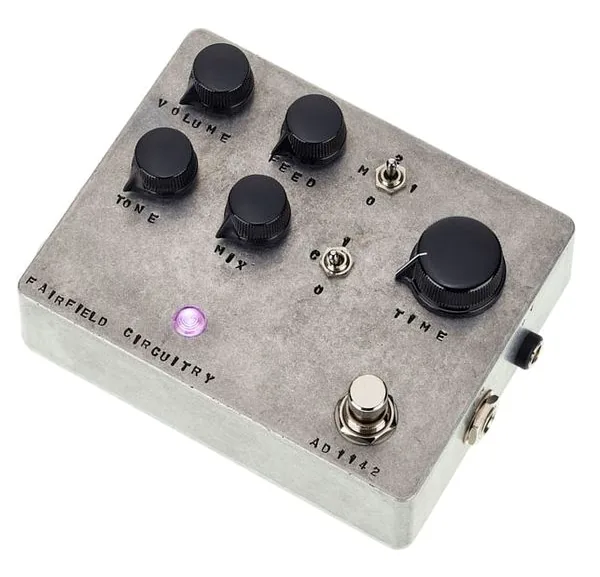
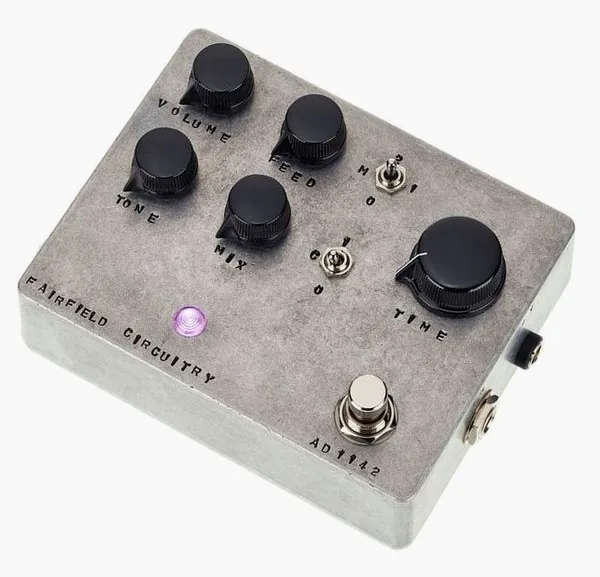
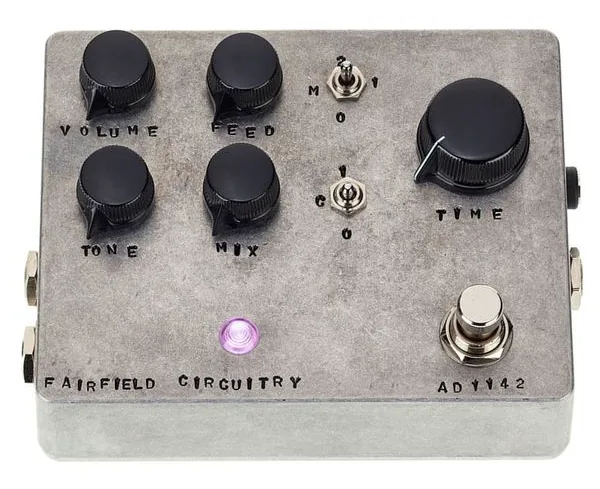
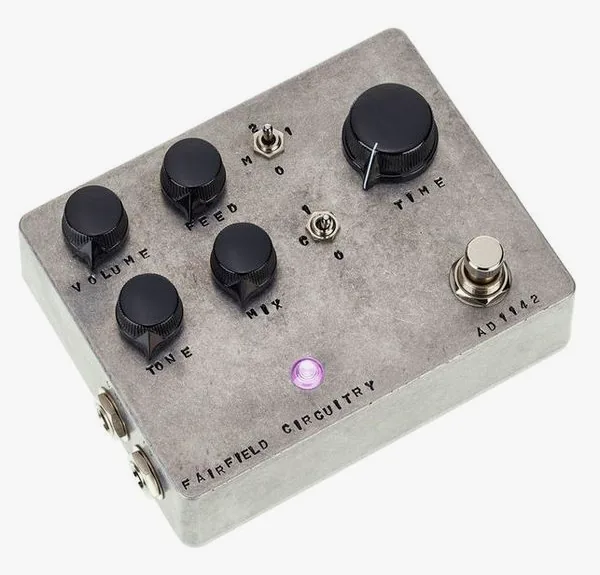
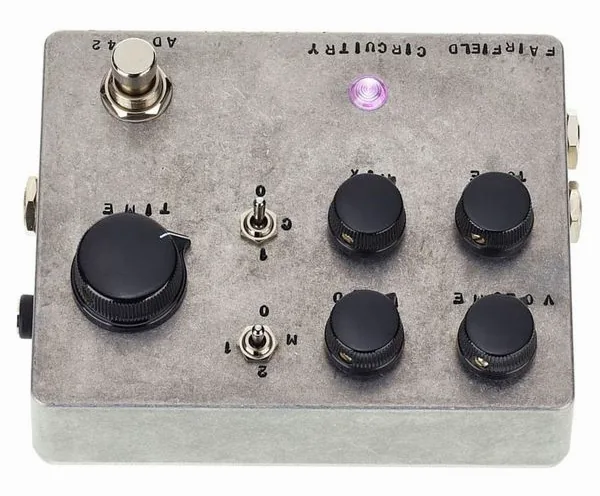
Physically, Meet Maude feels exceptionally solid for its size. At 361 grams and measuring 98 by 118 by 52 millimeters, it's space-efficient while giving the impression of a durable, professionally-built device. The finish is understated with a functional, almost industrial aesthetic, nothing flashy, designed for years of heavy use on crowded pedalboards.
The pedal requires a standard nine-volt center-negative supply and draws 60 milliamps, making power compatibility straightforward. However, there is no battery compartment and no power supply included in the box, so plan accordingly.
On the top panel, you'll find:
- Volume (output level)
- Feedback (number and intensity of repeats)
- Tone/Mix (color and blend of wet/dry signals)
- Time (delay length, up to 500 milliseconds)
There's a dedicated switch for random modulation, Fairfield's nod to vintage tape warble and chorus artifacts, as well as a compression switch, which affects both the response and how the repeats degrade. True bypass switching and a bright status LED complete the basic interface.
Sound: Depth, Texture, and Artifacts
Meet Maude is not attempting to deliver pristine hi-fi delays. Instead, it proudly delivers a "dark, band-echo style" sound where repeats are intentionally colored, slightly muffled, and organically modulated. The delay tails can develop lush movement, blurring into animated sheets of sound, especially with modulation engaged. Users compare the tone to sought-after vintage units, describing the repeats as musical, warm, and full of character.
This pedal excels at creating ambient backgrounds, moody single-note echoes, and, with higher feedback, looping textures that steadily degrade and evolve. The edges are soft, with lower frequencies gently emphasized and the overall timbre skewing toward analog warmth.
- Random Modulation: This switch introduces unpredictable pitch changes, a chorus or flutter reminiscent of old tape machines. Some players love this for its cinematic, organic quality. Others find the effect too heavy-handed and wish for an intensity control, especially since even "subtle" settings can be prominent in a mix.
- Compression: The compression switch slightly tightens the dynamic range, bringing out the modulation flavor but also making the pedal saturate and distort more easily. Some users find this feature indispensable for voice or guitar, while others ignore it altogether, citing its subtle effect.
This unpredictability is part of the pedal's charm, but also makes fine-tuning tricky. Even small tweaks to feedback and tone can shift the balance radically, accelerating the decay into overdriven, self-oscillating territory. Several advanced users note that finding a "clean," low-saturation setting can be impossible, Meet Maude inherently likes to break up and color repeats.
Integration, Versatility, and Limitations
The Meet Maude adapts to a wide range of setups: it sits comfortably in the signal path after drives and before modulations, and works just as well on vocals or electronic instruments via its standard quarter-inch input and output. It's especially popular among users who want to avoid the generic digital delay sound; every repeat carries its own fingerprint, never perfectly identical.
In band mixes, the pedal cuts through with its slightly dark voicing, never sterile, never over-polished. This makes it as much a creative tool as a practical delay. It won't please those seeking modern, crystalline echoes, nor those who need complete control over modulation shapes and intensity. Tap tempo is absent, limiting precise rhythmic applications. The maximum half-second delay time suits slapback, short rhythmic echoes, and hazy ambient washes, but won't cover long, ambient drones or precise looping.
User experience runs hot and cold: many become devoted fans ("it's the only delay I use now, fits perfectly for adding depth and warmth"), while others find its response unpredictable and its controls too interactive, particularly for live tweaking. Near the edge of feedback and time settings, the sound can suddenly tip into howling self-oscillation, unusable for subtle, fast-paced changes onstage. For aggressive, experimental textures or studio atmospherics, though, these quirks become a creative playground.
Strengths, Weaknesses, and Value
- Strengths:
- Authentic, warm, vintage-inspired analog delay sound
- Unique random modulation switch for tape-like effects
- Exceptionally solid build and boutique-level finish
- Highly interactive controls for expressive soundcrafting
- Stands out in a mix, distinct, never generic
- Weaknesses:
- No tap tempo, external control, or battery option
- Controls interact in unpredictable, sometimes frustrating ways
- Modulation effect may feel excessive to some
- Saturation/distortion always present, sometimes overwhelming
- Expensive relative to simpler analog delays
Conclusion: For Who, and Why?
The Fairfield Circuitry Meet Maude isn't designed for everyone. It rewards those looking for personality and sonic depth rather than clinical repeatability, and thrives in setups where tactile control and rich coloration matter more than ultra-clean, tightly sync'd delays. If you prize analog warmth and unpredictability, and you're comfortable with a learning curve, Meet Maude earns its spot, and may become addictive. For collectors and tone chasers, or anyone seeking a distinctive, musical delay rather than a utilitarian tool, it's hard to beat. But if you need transparency, hands-off operation, or digital precision, keep looking elsewhere.
Shipping and duties
The retailer ships from its warehouse in Germany. Prices are shown in US dollars and do not include import duties. Orders under roughly $800 usually clear US customs without duty; above that, a duty of a few percent may be collected on delivery. 30-day money-back and a 3-year warranty apply.
Scores by area
Where it shines, where it stumbles
What convinced me
- Rich, dark analog sound with unique character
- Extremely robust and high-quality construction
- Expressive modulation and effective compression
- Integrates well in both guitar and vocal setups
- Exceptional for creative, ambient, and experimental textures
What bugged me
- Very interactive and tricky control set can be difficult to dial in
- Tends to distort or saturate quickly under many settings
- High price point for an analog delay
- No tap tempo or battery operation
- Random modulation may be too intense and can't be fine-tuned
Is it the right one for you?
Good pick if
Ideal for analog delay enthusiasts seeking a bold, unconventional echo effect and those interested in unique textures for guitar, voice, or experimental music. Perfect for sound designers and players who enjoy hands-on control and creative modulation.Look elsewhere if
Not for those who want a straightforward, ultra-clear delay or who expect transparent repeats similar to classic digital units. Those uncomfortable with complex parameter interactions or seeking an 'always-on' simple delay may be frustrated.Suggested level: Intermediate
Specifications
- Analog
- Yes
- Delay time
- 500 ms
- Tap feature
- No
- Battery operation
- No
- Psu included
- No
What other players say
Customers highlight Meet Maude's unique sonic character, noting its dark and musical delays with analog warmth. The build quality and originality are praised, but many report the controls can be confusing and that the effect can become over-saturated. The price and lack of tap tempo are discussed as drawbacks. Users are impressed by its creativity and character, but acknowledge it may not suit everyone, especially for an always-on, primary delay.
The controls are very interactive and it can be difficult to find a balanced setting.
All I need is Maude.
It's warm, you can boost the signal with it, you have what amounts to a tone control on it.
Up close
Watch and listen
Questions players ask
Does the Meet Maude work well as a main delay pedal?
It can work as a main delay for certain vintage and textured sounds, but many users find it too colored and saturated for everyday use. It's best for distinctive, creative, or layered setups.
How intuitive are the controls?
The controls are highly interactive, meaning small tweaks can have a big impact. Some players appreciate the flexibility while others find it frustrating to balance settings.
Is the modulation effect adjustable?
Modulation can be switched on or off, but its depth cannot be adjusted. Some users find it too pronounced at times.
Is this pedal suitable for use with instruments other than guitar?
Yes, it has been positively used with vocals and electronic instruments, thanks to its robust construction and unique voicing.
What kind of delay tones does Meet Maude excel at?
It shines at crafting dark, atmospheric, and tape-inspired soundscapes, with options for experimental or subtly colored repeats.
The last word from the bench
Meet Maude is a boutique analog delay with a bold and evocative sound, best suited to players with a taste for creatively crafted tones. The interactive controls and strong coloration may intimidate those wanting a straightforward, transparent delay. Its unique modulation and robust build set it apart in a crowded market, but it is certainly not for everyone. The price matches its personality: divisive but memorable.
Hanging next to it
Before you decide
Fairfield Circuitry Meet Maude
Today's price and delivery time are shown at the retailer. Affiliate link, your price does not change.
 Guitar Gear Reviews