Electro Harmonix Pico Atomic Cluster
The Electro Harmonix Pico Atomic Cluster delivers original spectral deconstruction with a clear focus on textural and glitch effects, though it's not for everyone.
★★★★★ 4.6/5 · 4 buyer reviews · 6 min read · updated 2026-10-07 · Tested by Cal Whitaker
Introduction: Pushing Boundaries with Spectral Decomposition
Among Electro Harmonix's 2025 offerings, the Pico Atomic Cluster stands out for its singular approach to guitar and synth effects. Built around a spectral decomposer circuit, this compact pedal does not rely on conventional distortion, pitch, or modulation. Instead, it breaks the incoming signal into its frequency components, reducing resolution and restructuring the result into rhythmic glitches, arpeggiated pulses, and pad-like textures. The result is a unit that leans hard into experimental, lo-fi territory, but only if you approach it with the right expectations and context.
Design and Interface: Learning the Pico Workflow
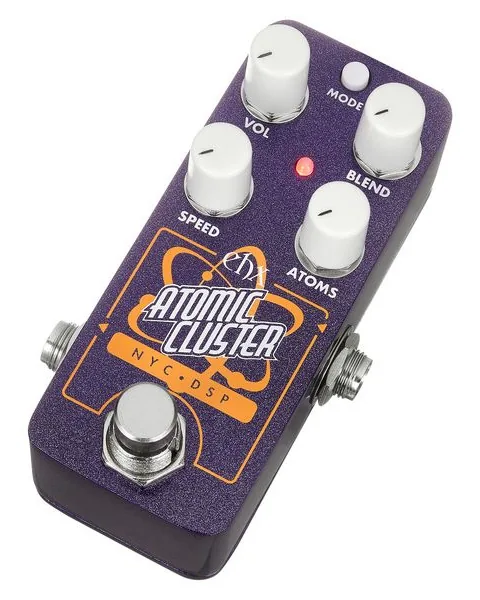
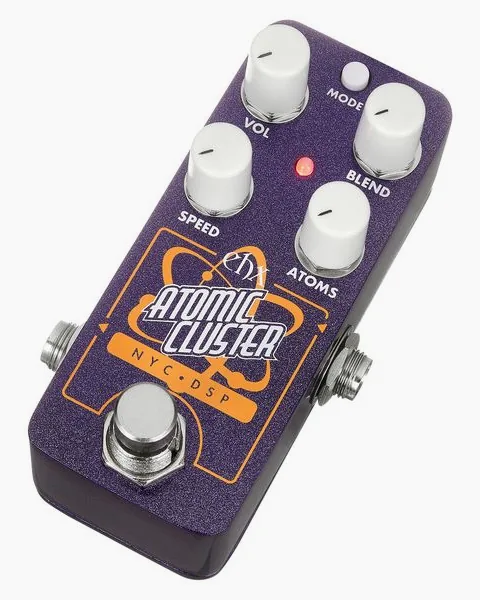
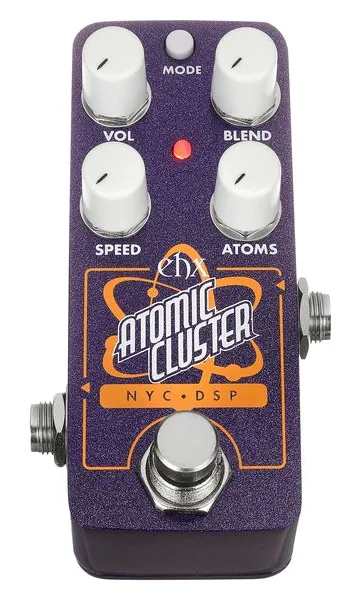
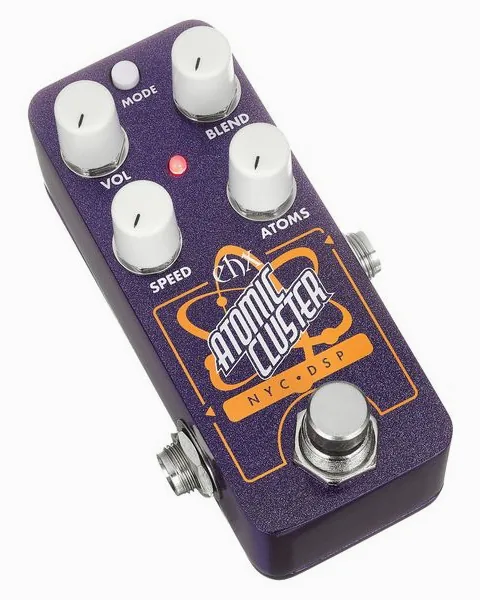
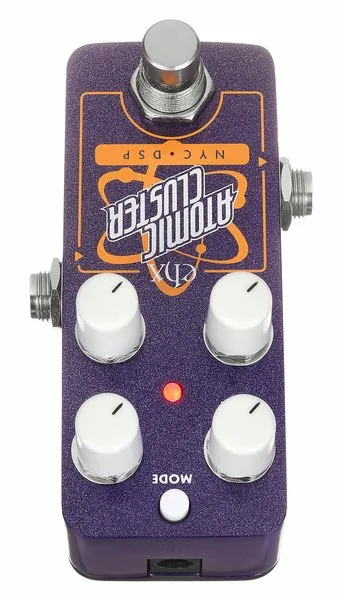
Housed in a tiny enclosure just 51 by 93 by 51 mm, and weighing in at 544 g, the Pico Atomic Cluster fits almost anywhere on your pedalboard. The trade-off for this small format is a stripped-back feature set. The top panel offers four rotary knobs:
- Volume: Output level
- Blend: Mixes dry and processed signal
- Speed: Affects the rate of the rhythmic or glitch effect
- Atoms: Alters the granularity or density of the processed fragments
An extra push button marked "Mode" selects between the available spectral effect types, while a central LED indicates when the effect is active. Input and output are standard quarter-inch jack. Power is supplied by a 9V DC adapter, which is included, a welcome touch at this price point.
Sound and Performance: Atomizing Your Tone
The true nature of the Pico Atomic Cluster unfolds once you feed it a clean or lightly driven electric guitar. The pedal's algorithm pulls apart the frequency content and then reassembles it. Instead of pitch-altering artifacts or digital harshness, you get a sequence of textural events: short pulses, bursts of partials, and bursts that float, sometimes in step with your playing, sometimes not.
Comments from early adopters point out that calling it "glitchy" only tells part of the story. The pedal certainly generates broken, rhythmic fragments, but the result is often less a chaotic stutter and more a tapestry of lo-fi textures. Playing simple single-note lines or open chords with the Blend turned up and Speed adjusted low, you can evoke atmospheric, almost granular synthesis effects. Pushing Speed up leads to choppier, more percussive results. The Atoms knob is particularly sensitive: past a certain threshold, the sound can become overly dense and cluttered, so the sweet spot tends to be somewhere in the middle for most musical applications.
What's Musical? Where It Shines, Where It Doesn't
Based on feedback and testing, the Pico Atomic Cluster excels when used with:
- Clean or slightly overdriven guitar tones. This allows its textures to breathe and avoids unnecessary saturation.
- Synthesizer signals. Owners of modulars or desktop synths found it equally inventive, especially with evolving pads or drones.
- Ambient and experimental soundscapes. Users have coaxed everything from mechanical chirps reminiscent of analog computers to wide, cinematic washes fit for atmospheric tracks.
Certain combinations (for example, heavy distortion into the Pico) tended to produce less usable results, with the pedal struggling to respond musically. One frequent request: a way to clock the rhythmic effects externally (for example by MIDI or tap tempo). Since the rhythm is set "by ear," matching the pedal's timing to a track or session, especially when recording, can prove tricky.
Limitations: What You Don't Get at This Price
The Pico Atomic Cluster does not allow for preset storage. Its ultra-compact enclosure means no room for secondary footswitches or external syncing (no MIDI or tap), and no secondary outputs or advanced routing. The interface is tactile and quick to tweak, but the tool is best for intuitive, hands-on sound design rather than precision recall of specific sounds. The effect can also overwhelm a mix if pushed too far, the Atoms control especially rewards subtle adjustments rather than extremes.
Build Quality and Value
As with most Electro Harmonix offerings, build quality is reliable, with solid-feeling switches and jacks. The included power supply is a nice inclusion for the modest $96 price. The feedback on longevity and ruggedness is positive, though the pedal's light weight and minimal hardware may not appeal to those who prefer tank-like stompboxes.
Conclusion: Specialized but Inspiring
The Electro Harmonix Pico Atomic Cluster carves out a niche for experimentalists, textural players, and those seeking "atomic" levels of manipulation in a truly miniature pedal. It is neither a traditional glitch pedal nor a one-trick lo-fi box. While not always controllable enough for precise tempo-based work and lacking preset or MIDI features, it can convert a simple phrase into something deeply unfamiliar and musical. Apply it sparingly and tweak with care; the reward is a set of interlocking, rhythmic, and granular textures that can breathe new life into clean instruments and synths. Not for everyone, but for the right sonic adventurer, it is a creative springboard.
Shipping and duties
The retailer ships from its warehouse in Germany. Prices are shown in US dollars and do not include import duties. Orders under roughly $800 usually clear US customs without duty; above that, a duty of a few percent may be collected on delivery. 30-day money-back and a 3-year warranty apply.
Scores by area
Where it shines, where it stumbles
What convinced me
- Highly original textural and lo-fi effects
- Compact design saves pedalboard space
- Capable of unique rhythmic and arpeggiated sounds
- Versatile on guitar and synthesizers
What bugged me
- No external clock or MIDI sync for tempo control
- Limited compatibility with heavy distortion
- No preset saving functionality
- Some users find the interface challenging for dialed-in results
Is it the right one for you?
Good pick if
Ideal for experimental guitarists, synth players, and ambient musicians who want to add granular, glitch, or spectral effects to their setup. It suits those interested in unique textures, lo-fi tones, and rhythmic modulation, especially on clean or lightly driven sounds.Look elsewhere if
Not for players needing precise tempo sync, preset recall, or seamless distortion integration. Those who want traditional effects or straightforward usability may find it less suitable, and it's unlikely to appeal to musicians needing consistent lead or always-on sounds.Suggested level: Intermediate
Specifications
- Effect types
- Spectral Decomposer
- Controls
- Vol, Blend, Speed, Atoms
- Push button
- Mode
- Led
- Effect on
- Footswitch
- Effect bypass
- Input and output
- 6.3 mm jack
- Power supply connection
- Barrel connector 5.5 x 2.1 mm, center negative
- Dimensions
- (W x D x H): 51 x 93 x 51 mm
- Weight
- 544 g
What other players say
Customer feedback underlines the Pico Atomic Cluster's ability to create complex, granular effects with textural character and rhythmic interest, especially on clean guitar and synth sources. Some highlight its intuitive yet deep controls and compact form. The lack of tempo sync, preset functionality, and compatibility issues with strong distortion are the main drawbacks. While many find the sonic palette impressive and inspiring, a few users struggled to integrate it into traditional setups and returned the pedal when it didn't fit their music.
I never thought I’d get R2D2 out of my amp, but there you go!
The oscillations this little pedal produces are really textural and somehow lo-fi, like many tiny tonal atoms swirling together.
It’s a fun tool for experimental ambient soundscapes, but it didn’t fit my sound, so I returned it.
Up close
Watch and listen
Before you decide
Questions players ask
Does the Pico Atomic Cluster allow external tempo synchronization?
No, it does not offer MIDI or clock input, so tempo must be set manually via the Speed control.
Can this pedal be used with synthesizers?
Yes, several users report successful results with synthesizers, especially for increasing textural depth.
Does it work well with distortion effects?
Reviews indicate that heavy distortion does not pair well with the effect, though it excels with clean or lightly overdriven sounds.
Can you store and recall presets on this pedal?
No, the Pico Atomic Cluster does not feature preset saving.
Is it suitable as an always-on effect?
Most reviewers found it best used sparingly for adding color or atmosphere rather than leaving it permanently engaged.
The last word from the bench
This pedal stands out as a specialist tool for experimental musicians looking for fresh, lo-fi atmospheres and rhythmic glitches. Its compact build and creative effects make it a smart option if space is tight. However, lack of external sync, preset support, and limited distortion compatibility mean it's not a universal fit. It shines when used subtly and by those seeking new sonic territory, especially in ambient or electronic settings.
Hanging next to it
Electro Harmonix Pico Atomic Cluster
Today's price and delivery time are shown at the retailer.
 Guitar Gear Reviews