Electro Harmonix Micro POG
The Electro Harmonix Micro POG delivers polyphonic octave effects with signature character and rugged reliability, fitting seamlessly onto most pedalboards.
★★★★★ 4.7/5 · 146 buyer reviews · 7 min read · updated 2026-10-06 · Tested by Cal Whitaker
Electro Harmonix Micro POG: Polyphonic Octave Power in a Compact Format
Since its debut in 2007, the Electro Harmonix Micro POG has built a reputation as one of the most accessible yet powerful octaver pedals for guitar and bass. At $199, this compact pedal offers polyphonic pitch shifting with individual controls for original, lower octave, and higher octave signals. Let's take a detailed look at its performance, sound character, construction, and where it fits in the crowded octaver landscape.
Build Quality and Interface
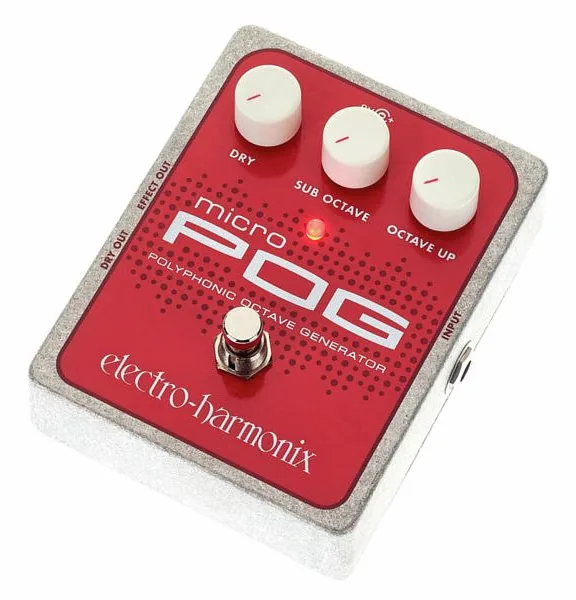
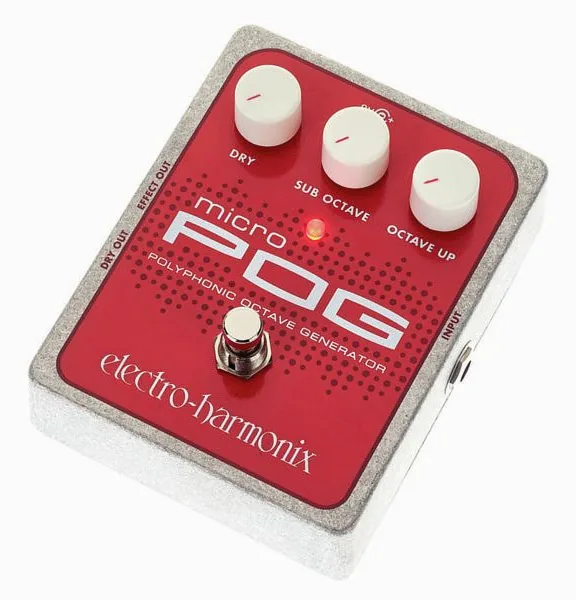
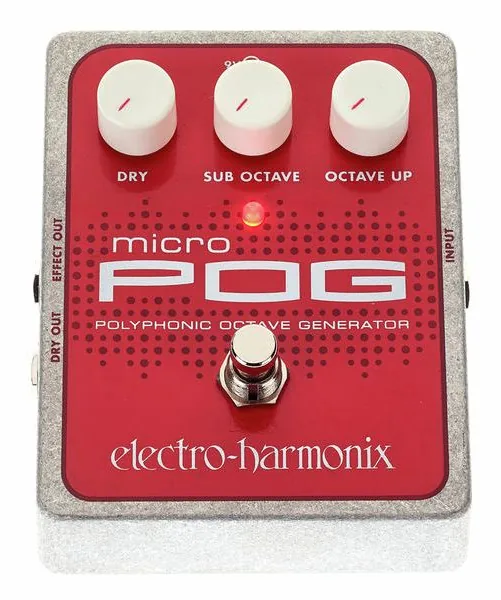
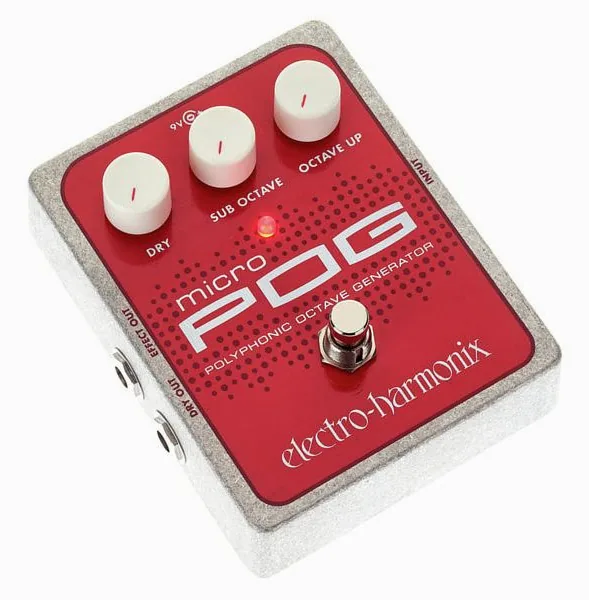
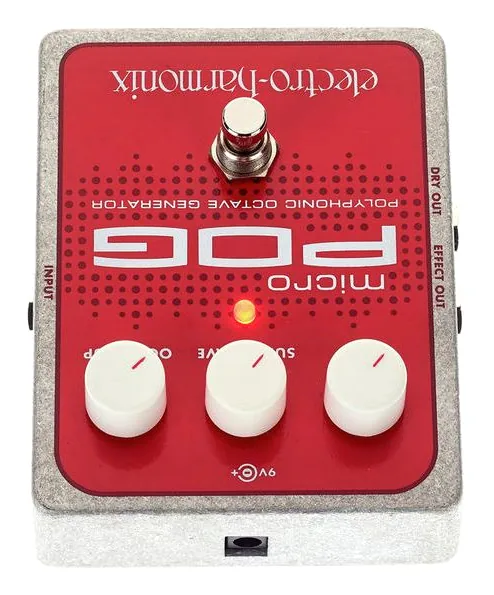
Electro Harmonix is known for rock-solid housings, and the Micro POG is no exception. The enclosure measures 102 mm wide, 121 mm deep, and 57 mm high, giving it a pedalboard-friendly but somewhat chunky silhouette. The pedal feels almost bulletproof, with tough knobs that provide satisfying resistance. All three dials (original, octave below, and octave above) are clearly labeled and offer a smooth sweep, inviting nuanced balancing of voices. While the switch is rugged, several users mention it's a bit stiff and loud, nothing dramatic, but noticeable in quieter settings.
The Micro POG runs exclusively on a power supply (Electro Harmonix includes the correct adapter), with no option for a 9V battery. This limitation won't matter on a gigging board, but it does reduce flexibility for battery-only setups.
Sonic Capabilities
The pedal's effect type is straightforward: octaver, with completely independent level for each signal path. Plug in a six-string guitar, crank the higher octave and original signals, and that trademark "12-string" shimmer jumps out. Dial back the high octave and push the lower, and you can transform your four-string bass into a thundering eight-string double-tracked monster. Many users highlight thick, present output in both octave directions that holds up for both riff work and solos. Bassists in particular praise the clarity of the lower octave, even on the deepest notes and under heavy fuzz drives, a feat that cheaper digital octavers rarely achieve.
The Micro POG doesn't just add warmth or bottom, it thickens and expands the soundstage. Many describe the result as "organ-like," with rich, synthetic overtones unique to this pedal. Combined with reverb, delay, or a volume pedal, you can access territory from swelling pad textures to classic rock Hammond emulations. This is a pedal that encourages experimentation: try a simple chordal swell and the room fills with harmonically dense layers, ideal for genres from shoegaze to psychedelic rock.
Polyphony, Tracking, and Latency
The standout technical feature is the polyphonic tracking. Unlike monophonic octavers that collapse under chords or arpeggios, the Micro POG handles both with confidence. Fast runs, bends, and intricate picking are faithfully processed, with only a barely perceptible latency reported by a few users. Compared to budget models or older analog octavers, the speed and clarity here are significant improvements. This makes it a plug-and-play creative tool for rhythm, lead, and experimental playing alike.
Still, no digital octaver is totally transparent. The Micro POG imposes its own timbral "color" on the note, with a slightly metallic or "organ" vibe, especially when both octaves are prominent. If you are expecting your guitar or bass to sound exactly as itself but an octave higher or lower, you may find it synthetic at extreme settings. However, most musicians find the coloration both musical and inspiring, provided you moderate the octave levels rather than maxing everything out.
Application and Versatility
Users consistently praise the Micro POG's versatility. Guitarists can emulate 12-string textures, simulate bass lines, or conjure vintage keyboard tones. Bassists use it for solo spotlight moments or to fill out trios when a thicker sound is needed. The pedal also shines in effect chains: blend the "wet" (octaved) and "dry" (original) outputs to create complex stereo or multi-amp rigs, route fuzz or delay after the octaver, or feed it rare instruments like tenor ukulele or even vocals for unconventional results.
Simplicity is key here. With just three knobs, shaping your sound is fast, ideal for live performers who don't want menu-diving or preset juggling. While the pedal is a "one-trick pony" for some, the trick it does is musically useful and dramatically broadens any board's potential.
Limitations and Caveats
- No battery operation: Requires power supply only.
- Switch is a bit loud: Footswitch click can be noticeable.
- Not a "true" bypass in all cases: Some users notice a minor difference when the pedal is disengaged, though most find the signal stays clean.
- Slight digital flavor: Particularly apparent with the high octave at full, the sound can get glassy or sharp on some setups.
- Size: While smaller than the POG2, it's still bigger than minimalist "mini" pedals.
Micro POG vs. POG2 and Others
If you only need the core octave functions and want fast access, the Micro POG is ideal. The larger POG2 offers more tweakability (envelopes, presets, additional voice blending), but at a higher price and size penalty. Many find the Micro's sound superior to smaller versions like the Nano POG, especially for bass. Compared with offerings from Boss and Mooer, the Electro Harmonix generally tracks better and feels more robust, though the particular timbre won't be everyone's taste.
Verdict: Distinctive, Practical, and Inspiring
The Electro Harmonix Micro POG remains the benchmark for polyphonic octave pedals under $200. Its robust design, intuitive controls, and distinctive musical tone make it one of the most creative expansion pedals for guitarists and bassists alike. While it imparts some of its own character, particularly at extreme settings, this is often precisely what players are after. If you crave vintage organ tones, want to fatten your live sound, or simply need a road-ready octaver that gets you huge results quickly, this pedal is a safe and rewarding bet.
Shipping and duties
The retailer ships from its warehouse in Germany. Prices are shown in US dollars and do not include import duties. Orders under roughly $800 usually clear US customs without duty; above that, a duty of a few percent may be collected on delivery. 30-day money-back and a 3-year warranty apply.
Scores by area
Where it shines, where it stumbles
What convinced me
- Polyphonic tracking allows accurate octave processing for both single notes and chords
- Sturdy construction and reliable performance on stage and in studio
- Simple operation with only three dedicated control knobs for direct sound, sub octave, and octave up
- Versatile tonal palette: organ-like sounds, 12-string effects, thick bass simulation
- Works well on various instruments including guitar, bass, and even nonstandard sources
What bugged me
- Absent true bypass; some users report audible switching noise
- No battery operation; only works with included power supply
- The effect imparts a pronounced organ-like character which may not suit all musical contexts
- Enclosure is more spacious than some would like; could be more compact
- Lack of tone controls for individual octaves and no onboard preset memory
Is it the right one for you?
Good pick if
Ideal for guitarists and bassists seeking lush, layered tones or creative ways to expand sonic possibilities without complicated menus. Suits musicians in need of polyphonic tracking for chords, octave effects for soloing, or unique textures such as organ or 12-string emulation. A solid choice for live performers and those wanting reliable, intuitive control on a crowded pedalboard.Look elsewhere if
Not for players focused solely on transparent, neutral octave replication or those seeking highly tweakable parameters and preset storage. Probably not suitable for minimalists requiring battery power, ultra-compact pedals, or those bothered by minor switching noise.Suggested level: Intermediate
Specifications
- Effect types
- Octaver
- Dimensions (wxdxh)
- 102 x 121 x 57 mm
What other players say
Customer opinions on the Micro POG are largely positive, highlighting its clean and responsive polyphonic tracking, straightforward operation, and distinctive organ-like or layered textures. Many users find it inspiring across guitars, basses, and even less traditional instruments, noting the expanded sound possibilities. Criticisms are typically focused on its buffered bypass, power supply dependence, large enclosure for some pedalboards, and a tonal coloration that may not fit all applications. Occasional complaints mention the footswitch noise and lack of adjustable octave tone. However, for most buyers, the sound quality, sturdy build, and creative utility consistently outweigh the downsides.
This pedal produces an unbelievably beefy, wide 3-octave output which is very much unique. It doesn't just sound like an octave'd guitar, it sounds like a different instrument - many times very organ-like.
Solid, reliable, easy to use, and simple operation, just dry, sub octave, and octave up controls. The construction is robust and the style is very much to my taste, it's Electro Harmonix through and through.
The Micro POG's tracking is really, really well. I haven't had any issues with that, even when I bent strings on my bass guitar. With dry knob you can turn the dry sound off and just get the octave above sound.
Up close
Watch and listen
Questions players ask
Does the Micro POG work well with both guitar and bass?
Yes, users consistently praise its performance on both guitar and bass, with clean tracking across the frequency range and minimal latency.
Is there a noticeable difference between Micro POG and the full-size POG2?
POG2 offers more features including preset memory and additional tonal controls, but the core tracking and algorithm are very similar; Micro POG is simpler and more pedalboard-friendly.
Can the Micro POG emulate organ or 12-string guitar sounds?
Yes, blending the octaves creates convincing organ simulations and thick, 12-string-like textures, especially when combined with reverb or chorus.
Is there true bypass and can it run on batteries?
The pedal uses buffered bypass (not true bypass), and it cannot operate on batteries, only with the included external power supply.
How does the Micro POG compare to cheaper alternatives?
While some lower-cost octavers exist, users find the Micro POG's tracking, tonal integrity, and durability superior, especially when handling polyphony and live use.
The last word from the bench
With its effortless operation and solid tracking, the Micro POG stands out among octave pedals both for live performance and creative studio work. The organ-like voicing, sturdy build, and extensive compatibility with guitars and basses make it a flexible addition for players exploring new sonic textures. While some may prefer a more neutral octave, or need more advanced functionality, this pedal excels for its intended use cases. For those seeking lush layers and unique sound-shaping, the Micro POG remains a benchmark.
Hanging next to it
Before you decide
Electro Harmonix Micro POG
Today's price and delivery time are shown at the retailer. Affiliate link, your price does not change.
 Guitar Gear Reviews