Electro Harmonix B9 Organ Machine
The Electro Harmonix B9 Organ Machine offers highly realistic organ sounds, provided you're ready to adjust your playing technique.
★★★★☆ 4.2/5 · 102 buyer reviews · 7 min read · updated 2026-10-07 · Tested by Cal Whitaker
Overview: Electro Harmonix B9 Organ Machine
The Electro Harmonix B9 Organ Machine is a specialized effects pedal designed to transform an electric guitar or bass signal into a range of iconic organ timbres. Priced at $188 and supplied with its own 9.6V DC power adapter, it aims at guitarists hunting for authentic keyboard flavors without resorting to MIDI gear or complex processing. The pedal features nine distinct organ presets, separate outputs for dry (untreated) and organ sounds, and four essential controls to shape the effect. Since its launch in mid-2014, the B9 has built a reputation as a niche tool with unique tonal possibilities and a few important quirks.
Features and Controls
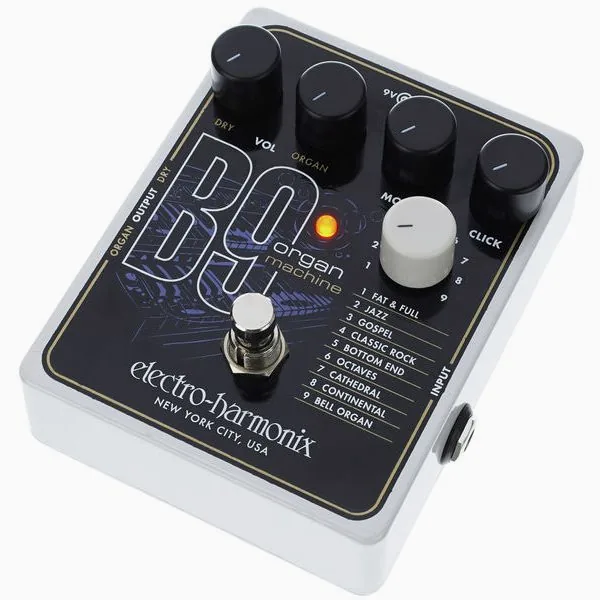
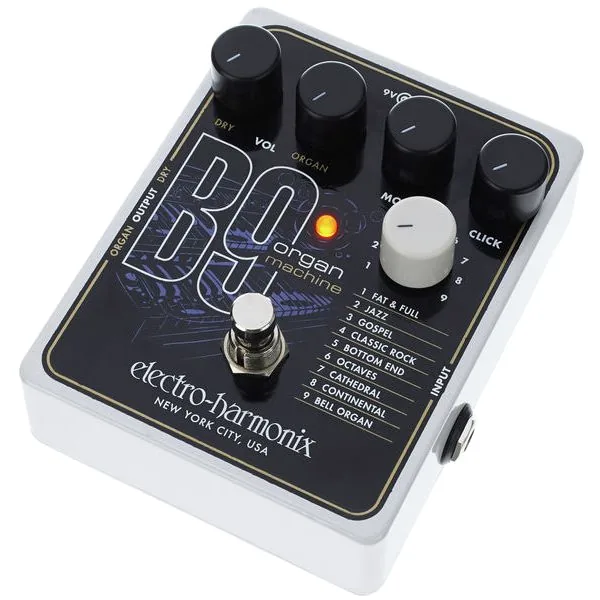
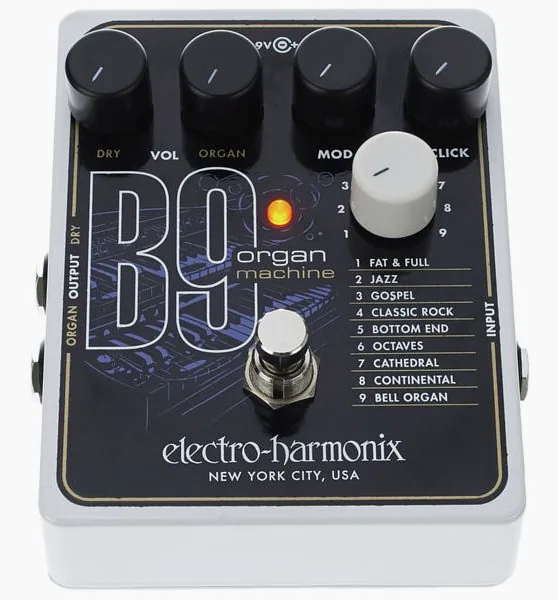
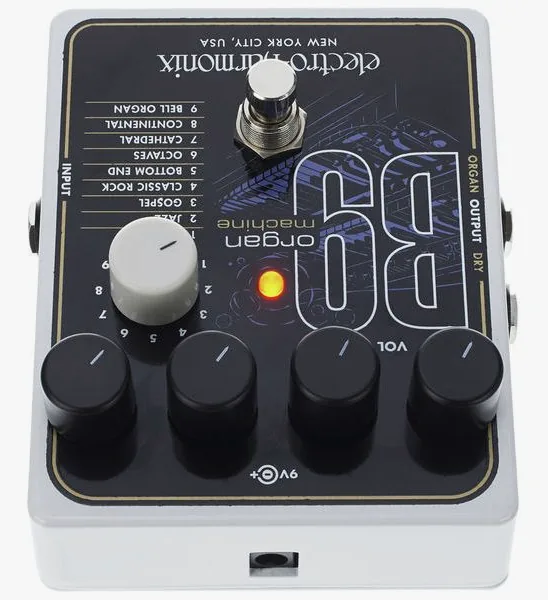
- Organ Emulation: The B9 generates organ sounds by processing your guitar or bass signal, allowing access to signature tones from jazz, gospel, classic rock, cathedral, and more. Presets include Fat & Full, Jazz, Gospel, Classic Rock, Bottom End, Octaves, Cathedral, Continental, and Bell Organ.
- Controls:
- Dry (Volume): Adjusts the level of your original instrument sound.
- Organ (Volume): Sets the output level of the organ emulation.
- Modulation: Alters parameters unique to each preset, often controlling chorus or vibrato for more swirling or shimmering sounds.
- Click: Emulates the attack click of various organs, which can add percussive character, especially useful for funk or gospel settings.
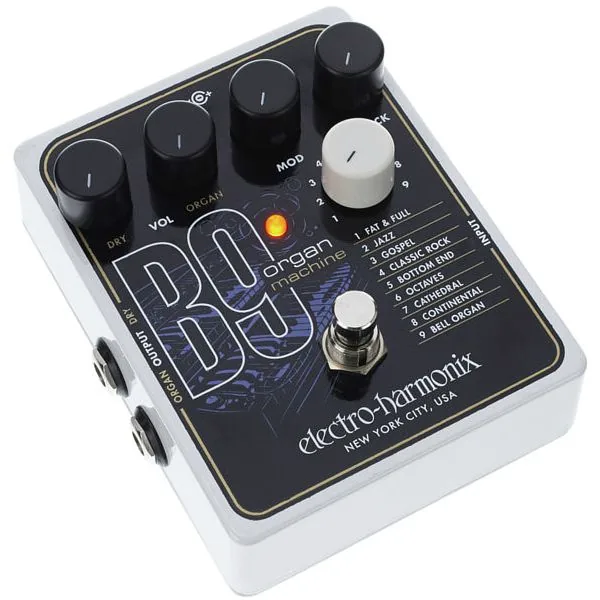
- Inputs and Outputs: Standard quarter-inch jacks are provided. There are two separate outputs, one for the dry guitar signal, one for the processed organ sound.
- Build and Size: The chassis measures 102 x 121 x 89 mm. Construction quality is robust, on par with most Electro Harmonix products, though lighter than some alternatives.
- Included Power Supply: The pedal ships with a compatible 9.6V DC adapter, ensuring hassle-free setup.
Sound Quality and Preset Versatility
The core appeal of the B9 is its ability to convincingly transform a guitar's timbre into a polyphonic organ. In practice, some presets, especially Jazz and Continental, stand out as impressively close to real electric organs, capturing the woody, swirling tone reminiscent of vintage Hammonds and classic combo models. The Cathedral setting provides a lush, reverberant pipe organ suitable for ambient pads or dramatic fills, while Fat & Full offers a dense, swirling mix ideal for retro rock covers.
Other preset modes like Gospel and Bell Organ work well for texture, though several users note that not all nine are equally practical for every context. Many sounds differ not just in harmonic content but also in EQ and output volume, which can require ongoing adjustment when switching between them in live situations.
The pedal's polyphonic tracking handles slow arpeggios, held chords, and melodic lines capably, though percussive or rapid playing can introduce glitches or latency. The effect is highly sensitive to your picking dynamics, the B9 responds non-linearly, meaning sharp attacks can lead to sudden volume jumps. This can be mitigated by running a compressor or sustainer pedal in front, which most experienced users recommend, both for consistency and to maintain sustain on long notes.
Playability and Limitations
The B9 requires a shift in technique to achieve optimal results. The pedal excels with single notes, dyads, and simple triads. Playing four or more strings, full barre chords, or aggressive strumming tends to muddy the output, double stops and guitar-style jazz voicings track most cleanly. Slides, bends, and heavy vibrato can work but often produce more "synth-like" artifacts rather than classic organ textures.
The bridge pickup is generally favored, as it delivers a brighter, clearer input signal which the pedal's tracking engine interprets more reliably. Rolling off your guitar's tone control also subtly darkens the organ output. Players note that using an effects loop with a dedicated amplifier or PA for the organ output can further refine results, though this increases setup complexity.
Output and Routing Details
One persistent criticism is the fixed output routing: both dry and organ outputs are active at all times. This design means you cannot exclusively mute the dry guitar when the effect is on, which limits flexibility. Some users work around this by employing a volume pedal or switching amp channels, though a dedicated output mute feature would have improved usability for live performances. In the studio, routing both outputs to separate channels enables nuanced re-amping and blending, at the cost of additional gear and cabling.
Reliability and Build Quality
The B9 Organ Machine has a reputation for solid reliability in home and studio use. Sturdy switches and pots stand up to regular adjustment. A minority of users reported unit failures after extended use, but after-sales service from the manufacturer and retailers has generally been responsive.
Practical Applications
- Augmenting a rock, pop, or blues trio missing a keyboardist, filling out ballads, intros, or bridges with classic keys flavor.
- Studio sound design, layering organ padding beneath guitar lines for added depth without keyboard programming.
- Live looping and solo acts, creating lush backgrounds for soloing or vocal numbers.
Players mostly agree that the B9 supplements rather than replaces a real organist, but it lets guitarists bring those essential Hammond or pipe organ colors to projects where adding another musician or MIDI rig would be impractical.
Conclusion
The Electro Harmonix B9 Organ Machine stands out for its ability to add authentic organ textures to a guitarist's tone arsenal. It shines in controlled settings with careful playing, a steady input signal, and attention to technique. Users should expect an acclimatization period and may need to tweak their playing and pedalboard configuration for best results. While not a one-button solution for total organ emulation, it remains unrivaled in its price and category, offering inspiring sounds and surprising realism, balanced with a few clear operational compromises. For creative performers looking to broaden their palette beyond standard guitar effects, the B9 is a genuinely inventive option.
Shipping and duties
The retailer ships from its warehouse in Germany. Prices are shown in US dollars and do not include import duties. Orders under roughly $800 usually clear US customs without duty; above that, a duty of a few percent may be collected on delivery. 30-day money-back and a 3-year warranty apply.
Scores by area
Where it shines, where it stumbles
What convinced me
- Authentic and convincing organ emulation with multiple classic organ styles
- Nine distinct presets cover a range of genres from cathedral to jazz to rock
- Responsive polyphonic tracking and sustain for chords and melodic lines
- Solid build quality and straightforward connections for integration
- Creative potential for expanding the tonal palette of both guitar and bass
What bugged me
- Significant sensitivity to playing dynamics, requiring adapted technique
- No switchable rotary (Leslie) speed control; modulation is limited
- Dual outputs (dry/effect) always active with limited routing flexibility
- Some presets less usable in live settings; variety within presets can be subtle
- Best results often demand a compressor and careful setup; adaptation period needed
Is it the right one for you?
Good pick if
Ideal for guitarists and bassists seeking to add organ textures to bands without a keyboard player, solo performers using loopers, and musicians exploring vintage or cinematic soundscapes. Great for those ready to adapt technique and experiment in the studio or live.Look elsewhere if
Not recommended for players wanting plug-and-play simplicity, those needing seamless preset switching, or anyone expecting to fully replace an organist in complex live settings. Also less suitable for musicians unable to adjust picking dynamics.Suggested level: Intermediate
Specifications
- Effect types
- Organ
- 9 presets
- Fat & Full, Jazz, Gospel, Classic Rock, Bottom End, Octaves, Cathedral, Continental & Bell Organ
- Input
- Jack
- Outputs
- Jack for input signal (Dry) and effects signal (Organ)
- Dimensions (wxdxh)
- 102 x 121 x 89 mm
What other players say
Customer feedback highlights the impressive realism of many organ sounds, particularly when using jazz, cathedral, and classic rock presets. Most users agree a compressor before the pedal improves tracking and reduces volume jumps. There is a universal need to adapt guitar playing style, dynamic control and limited use of bends and complex chords makes a big difference. Some wish for improved live usability, specifically regarding output routing and rotary speed control. Overall, players value its creative potential but acknowledge a learning curve and some hardware limitations.
The B9 Organ Machine offers mostly very authentic sounds, if you adapt your playing technique.
The emulation is really surprising; I haven't heard a more realistic organ simulator for guitar.
It tracks very well, with great sounds; you have to think a little like a Hammond player in terms of technique.
Up close
Watch and listen
Before you decide
Questions players ask
Can the B9 Organ Machine replace a real organist or keyboard player?
No, while the B9 provides realistic organ emulation, it's best for adding color or as a layer, not as a true replacement for an organist, especially in complex arrangements.
Is the B9 Organ Machine difficult to use live?
Yes, due to its sensitivity and the need to adapt guitar technique, quick preset switching and consistent performance can be challenging in live situations.
Does the pedal work equally well with all guitars and pickups?
It performs best with instruments having strong, clean signals, bridge pickups and a compressor in front can provide the most reliable results.
Are all organ presets equally usable?
No, while all nine presets offer authentic flavors, some (like 'Jazz,' 'Classic Rock,' or 'Cathedral') are favorites, and others may be less practical or sound too similar in a band mix.
Can I use separate amplifiers for dry and organ signals?
Technically yes, but both outputs are always active, which limits full separation in most live setups and may require extra gear or creative routing.
The last word from the bench
The Electro Harmonix B9 Organ Machine stands out for its convincing organ tones, especially for players seeking to add texture or emulate vintage keyboard sounds in guitar-driven settings. However, it demands patience: the learning curve is real, and dynamic response can be unforgiving unless your playing is controlled and, ideally, compressed. The routing options for dry and organ signals limit live flexibility, and not every preset is suitable for all situations. Still, for experimentation and creative layering, this pedal delivers where few competitors come close.
Hanging next to it
Electro Harmonix B9 Organ Machine
Today's price and delivery time are shown at the retailer.
 Guitar Gear Reviews