Boss WAZA Tube Amp Expander Core
Boss WAZA Tube Amp Expander Core delivers high-level flexibility and pro studio features for tube amp users, but its software and mono FX loop need improvement.
★★★☆☆ 3.3/5 · 6 buyer reviews · 8 min read · updated 2026-10-06 · Tested by Cal Whitaker
Boss WAZA Tube Amp Expander Core: Deep Dive Review
The Boss WAZA Tube Amp Expander Core enters the market as a compact, multi-function device designed to integrate seamlessly with genuine vacuum tube amplifiers. With a price tag at $666, it promises to let players push their amplifiers hard, delivering stage and recording flexibility previously reserved for larger or more expensive units. Let's break down its features, performance, and real-world usability based on both technical data and field experience.
Build, Connections, and First Impressions
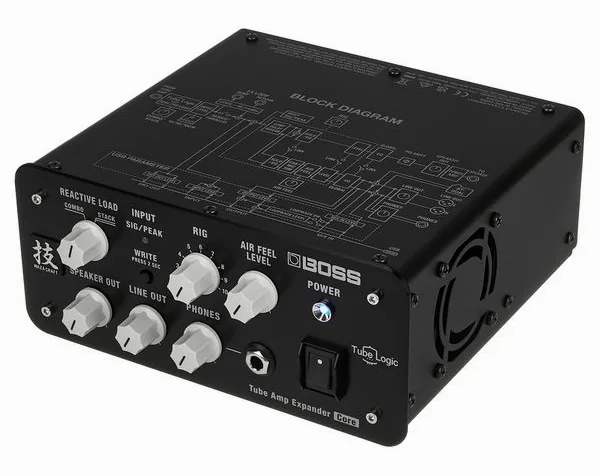
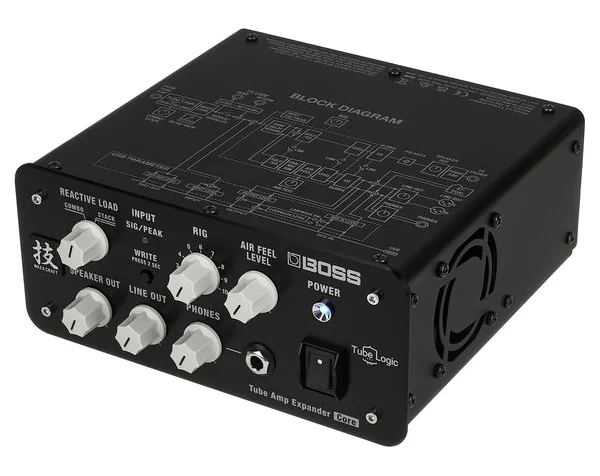
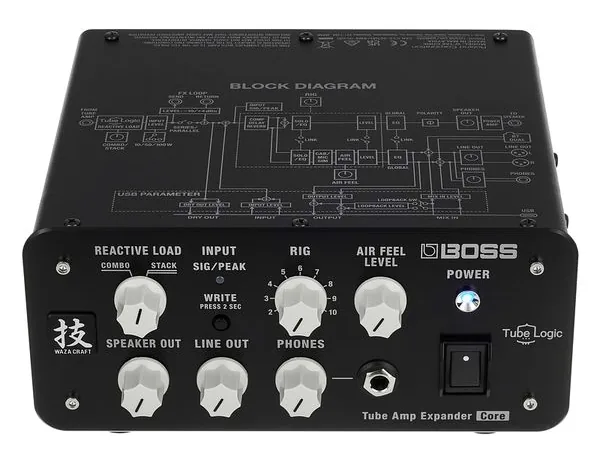
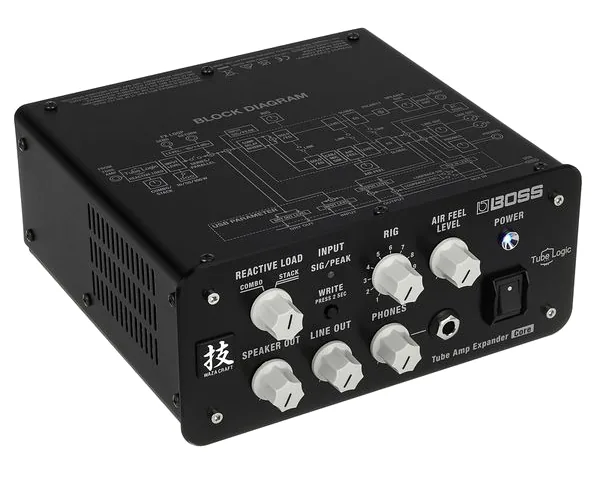
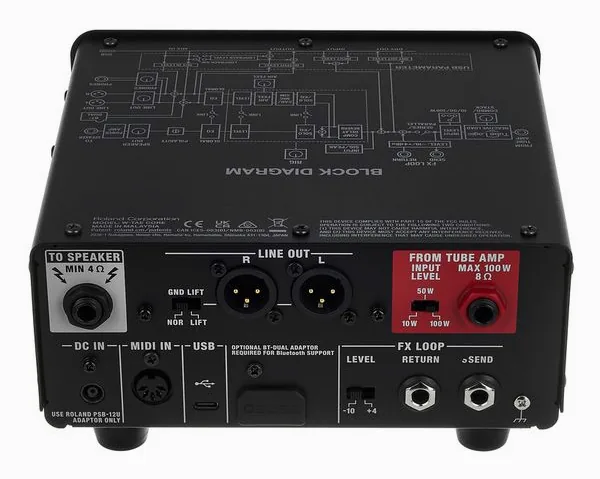
At 2,200 grams and measuring 200 x 202 x 99 mm, the Expander Core fits easily on an amp head or studio desk. Its all-metal chassis and precise knobs give the impression of durability. Connections include 4 and 8 ohm speaker output, dual balanced XLR line outs, USB-C, MIDI in, effects loop send/return on quarter-inch jacks, and a dedicated slot for Boss's optional Bluetooth adapter (not included). Power is supplied via the provided DC adapter; battery operation is not possible.
Controls are logically laid out, with dedicated knobs for selecting load type (combo or stack), rig choice, Air Feel ambience level, and output volumes for both speakers and headphones. Switches allow you to set the amp input level (10, 50, or 100 watts) and engage ground lift. LEDs provide instant feedback on signal status and power.
Key Features in Practice
- Reactive Load with Combo/Stack Modes: The selectable reactive load is the centerpiece, meant to reflect your amplifier's feel and response with minimal tonal coloration. In field tests, users confirm a noticeable improvement over passive resistive attenuators, particularly in touch sensitivity and dynamic response.
- Cabinet Emulation and Impulse Response (IR) Support: The unit offers 22 onboard microphone'd cabinet simulations, including highly regarded Celestion digital IRs. For custom setups, you can load up to 64 mono or stereo WAV impulse responses (up to 32-bit float/96 kHz), letting you tailor the response for specific cabinets or live/recording situations.
- Onboard Effects and Mix Tools: Boss equips the Expander Core with studio-grade compression, delay (including an SDE-3000 setting), reverb, and both parametric and graphic EQ. Mix Assist offers further sound-shaping, intended to optimize sounds for mixing or mastering scenarios. Effects can be edited in real time from the front panel, dedicated software, or via compatible iOS/Android apps over Bluetooth (with the BT-Dual adapter, sold separately).
- Headphone and Silent Practice: Dummy load lets you run your amplifier into the Core with no speaker attached, enabling silent rehearsal or late-night sessions via the high-quality 6.3mm stereo headphone output.
- 10 Recallable Rigs: Users can store up to ten complete configurations, speeding up gig and recording workflows.
Sound and Practical Results
Players consistently praise the Expander Core for letting their tube amps operate in the sweet spot, power section fully engaged, without excessive volume. The reactive drive circuit, developed under Boss's Tube Logic design, maintains much of the 'thump' and natural compression tube amps produce at high volume, both through a speaker or direct to a console. Field reports note that even with classic amps like the Marshall Vintage Modern, the pedal preserves the amp's voice with remarkable realism.
Direct recording via XLR and USB shows clear advantages in workflow, with the Air Feel ambience feature providing a convincing sense of space, and the cabinet emulations yielding a polished, professional sound straight into a DAW. Most users find the ability to edit two microphone setups per cabinet and integrate third-party IR files especially valuable for studio work. The headphone experience is similarly strong, often described as natural and authentic.
However, not all agree on fidelity: some players with a background in high-end tube amp setups (or direct experience with alternatives like the Fryette Power Station) find the Expander Core's Class D amplifier output less organic than true vacuum tube power, especially as an attenuator. For these purists, the nuanced bloom and harmonic richness can feel more "plug-in" than analog at times, even though the device convincingly outperforms traditional resistive attenuators in flexibility.
Effects, Flexibility, and Software
Post-power amp effects are a genuine strength. Compressors are well-voiced, delays sound lush, and reverbs deliver convincing realism, matching or surpassing many standalone studio processors. That said, the mono effects loop design is a limiting factor for those running stereo wet/dry rigs, and the fixed order of the effects chain can constrain more complex routing approaches. Multiple users point out a desire for a stereo loop and greater flexibility in effect placement between outputs.
Software is the major weak point in the otherwise strong package. The editor (Mac/PC/iOS/Android) is described as functional but laggy and visually inconsistent, especially compared to other Boss products. Firmware management can only be done via computer, not over Bluetooth, and initial Bluetooth pairing can be sluggish. Despite these quibbles, once connected, remote editing works well, especially for dialing in tones from across the room.
Limitations and Compatibility
- Amplifier power restrictions: The Core supports vacuum tube amplifiers up to 100 watts output, but it does not work with certain high-powered models such as Mesa Boogie Dual/Triple Rectifiers.
- Speaker output power: The built-in 30-watt amplifier is sufficient for home use and smaller rehearsal situations. Those requiring higher on-stage volume or clean headroom may find this limit restrictive.
- Bluetooth adapter sold separately: Wireless control and audio streaming require the purchase of the BT-Dual adapter, increasing the total cost.
- Occasional ground noise: Some specific amp combinations may introduce hum when not connected to a speaker load, though the ground lift switch helps reduce this issue in many cases.
Conclusion: Who Is the Expander Core For?
The Boss WAZA Tube Amp Expander Core delivers a compelling suite for guitarists needing maximum flexibility with real tube amplifiers, whether on stage, at home, or in the studio. The strong points remain its authentic reactive load feel, powerful cabinet and microphone emulation, robust effects, and ability to serve as a DI and silent practice solution. Software and connectivity issues need improvement, and those chasing pure analog tone at high stage volume may need to look elsewhere, but for players balancing traditional amps with the demands of modern workflow, the Core stands out as a smart investment.
Shipping and duties
The retailer ships from its warehouse in Germany. Prices are shown in US dollars and do not include import duties. Orders under roughly $800 usually clear US customs without duty; above that, a duty of a few percent may be collected on delivery. 30-day money-back and a 3-year warranty apply.
Scores by area
Where it shines, where it stumbles
What convinced me
- Allows genuine tube amplifier operation with full tonal control at manageable volume
- Impressively natural post-power amp effects with convincing speaker and microphone emulation
- Excellent DI functionality and versatile recording options, including user impulse response slots
- Solid hardware build quality and extensive connectivity, including MIDI and USB-C
- Wireless editing possible via separate Bluetooth adapter
What bugged me
- Built-in 30-watt amplifier may be insufficient for loud stage situations, 50 watts would be better
- Mono effects loop limits stereo effect possibilities despite stereo outs
- Editing software is slow and clunky with connectivity issues, especially with the Bluetooth app
- Bluetooth adapter required for wireless use is not included
- Not as sonically transparent as high-end analog attenuators; some notice a less authentic tube character
Is it the right one for you?
Good pick if
Ideal for tube amp owners who require dynamic, authentic sound at any volume for home, studio, or live sound situations. Suits those seeking integrated studio-quality effects, flexible routing, and direct recording capabilities. Great for players who appreciate continuous attenuator control, multiple IR slots, and digital management of rigs.Look elsewhere if
Not ideal for purists demanding purely analog tone preservation or those needing significant stage volume levels without compromise. May disappoint users seeking flawless software integration or plug-and-play, fully stereo FX loop routing. Avoid if you want a one-stop analog attenuator or dislike device/app complexity.Suggested level: Intermediate
Specifications
- Impedance
- 4, 8
- Noise supression
- No
- Di interface
- Yes
- Speaker simulation
- Yes
- Dummy load (usable without cabinet)
- Yes
What other players say
Most users praise the Boss WAZA Tube Amp Expander Core for enabling their tube amps to sound authentic at controllable volumes, both in the room and direct to FOH or recording setups. The high-quality onboard studio effects and flexible IR capability are standout features. Critical voices note that the attenuator's tonal transparency does not fully match the best analog units, and the software experience is laggy and unreliable for some. Build quality and hardware options are largely valued, though the 30-watt power amp is seen as a compromise in certain gig contexts.
The tube amp expander changes everything, not having to rely on modellers but able to use your real tube amp at its optimum 'tone' settings yet still have a manageable volume.
The onboard effects are just perfect studio quality, Compressors are spot on, the SDE3000 delay setting alone is just to die for, the reverb... perfect.
The effects loop should have been movable in the chain and provide stereo in and outs...
Up close
Watch and listen
Questions players ask
Does the Boss WAZA Tube Amp Expander Core work as a standalone attenuator without a cabinet?
Yes, it features a true dummy load, allowing you to safely use your tube amp for recording or headphone playing without connecting a cabinet.
Is the onboard amplifier loud enough for live gigs?
The built-in 30-watt amplifier suffices for small venues or monitoring, but may not deliver enough headroom for loud stages. A higher wattage amp is preferable for large venues.
Can I load third-party impulse responses on this device?
Yes, it supports up to 64 mono or stereo user impulse responses in WAV format, up to 32-bit float/96 kHz resolution.
Are the stereo effects fully integrated throughout the signal chain?
No, the effects loop is mono, and stereo processing is available only post-loop within the device.
Is the Bluetooth adapter included for wireless editing?
No, the Bluetooth adapter must be purchased separately. Wired editing is available via USB-C.
The last word from the bench
The Boss WAZA Tube Amp Expander Core is a creative solution for players wanting to get their tube amps singing at any volume without compromise, blending real amp tone with powerful studio tools in one box. The feature set is impressive, reactive load, high-quality onboard effects, robust speaker simulation, and flexible integration. While some prefer pure analog attenuators for ultimate tonal transparency, especially for critical listening, most will appreciate the practicality and sound-shaping potential here. Software stands as the main weak spot, with workflow and connectivity issues holding it back from being perfect.
Hanging next to it
Before you decide
Boss WAZA Tube Amp Expander Core
Today's price and delivery time are shown at the retailer. Affiliate link, your price does not change.
 Guitar Gear Reviews