Boss IR-200 Amp & IR Cabinet
Compact, powerful and highly flexible, the Boss IR-200 stands out as a leading amp and cabinet simulation pedal for both live and studio settings.
★★★★★ 4.7/5 · 20 buyer reviews · 7 min read · updated 2026-10-07 · Tested by Cal Whitaker
Overview: Compact Powerhouse for Amp and Speaker Simulation
The Boss IR-200 Amp & IR Cabinet arrives as a highly focused, compact pedal aimed at modern guitarists and bassists searching for freedom from cumbersome amplifiers on stage or in the studio. Released in late 2021, its design targets both pedalboard minimalists and those wanting deep tone control for live, practice, or recording setups. As a self-contained amp and cabinet simulator, the IR-200 stands out by combining over 150 high-resolution speaker cabinet impulse responses, a robust selection of amp emulations, and stereo routing, all in a stompbox roughly the size of a typical twin footswitch pedal.
Controls, Connectivity, and Build Quality
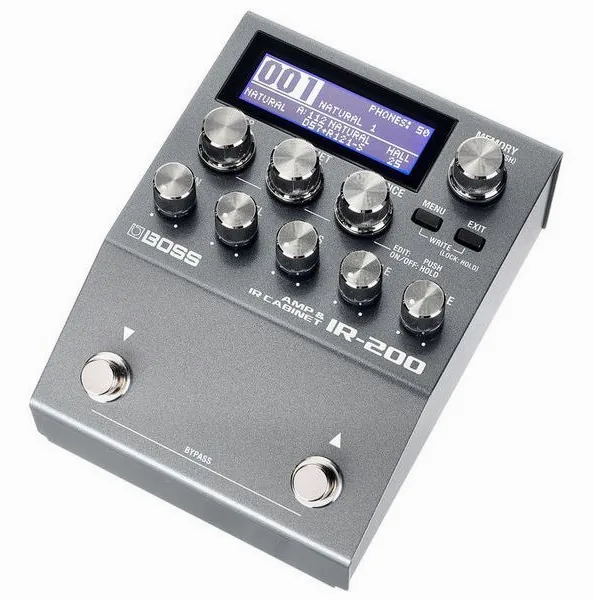
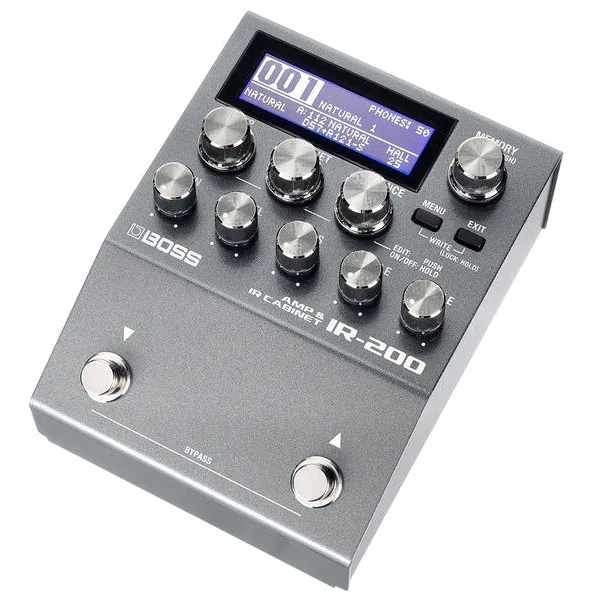
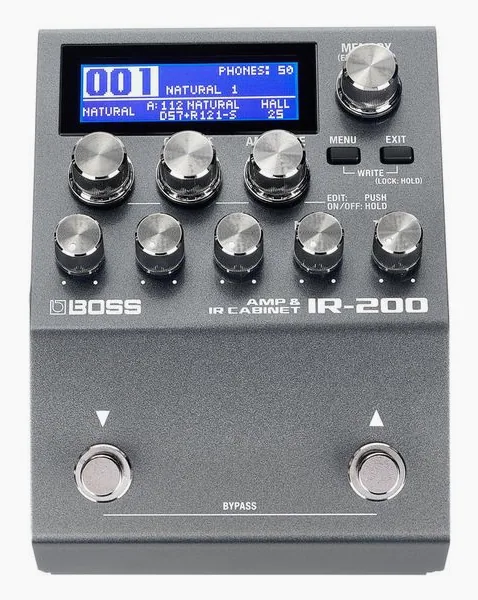
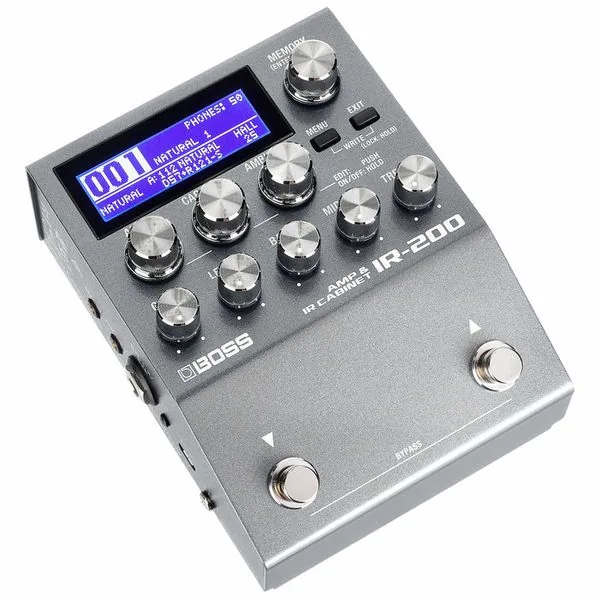
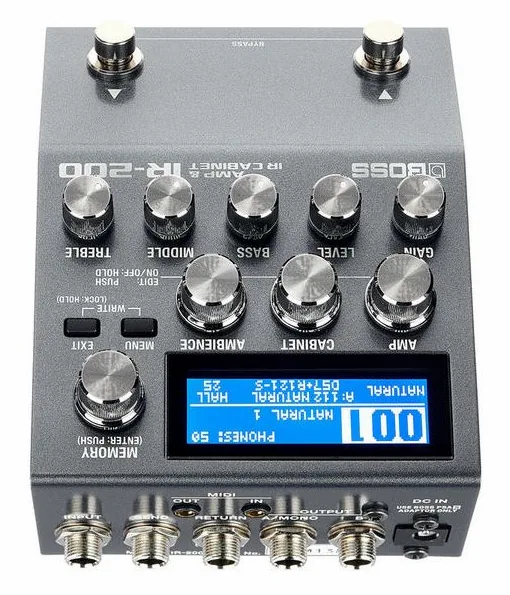
The IR-200's interface remains utilitarian but approachable. All essential parameters, amp and cabinet selection, gain, three-band EQ, overall level, and ambience, are accessed via dedicated rotary controls on the top panel. Navigation for deeper tweaking is done using Menu and Exit buttons and its LC display. A pair of footswitches provides bypass and patch navigation (up/down).
- Inputs/outputs: Standard quarter-inch instrument input, stereo outputs, programmable stereo effects loop, control/expression pedal input, auxiliary input, stereo headphone output, MIDI (in/out via TRS minijacks), USB for audio and IR management.
- Build: True to Boss reputation, the metal enclosure feels solid and roadworthy at 800 grams, with all jacks and switches having a dependable tactile response. The power supply is included, featuring a DC input with moderate current draw (335mA).
Rig Integration and User Experience
Field reports and hands-on experience highlight the IR-200's strength as both a direct recording tool and a live pedal platform amp replacement. The stereo effects loop stands out, allowing stereo modulation/time-based pedals to stay after the amp and cab models, critical for players running lush reverbs, delays, and choruses in stereo. It accommodates both electric and acoustic guitars and works adequately with bass, though some advanced users note quirks when driving certain bass preamps or expecting highly accurate bass amp simulation.
Users praise the wide-ranging input/output options; the ability to run dual independent cabinets in stereo or connect via USB directly to digital audio workstations (DAW) for dry and processed recording is often cited as a game changer. The headphone output (mini-jack) with optional ambience effect enables late-night or silent practice, and the auxiliary input gives quick access for backing tracks or jamming along with external sources.
Onboard Sounds: Amp Models, Impulse Responses, and Effects
- Tonal palette: The IR-200 delivers a mix-and-match approach to amp and speaker cabinet emulations; users can assign any amp with any cabinet IR. All amp simulations, from classic "American clean" models to high-gain Brit-inspired voicings, are represented, though the total number in the unit is generally referenced as eight to ten principal amps.
- Impulse responses: Over 150 cabinet impulse responses are included, with contributions from both Boss and Celestion Digital, covering a broad spectrum of guitar and bass speaker options. High sample resolution (32-bit, 96kHz) ensures clarity and realism, and the IR-200 accommodates user-loaded third-party IR files up to 500ms in length.
- Sound sculpting: Each patch can utilize advanced EQ with system and per-patch ten-band settings (graphic or parametric by output), enhancing flexibility when adjusting for specific PA systems, venues, or instruments. Basic ambience/reverb simulation is present, serviceable for adding space, though less detailed than standalone reverb units.
Practical Playability and Patch Management
The IR-200's 128 user memory slots make it straightforward to save and recall detailed setups, including custom IRs, amp/cab selections, and FX loop routing. Operation is generally considered easier than typical multi-effect "workstations", all crucial parameters are a knob away. Still, menu diving is required for advanced editing and MIDI assignment configuration. Live performers benefit from the soft, lag-free switching, and the pedal responds predictably with external MIDI controllers for integration into more elaborate rigs.
Hands-On Impressions: Strengths and Weaknesses
- Positives: The quality and flexibility of amp/cab simulations impress, especially for clean and light breakup sounds. The pedal's ability to serve as both a DAW interface and stage-ready amp solution is a highlight for home studios and gigging guitarists. The controls offer fast, intuitive access to bread-and-butter tones.
- Negatives: Some find the sheer number of IRs and options overwhelming, with factory IRs described as competent but not spectacular compared to custom third-party files. The lack of a balanced direct output (DI) frustrates those who interface directly with PA systems. Achieving pleasing distortion pedal integration may require heavy EQ use to avoid harshness, and getting the noise gate to play well with certain pedalboards, especially in four-cable method setups, requires extra patience and tweaking.
Conclusion: Who Is the Boss IR-200 For?
The Boss IR-200 Amp & IR Cabinet is engineered for guitarists (and select bassists) after a ready-to-gig or record, fully pedalboard-sized amplifier and cabinet emulation unit. Anyone wanting to retire their heavy combo or stack, streamline live setups, or improve direct-recorded tones will find it fills a critical niche between pricier multi-FX workstations and more basic amp DI solutions. Its compact size, extensive array of user memory, and flexible stereo routing make it particularly attractive for hybrid analog-digital pedalboard systems or mobile players requiring powerful features in a small form factor.
For the $341 price tag, the IR-200 delivers on sound quality, connectivity, and gig-friendly reliability, despite a few workflow gripes and minor shortcut features absent (notably, no balanced output). Boss's focus on robust build and versatile amp/cab sculpting tools lands the IR-200 as a top pick in its class for serious home recordists and performance-minded players wanting a compact, no-nonsense solution with professional results.
Shipping and duties
The retailer ships from its warehouse in Germany. Prices are shown in US dollars and do not include import duties. Orders under roughly $800 usually clear US customs without duty; above that, a duty of a few percent may be collected on delivery. 30-day money-back and a 3-year warranty apply.
Scores by area
Where it shines, where it stumbles
What convinced me
- Excellent amp and cabinet emulation quality with over 150 high-resolution impulse responses
- Very flexible connectivity: stereo effects loop, dual outputs, USB audio, MIDI, headphones, aux in
- Compact and solid construction, pedalboard-friendly
- Easy to navigate interface with dedicated controls for important parameters
- Handles external pedals well and works as a versatile platform
What bugged me
- No balanced output or direct injection out, which some users miss
- Learning curve for deep configuration and patch management
- Included amp and cabinet impulse responses can sound average to experienced users, requiring custom IRs for best results
- Does not fully replicate the dynamic response of tube amplifiers
- Price may be high compared to multi-effects units with broader functionality
Is it the right one for you?
Good pick if
Ideal for gigging guitarists and bassists looking for a highly portable amp and cabinet simulation, home studio enthusiasts who need easy direct recording, and players wanting a pedal platform for integration with other effects. It suits musicians needing flexible outputs and stereo processing for complex setups.Look elsewhere if
Not for purists seeking absolute analog or tube amp feel, users needing instant great tone with minimal tweaking, or those who require built-in battery operation or balanced XLR outs. Also may not be the first choice for those who mainly play bass with specific amp model preferences.Suggested level: Intermediate
Specifications
- Design
- Stompbox
- Amp modeling
- Yes
- Drumcomputer
- No
- Incl. tuner
- No
- Expression pedal
- No
- Usb-port
- Yes
- Headphone output
- Yes
- Midi interface
- Yes
- Line out
- Yes
- Battery operation
- No
- Psu included
- Yes
What other players say
Most customers praise the Boss IR-200 for its realistic amp and cabinet emulation, robust feature set, and strong value for recording, rehearsals, and live performances. Users found the pedal easy to integrate into existing rigs thanks to its compact design and comprehensive connectivity. Some note a learning curve with the deeper features, and a few experienced trouble with bass amp emulation or wished for a balanced output. Overall, the sentiment is very positive, with many appreciating its versatility, practice benefits, and sound quality.
Amazing ease of use. Great selection of Amp, Cabs, Speakers. Mix and match any amp, cab, speaker. Super stereo effects loop. Nothing better in this price range.
The amp simulations are sufficient to cover all needs: electric guitar, acoustic guitar, and bass. The stereo FX loop is probably what I liked most about the pedal.
There's no lag/doesn't feel disjointed but doesn't feel like a tube amp either. If you don't like the built in amps though you can always get a preamp of some sort.
Up close
Watch and listen
Before you decide
Questions players ask
Can I load my own custom impulse responses into the Boss IR-200?
Yes, it supports uploading custom impulse responses with up to 500 ms resolution, expanding tonal options beyond the built-in library.
Does the IR-200 work well with bass or acoustic guitar?
It offers some support for bass and acoustic guitar, but bass amp simulation reportedly introduces unwanted resonance or noise for some users.
What types of connectivity does it offer for studio and live use?
You get stereo and mono outputs, a stereo effects loop, USB audio interface functionality, MIDI, headphones output, and aux input. However, there's no balanced out or dedicated DI.
Is the noise suppressor effective, and does it work well with other pedals?
The built-in noise suppressor is useful, but tuning it in complex pedalboard setups, especially using the four-cable method, can require some effort for optimal results.
How easy is it to edit and recall sounds and patches?
Important parameters are accessible through dedicated knobs and a clear screen. Still, deep editing and patch management can be more involved, especially when using different guitars or external IRs.
The last word from the bench
The Boss IR-200 combines excellent amp modeling and impulse response features in a compact, rugged package. Its deep customization, quality connectivity options, and user-friendly controls make it a reliable choice for those wishing to replace a traditional amp/cab or build a portable rig. Some compromises exist, such as missing a DI out and a steeper learning curve for tone shaping, but the overall sound and capability are more than convincing. Well-suited for both practice and performance, provided you're comfortable investing time for setup.
Hanging next to it
Boss IR-200 Amp & IR Cabinet
Today's price and delivery time are shown at the retailer.
 Guitar Gear Reviews