 Guitar Gear Reviews
tc electronic Hall of Fame 2
A feature-rich, highly tweakable reverb pedal offering remarkable versatility and sound quality at a strong value.
★★★★★ 4.8/5 · 579 buyer reviews · 8 min read · updated 2026-09-12 · Tested by Cal Whitaker
Shipping and duties
The retailer ships from its warehouse in Germany. Prices are shown in US dollars and do not include import duties. Orders under roughly $800 usually clear US customs without duty; above that, a duty of a few percent may be collected on delivery. 30-day money-back and a 3-year warranty apply.
Scores by area
Where it shines, where it stumbles
What convinced me
- Highly versatile with a wide range of reverb types and three user banks for custom presets
- Intuitive controls and easy setup, even for beginners
- TonePrint system allows deep sound editing and quick preset loading via app or software
- Compact, durable build with stereo in/out and low power consumption
- Mash footswitch offers expressive control over parameters in real-time
What bugged me
- Spring reverb emulation is not as authentic as dedicated spring units
- Mash function's usability is limited due to abrupt transition and no smooth decay when released
- TonePrint editor interface can feel unintuitive or overwhelming for some users
- Footswitch may lack tactile feedback or be unreliable over time for some users
- Mode knob could benefit from more defined detents
Is it the right one for you?
Good pick if
Ideal for guitarists and bassists needing a versatile, all-in-one reverb pedal for a wide range of genres and live or studio use. Also well-suited to synth and keyboard players seeking stereo effects and advanced preset management. Perfect for users who want to explore, customize, and tweak their own sonic textures without breaking the bank.Look elsewhere if
Not suited for players seeking absolute authenticity in vintage spring or boutique-style reverbs. Those who dislike digital editing, or need classic analog-only operation without extra features, might prefer simpler or specialized pedals.Suggested level: Intermediate
Specifications
- Analog
- No
- Battery operation
- Yes
- Psu included
- No
- Input/output configuration
- stereo in / stereo out
What other players say
Customer feedback praises the Hall of Fame 2 for its versatility, intuitive operation, and remarkable feature set. Many highlight the depth offered by the TonePrint system, compact format, and the instant usability out of the box, with reverb sounds that cover both subtle ambiences and lush soundscapes. The majority find its sonic character satisfying, noting it sits naturally with both electric and acoustic guitars, and even with synths. The most common criticisms are the unimpressive spring reverb emulation, somewhat abrupt or unreliable Mash switch operation, and a steep learning curve in the TonePrint editor. Despite minor hardware quirks or feature gripes, satisfaction is high among both beginners and advanced users.
It is quite smaller and lighter than other similar products. Sounds fantastic, specially for the shimmer mode.
A feature-rich, highly tweakable reverb pedal offering remarkable versatility and sound quality at a strong value.
Mash is a great idea, but when letting go of the switch it abruptly cuts off the effect, no smooth decay.
Up close
Watch and listen
Questions players ask
Does the Hall of Fame 2 work well with both guitar and synthesizer setups?
Yes, its stereo input/output and range of reverb types make it suitable for electric guitar, acoustic, and keyboard or synth rigs alike.
How easy is it to load or create custom presets?
You can load presets from the app directly to the pedal, and create your own with the free TonePrint Editor. The process is straightforward but does require some familiarity with the software.
Is the Mash footswitch essential to use, or can I ignore it?
Mash adds expressive control for those who want it, but the pedal works perfectly fine as a traditional reverb without using this feature.
How authentic is the spring reverb simulation?
The spring mode is decent and usable, especially at this price, but it doesn't exactly replicate the drippy, vintage amp sound. Purists may prefer a dedicated analog unit.
Is the Hall of Fame 2 pedal reliable for gigging?
Most users report strong durability and reliability, though a few mention minor footswitch or mode knob issues over extended use. Overall build quality is considered solid.
Overview: The tc electronic Hall of Fame 2 Reverb Pedal
Since its launch in 2017, the tc electronic Hall of Fame 2 has positioned itself as a Swiss army knife for reverb in the compact pedal category. Priced at around $105, it offers a full suite of classic and modern reverb styles, stereo operation, and user programmability, aiming for a sweet spot between affordability and professional versatility. The highlight additions over the first version include the pressure-sensitive MASH footswitch, the "Shimmer" reverb algorithm, and expanded TonePrint capabilities.
Build and Controls
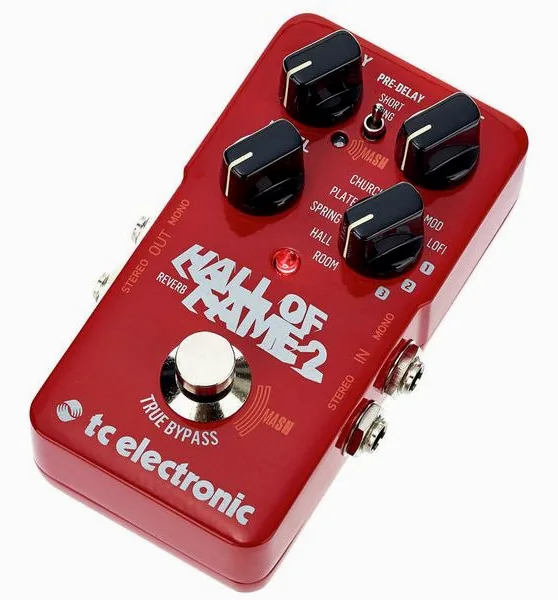
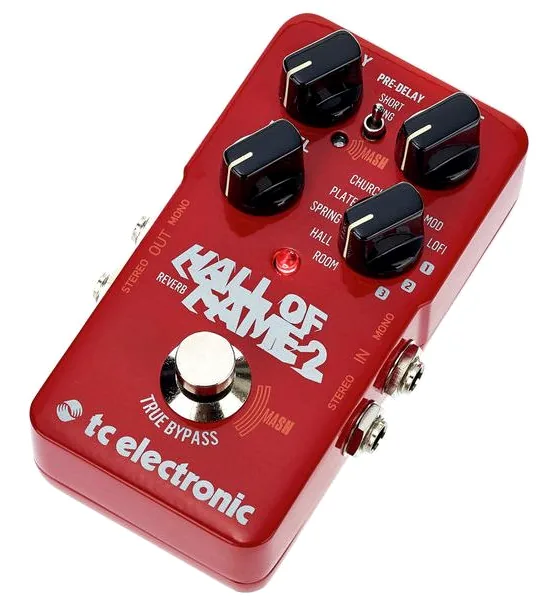
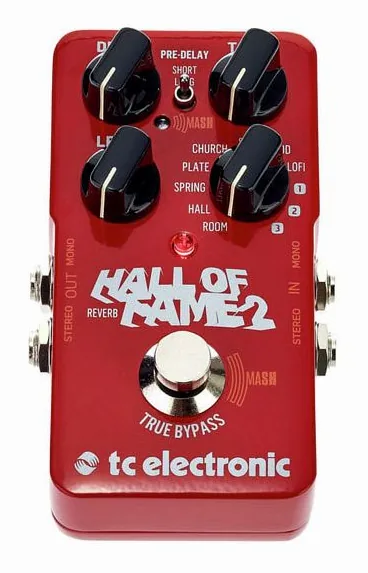
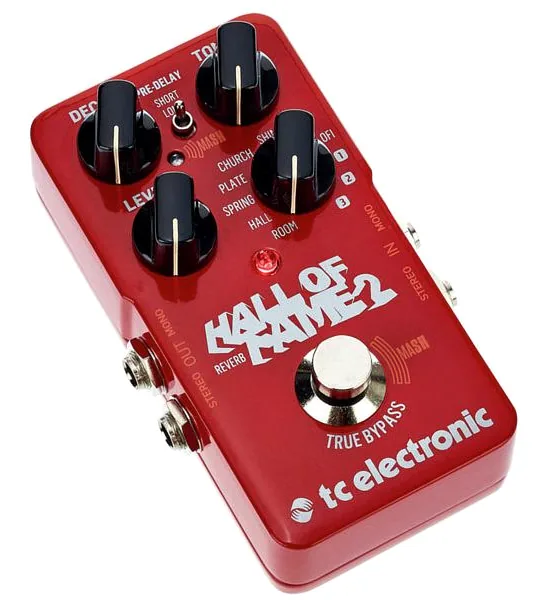
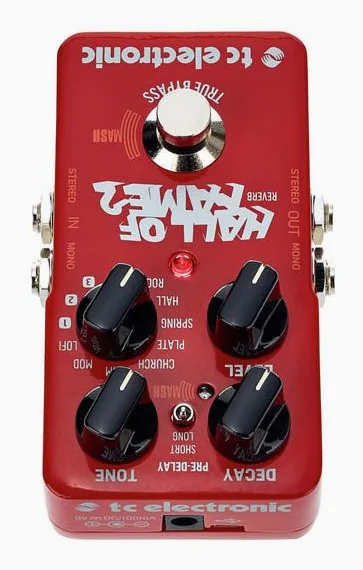
Measuring 72 x 122 x 50 mm and weighing a solid 300g, the Hall of Fame 2 maintains a compact and pedalboard-friendly footprint without sacrificing accessibility. Construction is robust, with metal housing and smooth-turning knobs. The four main controls, Decay, Tone, Level, and Mode, cover all essential reverb parameters. The footswitch handles on/off as well as dynamic expression duties thanks to the MASH sensor. There are stereo input and output jacks, a 9V battery compartment (removable panel, a common feature in compact pedals), and a DC power input (adapter not included, standard negative center pin).
Switching between reverb algorithms takes about a second, during which only the dry signal is present. While this is not problematic for studio tweaking or home use, it means seamless effect changes during live sets require a bit of planning.
Sound: Reverb Algorithms and Quality
The Hall of Fame 2 provides a library of classic spaces (Room, Hall, Plate, Church), special effects (Lofi, Modulated), and modern reverb types. Most modes deliver smooth, musical results that blend well with both electric and acoustic instruments. The maximum decay time of 20 seconds can push into ambient territory, though those obsessed with endless atmospheres will notice limits compared to dedicated studio plugins.
- Spring: Emulation is polite rather than authentically sloppy, lacking the chaotic splash of an old tube amp tank. Serviceable for basic use, but if you want pronounced drip or "boing," look elsewhere.
- Plate: Satisfying for most modern applications. It lacks the metallic bite of high-end studio units but sits well in a mix, especially with single-coils or jazz tones.
- Shimmer: The standout for many. Unlike overly glassy or artificial shimmer effects, the implementation here adds spaciousness and high-end lift without being grating or sterile. Genuinely useful on both guitar and synth pads.
- Others: Church delivers the expected depth for cinematic builds. Lofi and Modulated modes are more divisive, Lofi in particular is subtle and doesn't radically degrade the signal, instead behaving more like a mild echo.
Through both amps and PA, the Hall of Fame 2 stays transparent, notably thanks to the Analog Dry-Through feature, which ensures your dry signal is untouched when the reverb is engaged. On subtle settings, it adds natural space; cranked, it can deliver lush washes without smearing the original tone.
TonePrint and Customization
One of the biggest draws is the free TonePrint system. Using the app or desktop editor, players can load artist presets or create their own, storing up to three custom variants directly in the pedal. The range of editable parameters extends far beyond the hardware controls, offering deep access to internal tweaking. Loading presets is as simple as "beaming" patches via your smartphone's audio output to your guitar's pickup, an effective, if quirky, feature. Most users will get along fine with stock sounds, but the extra layer of control appeals to tinkerers.
Feedback is mixed on the desktop editor's usability: it's powerful but can get overwhelming for newcomers, and the interface isn't as intuitive as the pedal itself. Still, it greatly extends the achievable sonic palette, blurring the lines between pedal and plugin.
MASH Switch: Expression at Your Feet
The MASH technology transforms the footswitch into an expression controller: press harder, and the pedal dynamically alters assigned parameters (like reverb intensity or modulation amount). The effect is dramatic and musically inspiring, particularly for swells and ambient transitions. However, it's not without quirks, release the switch, and the effect snaps back instantly to base settings, lacking a natural decay tail. For some, this makes the feature less organic for live use, especially compared to a dedicated expression pedal. For others, it remains a creative bonus, especially when paired with well-crafted TonePrint patches.
Stereo Paths and Signal Integrity
Stereo inputs and outputs allow full utilization with dual-amp setups, stereo synths, or recording interfaces. Internally, the pedal processes both channels discretely, preserving true stereo (not simply duplicating mono). The Analog Dry-Through circuitry guarantees the dry signal never passes through digital conversion, which is a significant plus for purists concerned about tone coloration.
Real-World Use and Verdict
- Pros: Huge range of reverb styles, compact design, true stereo, programmable presets, intuitive core controls, TonePrint "deep dive" options, pressure-sensitive switch adds creative potential, transparent dry signal path.
- Cons: Spring reverb less authentic; MASH feature's "snap-back" decay limits smoothness; algorithm select knob lacks tactile detents; software editor could be more user-friendly; no power supply in the box.
Field reports align: the Hall of Fame 2 is an excellent workhorse reverb for guitarists and keyboardists who want both classic sounds and experiment-friendly features. Its sound quality punches well above its price, and it outclasses almost all direct competitors for flexibility in this range. If you want the most "authentic" vintage reverb emulations or ultra-high-end studio realism, you may eventually move upmarket, but for most, this pedal hits the mark for usability, value, and inspiration. The learning curve is minimal at the basic level, and its reliability stands up across months or years of use.
Conclusion: The tc electronic Hall of Fame 2 packs pro-level features and broad creative depth into an affordable, sturdy pedal. If you want classic reverbs that work straight out of the box, and the option to go deeper into sound design later, there are few more versatile or reliable choices for the money.
The last word from the bench
The tc electronic Hall of Fame 2 merges deep functionality with user-friendly controls, delivering a comprehensive palette of reverbs. Mash and TonePrint add modern flare and creative flexibility, though neither is strictly necessary to enjoy its core sound. It's not boutique-level in every reverb style, especially for spring aficionados, but the sonic variety, construction, and customization level are unmatched in its price bracket. Those seeking a versatile, creative companion for live or studio use at a fair price will find it hard to beat.
Hanging next to it


Before you decide
tc electronic Hall of Fame 2
Today's price and delivery time are shown at the retailer. Affiliate link, your price does not change.