Stanford CR Thinline 35 Cherry
The Stanford CR Thinline 35 Cherry offers semi-hollow construction, two humbuckers, and a case at a compelling price. Customer reports praise its sound and finish, but one serious fret issue makes a careful inspection important.
★★★★☆ 3.5/5 · 2 buyer reviews · 6 min read · updated 2026-10-07 · Tested by Cal Whitaker
Stanford CR Thinline 35 Cherry review
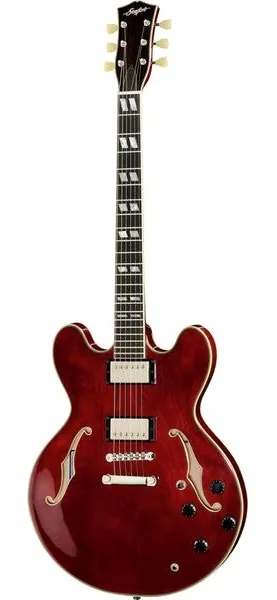
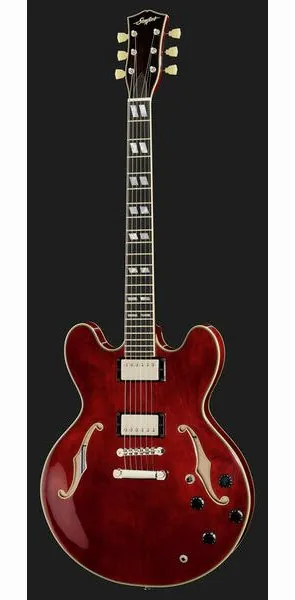
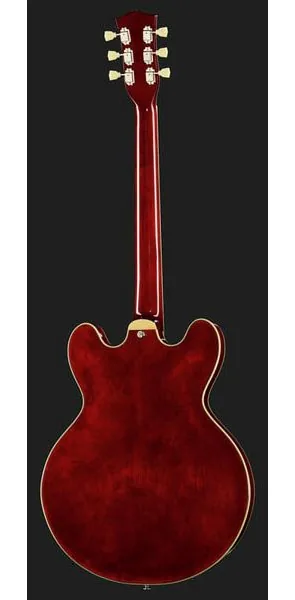
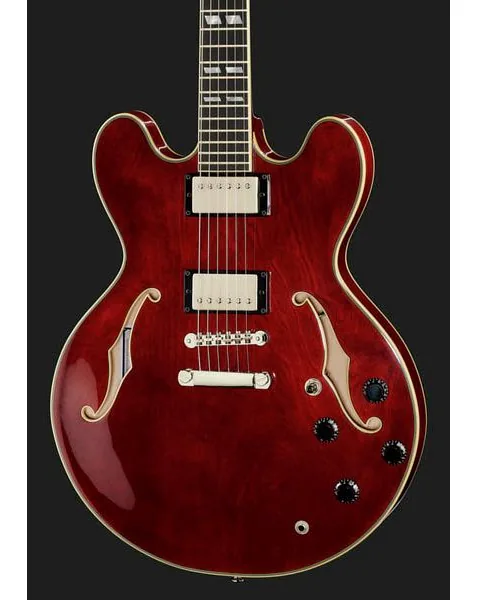
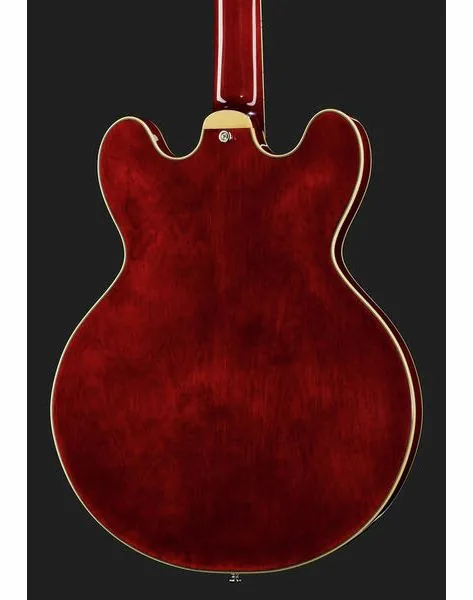
The Stanford CR Thinline 35 Cherry is a semi-hollow electric guitar in the Crossroads series. Its laminated maple top and maple veneer back and sides give it the familiar construction of a thin, chambered-style instrument, while a maple neck and rosewood fingerboard complete the basic recipe. The glossy cherry finish and split-block mother-of-pearl inlays add a traditional look. Stanford lists the guitar as available since February 2020, item number 485098, and prices it at 1179.
One point in the specifications is worth clarifying: this is a semi-hollow guitar, not a fully hollowbody instrument. The body design is described as Thinline semi-hollow, with maple veneer on the back and sides and a veneered maple top. That distinction matters to players choosing an instrument for its construction and response, and it avoids confusing this model with a fully hollow guitar.
Construction and hardware
The neck has a C profile, a 43 mm nut width, and a 630 mm scale. The rosewood fingerboard carries 22 medium-jumbo frets and split-block inlays. A bone nut is specified, along with Kluson-style tulip tuning machines. The bridge setup consists of a Tune-o-matic bridge and a stop tailpiece. There is no tremolo, which keeps the hardware layout straightforward.
Stanford equips the CR Thinline 35 with two humbuckers, controlled by two volume knobs and two tone knobs. The listed string set is D'Addario EXL 110, with gauges from.010 to.046. The brand does not identify the pickup maker or provide specifications in the supplied product details. One owner later reported receiving information from Stanford that the pickups are made in Asia to the company's specifications. That owner cited measured resistances of 8.8 kOhm at the neck and 9.2 kOhm at the bridge. These figures are useful context, but they come from an owner's account rather than the published product specification.
What owners report
Feedback is sharply divided on fret quality. One buyer reported about ten high frets and described the fretwork as a serious problem, despite being pleased with the rest of the guitar. That is a specific warning sign for anyone ordering without an opportunity to inspect the instrument. High frets can make clean, low-action setup difficult, and may require professional fretwork to resolve.
Other owners describe a very different experience. One reported excellent finish and construction, and said that after adjustment the neck allowed low action without fret buzz. The same player praised the humbuckers for blues, rock, and jazz, describing their output as appropriate for those styles. Another owner said the fit and finish, wood selection, fretting, pickups, hardware, and varnish all impressed, and considered the included case to be good quality.
Those contrasting accounts point to a meaningful unit-to-unit inspection risk, rather than a reliable verdict that every example has poor frets or flawless setup. If buying online, ask the seller to check fret level, neck relief, and action before shipment. A hands-on inspection is preferable where possible. The positive owner accounts suggest that a well-adjusted example can perform very well, but they do not erase the report of a guitar arriving with multiple high frets.
Sound, setup, and value
The available comments support a broad-use description, not a claim that the pickups suit every player. A player found the humbuckers effective for blues, rock, and jazz, with a suitable output level. The supplied details do not specify magnet type, wiring options, or other pickup construction data, so comparisons based on those details would be guesswork. Players who need a particular pickup voice should confirm it directly with Stanford or the retailer.
The guitar includes a case and does not include a bag. Its 630 mm scale, C-profile neck, and conventional control layout give buyers concrete points to assess against their preferences. The glossy cherry finish and traditional appointments are also part of the appeal, though appearance alone cannot predict setup quality.
An owner who contacted Stanford said the company confirmed that the guitar is made in China. That owner speculated about a possible manufacturer, but no manufacturer identity is confirmed by the provided information. The same restraint applies to the instrument's production details: Stanford's disclosed specifications leave some questions about sourcing unanswered.
Verdict
The Stanford CR Thinline 35 Cherry offers a well-appointed semi-hollow design, two humbuckers, a bone nut, and an included case. Positive reports describe strong finish quality and satisfying playability after setup. The high-fret complaint is serious enough to make inspection or a seller setup check a sensible part of the purchase. Buyers who can verify the fretwork may find a compelling instrument; those ordering sight unseen should account for the conflicting reports before committing.
Shipping and duties
The retailer ships from its warehouse in Germany. Prices are shown in US dollars and do not include import duties. Orders under roughly $800 usually clear US customs without duty; above that, a duty of a few percent may be collected on delivery. 30-day money-back and a 3-year warranty apply.
Scores by area
Where it shines, where it stumbles
What convinced me
- The semi-hollow maple body, rosewood fingerboard, and included case make for a well-equipped package.
- Players report strong fit and finish, comfortable low action after setup, and humbuckers suited to blues, rock, and jazz.
- The 630 mm scale, C-shaped neck, and 22 medium-jumbo frets offer familiar, accessible playability.
What bugged me
- One buyer reported about ten high frets and found the fretwork unacceptable.
- Stanford does not publish detailed pickup specifications or manufacturing information in the supplied product details.
Is it the right one for you?
Good pick if
A good fit for players seeking a semi-hollow guitar for blues, rock, or jazz, and buyers who value an included case. It may also appeal to shoppers prioritizing strong features for the price and willing to inspect the fretwork.Look elsewhere if
Not ideal for buyers who need consistently verified fretwork without an arrival inspection. Also a poor fit for shoppers who require published pickup details or manufacturing information before buying.Suggested level: Intermediate
Specifications
- Hollowbody guitar
- No
- Semi hollowbody guitar
- Yes
- Color
- Cherry
- Body
- Maple
- Top
- Maple, Laminated
- Neck
- Maple
- Fretboard
- Rosewood
- Frets
- 22
- Scale
- 630 mm
- Pickups
- HH
- Tremolo
- No
- Including case
- Yes
- Incl. bag
- No
What other players say
Customer feedback is divided. Several owners praise the finish, materials, hardware, case, and sound, with one describing excellent playability after setup and strong value. Another reports numerous high frets and an unacceptable playing experience. A customer also says Stanford confirmed that the instrument is made in China and that its pickups are made in Asia to the company's specifications.
“About 10 high frets.”
“Everything else was great, but the frets were a disaster. Cannot recommend.”
“The 335 has exemplary finishing. After setup, the neck plays effortlessly with very low action and no fret buzz.”
Up close
Watch and listen
Before you decide
Questions players ask
Is the Stanford CR Thinline 35 Cherry a fully hollow guitar?
No. It is a semi-hollow guitar, not a fully hollowbody model.
What styles is it suited to?
Its two humbuckers and semi-hollow design are described by an owner as suitable for blues, rock, and jazz.
Does it come with a case?
Yes. A case is included; a separate gig bag is not listed.
Should I expect to adjust it after purchase?
One owner reported excellent low action after setup, while another found around ten high frets. Check the fretwork and setup on arrival.
Are the pickup specifications and place of manufacture published?
They are not listed in the supplied specifications. One customer reports that Stanford confirmed the pickups are made in Asia to its specifications and that the guitar is made in China.
The last word from the bench
This model has a useful mix of familiar controls, a 630 mm scale, and a semi-hollow body suited to blues, rock, and jazz. Several owners describe excellent finishing and strong value, while one reports severe high-fret problems. The contrasting experiences make quality control the main concern, so inspect the frets and setup promptly after purchase. The included case adds practical value.
Hanging next to it
Stanford CR Thinline 35 Cherry
Today's price and delivery time are shown at the retailer.
 Guitar Gear Reviews