Quilter Superblock US
The Quilter Superblock US impresses with truly gigable American tones in a tiny, pedalboard-friendly format. A smart, practical solution for those needing authentic clean and edge-of-breakup sounds without tubes.
★★★★★ 4.8/5 · 89 buyer reviews · 8 min read · updated 2026-10-07 · Tested by Cal Whitaker
Overview: The Quilter Superblock US
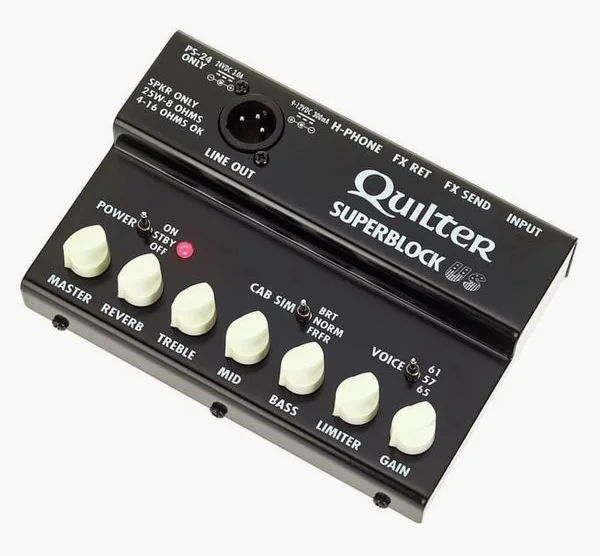
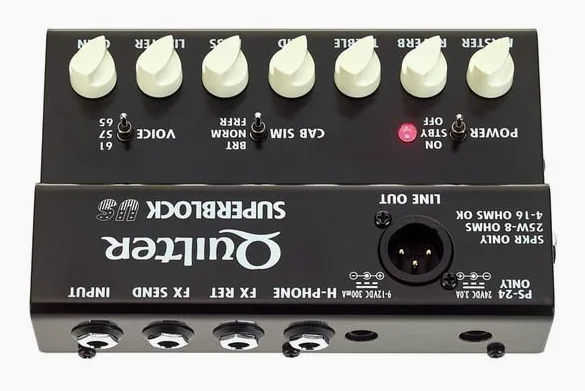
The Quilter Superblock US is a pedal-format solid-state guitar amplifier designed to deliver classic American sounds in a fraction of the weight and size of traditional heads and combos. Coming in at just 610 grams and sized like an oversized effect pedal (165 x 108 x 38 mm), it packs 25 watts of Class D power, a range of connectivity options, and a straightforward control set. It also ships with a 24V DC power supply for full output, and it can run on typical 9V pedalboard power for 1 watt operation, ideal for home use.
Core Features
- Three voicings: Choose between late-'50s California Tweed, early '60s Blonde, and mid-'60s Black panel-style preamp sections.
- Fully analog design: No digital amp modeling. The signal path (except the reverb) is all analog, promising quicker response and organic feel.
- Flexible outputs: 4, 16 ohm speaker output, balanced XLR direct out with cabinet simulation, and a stereo headphone output, all with selectable simulation modes.
- Comprehensive connectivity: Effects loop, control switches/pedal jack, and all-traditional 6.3mm input/output jacks.
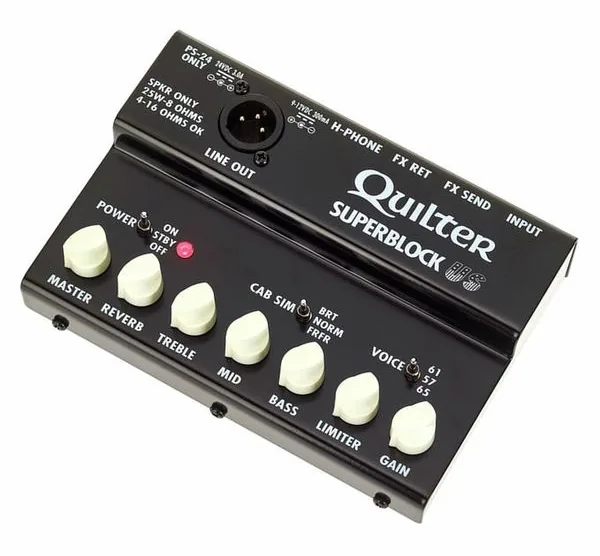
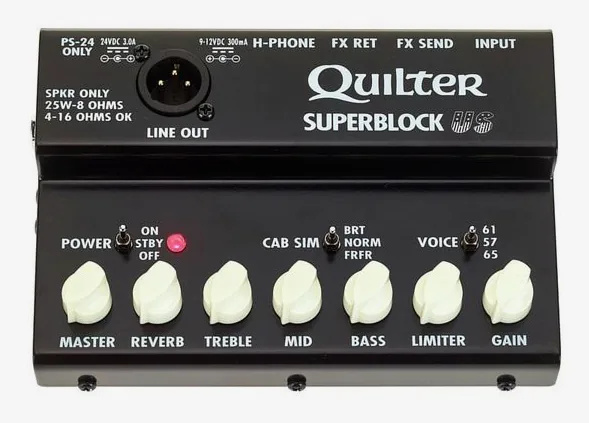
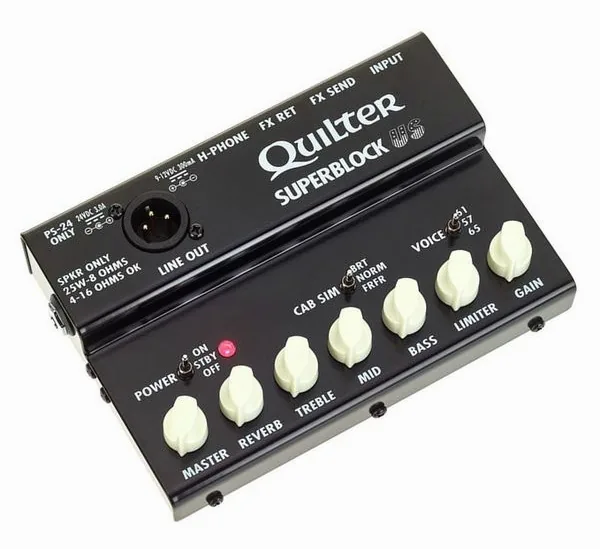
- Controls: Gain, Limiter, Bass, Middle, Treble, Reverb, and Master, plus three-way switches for amp voice and cabinet simulation.
Sound and Playability: Classic American Voices
The signature feature of the Superblock US is the amp voicings, each distinctly referencing a specific era of American amplifier:
- Tweed (60s): Focused mids and early breakup, grainy crunch when pushed, great for blues and early rock textures.
- Blonde (62): Slightly scooped mids, glassy highs. Sits between Tweed warmth and Blackface clarity; versatile for clean rhythm or bluesy leads.
- Black (65): Wide headroom, sparkling cleans, and the classic American spank associated with legendary records.
Real-world reports consistently praise the clarity of the clean, the amount of usable headroom, and the amp's ability to take pedals, especially overdrives, boosters, and modulation devices, without getting muddy or overly compressed. Players report noticeably different tones between the three voices, with a preference often falling on Black (65) for pristine cleans and on Tweed for punchy rhythm work.
Loudness, Dynamics, and Limiter
Despite its lightweight build, the Superblock US delivers serious volume. In band settings, jazz, pop, soul, soft rock, users rarely turn the Master above 3/10 before the amp is loud and punchy. The Limiter control is a standout, acting much like a traditional output stage compression. At mild settings, it softens transients and adds a touch of tube-like sag; cranked up, it helps control peaks for funk, pop, and crunchy rhythm tones. This helps bridge the "feel" gap between real tube stages and solid-state response.
Reverb and EQ
The on-board digital reverb does its job for most users, adding liveliness and space, although it won't fully emulate the depth of a classic spring tank. The three-band active equalizer responds more efficiently than most, allowing accurate correction or flavoring. The Middle control, in particular, shapes the sound well beyond vintage reference circuits, making it simple to suit different guitars and cabinets.
Headphone and Direct Outputs
The value of the Superblock US multiplies once you bring the headphone and XLR direct out into play. Both offer selectable simulation for two cab flavors plus a Linear (full-range, flat response) mode for going direct to mixers, audio interfaces, or monitors. This makes it practical for late-night practice or silent rehearsal and is a highly appreciated feature for studio work or quick live setup without mics.
Pedal Platform and Effects Loop
If you're building a pedalboard, the Superblock delivers. Players describe putting everything in front or using the dedicated effects loop with excellent, clean results. From lush reverbs and modulations to higher-gain overdrive and fuzz, the Quilter handles them without excessive noise or loss of clarity, even at the limit.
Live Use, Construction, and Workflow
Described repeatedly as "roadworthy" by users, the metal housing feels robust though the plastic controls and switches could prove fragile if handled roughly. One point of criticism is the proximity and size of the knobs and switches, manipulating the Standby/On/Off, and voicing toggles requires care to avoid errors.
The amp is small and light enough to fit directly on your pedalboard or to stash in a gig bag, and most musicians found it ideal for travel, venues with limited space, or for city musicians reliant on public transport.
Versatility and Power Options
One of the Superblock's cleverest touches is its dual power supply options. Run it at 24V with the included unit for gigs and rehearsal (full 25W output), or drop to a 9V adapter for 1W, perfect for personal practice or quiet recording. The speaker output supports a broad impedance range (4, 16 ohms), so you can use it with a wide variety of cabs.
Limitations and User Suggestions
- Certain users miss the depth and warmth of real tubes, especially when the amp is pushed hard, overdrive can sound less dynamic or a bit fuzzy in some situations.
- The chassis can slide on top of cabinets (no rubber feet included), adding pads recommended.
- Certain jacks (like speaker output) are awkwardly placed on the side and could be better served at the rear.
- Reverb, while functional, doesn't fully capture the intricacies of vintage spring units.
- Plastic control knobs and switches are small and might feel fragile to heavy-handed users.
Conclusion: Who Is It For?
The Quilter Superblock US stands out as a travel-ready, tonally versatile, and gig-capable amp solution for musicians who want authentic American clean and crunchy tones without a heavy tube head. Perfect for pedalboard users, home recordists, frequent flyers, and city musicians, it covers home, rehearsal, and small club needs with ease. Occasional quirks aside, its balance of portability, flexibility, and convincing sound make it a formidable update to the classic amp-in-a-box concept.
For guitarists craving Fender-style cleans and breakup in a maintenance-free, sub-700g format, few competitors offer as much for the money. Recommended as a main amp for minimalists or a reliable compact backup for tube purists.
Shipping and duties
The retailer ships from its warehouse in Germany. Prices are shown in US dollars and do not include import duties. Orders under roughly $800 usually clear US customs without duty; above that, a duty of a few percent may be collected on delivery. 30-day money-back and a 3-year warranty apply.
Scores by area
Where it shines, where it stumbles
What convinced me
- Extremely compact and lightweight, fits on most pedalboards
- Remarkably loud and maintains presence even against tube amps in a band
- Accurately voiced classic vintage American tones (three distinct voicings)
- Takes pedals exceptionally well via both front and effects loop
- XLR line out with speaker simulation, very practical for recording and direct live situations
What bugged me
- Plastic switches and knobs feel fragile, not ideal for heavy touring
- Overdrive and high gain tones lack dynamics and warmth compared to tubes
- Reverb is functional but doesn't convincingly emulate spring reverb
- Knob and switch placement can be cramped and fiddly
- Main power supply is external and adapter jack can feel flimsy
Is it the right one for you?
Good pick if
Ideal for guitarists seeking authentic American vintage clean and edge-of-breakup tones without the weight and hassle of tube amps. Great for live performers, home and studio musicians needing high-quality direct outputs, and pedalboard users wanting a true amplifier solution that takes effects seamlessly. Especially recommended for those who gig with public transport, play small venues, or practice at variable volumes.Look elsewhere if
Not for players who demand true tube amp sag, warmth, or touch-sensitivity, nor those regularly pushing amps into saturated high-gain territory from the amp itself. Those needing built-in digital connectivity, MIDI, or ultra-rugged road construction may not find it meets their technical expectations.Suggested level: Intermediate
Specifications
- Design
- Floor Effect
- Tube(s)
- No
- Amp modeling
- No
- Effects
- Yes
- Headphone output
- Yes
- Direct out
- Yes
- Midi interface
- No
- Integrated expression pedal
- No
- Connections for pedals or switches
- Yes
- Aux-input
- No
- Integrated tuner
- No
- Usb-port
- No
- Drum-computer
- No
- Power rating
- 25 W
What other players say
Customer reviews consistently praise the Superblock US for authentic American clean and breakup tones, impressive volume, and superb pedal compatibility in a compact package. Many find it replaces much heavier tube amps for practice, recording, and even live gigs, with its line out and flexible power supply a particular highlight. Criticisms mainly focus on delicate feeling knobs and switches, reverb not fully capturing spring character, and a noticeable difference from tube amps in high gain or dynamic 'feel', though most admit these are minor given the huge practical advantages.
It’s loud enough (25 Watts), so the perfect living room amp or for small clubs gigs. Comes with a good reverb and limiter inside... what else?
Great cleans, but unbearable overdrive tones, at least to me.
Takes my pedals (and I have a few) really well, is really loud with the original external 24v power supply, but also with a 9v power supply it is really good for practice at home/living room.
Up close
Watch and listen
Before you decide
Questions players ask
Can the Superblock US be used as a main gigging amp with a band?
Yes, when powered at 24V and paired with a suitable cabinet, its 25 watts are genuinely loud enough for small to mid-sized gigs, rivaling many tube amps in headroom and punch.
How realistic are the classic American voicings?
The three voicings are genuinely distinct and closely approximate classic Tweed, Blonde, and Blackface tones, especially when paired with the right speaker. Some subtle differences remain compared to original tube amps, mainly in dynamic response.
How does it take pedals, especially in the effects loop?
Pedals integrate very well, both up front and in the loop. Most users highlight it as an excellent pedal platform with minimal loss of tone or high end, while overdrives and fuzzes interact as expected.
Is the headphone and direct out usable for silent practice and recording?
Yes, the line out with speaker simulation and headphone jack both deliver convincing tones suitable for home use and recording. Some find the headphone output underpowered with high-impedance headphones, but tone quality is well-praised.
Is the unit robust enough for regular gigging?
Overall construction is solid and reliable, but the plastic knobs and tight switch layout may not withstand rough touring. Many recommend handling it with some care, especially when transporting or setting up.
The last word from the bench
The Superblock US is a standout option for players who crave vintage American amp character at a fraction of the size, weight, and maintenance cost. While hardcore tube purists may still notice differences, most users find its cleans, pedal compatibility, and direct recording capabilities exceptional for both home and live use. Its light weight, flexible power options, and simple interface make it a genuinely gig-ready replacement or backup. Minor gripes with knob durability and overdrive character don't overshadow its overall strong performance and value.
Hanging next to it
Quilter Superblock US
Today's price and delivery time are shown at the retailer.
 Guitar Gear Reviews