Nux Trident
Compact, great-sounding, and affordable modeling processor with caveats in effects quality and software support.
★★★★☆ 4.3/5 · 12 buyer reviews · 7 min read · updated 2026-10-07 · Tested by Cal Whitaker
Nux Trident: Floor-Based Amp Modeling and Effects in a Compact Unit
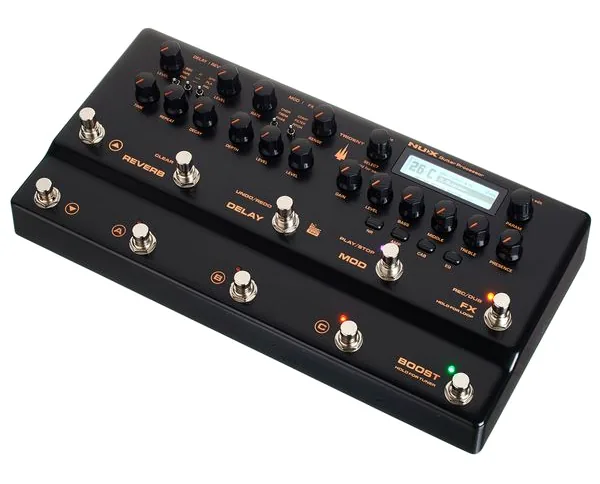
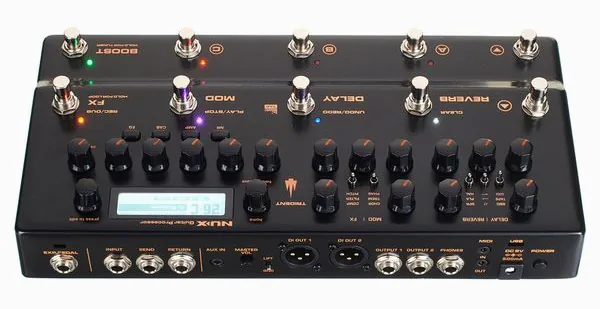
The Nux Trident is a digital amp modeling and effects processor designed as a floor unit. Priced at $275 and released in October 2023, it aims to deliver versatile features for guitarists seeking an all-in-one solution for both gigging and home use. Over the past months, feedback has stacked up from varied contexts: rehearsals, home studio setups, and live performances. This review draws on both the technical specs and a broad range of user experiences to evaluate the Trident's real-world performance.
Main Specifications and Features
- Design: Floor digital effects processor (312 x 164 x 65 mm, 1.65 kg)
- 27 amplifier simulations, 4 microphone simulations, 10 effect simulations
- Effects include: delay, pitch shift, phase shifter, chorus, compressor, filter, reverberation, tremolo
- 96 user presets
- Inputs: instrument jack, auxiliary in, external pedal in, effect loop, MIDI in/out, USB-C
- Outputs: stereo jacks (unbalanced), dual balanced XLR, headphones
- Integrated tuner
- No integrated expression pedal (but can connect external)
- USB port for editing and recording
- 9V DC power supply (adapter included)
The Trident does not use vacuum tubes, focusing instead on digital modeling. It covers all the main connections for modern workflows, dedicated jacks, XLR for direct to PA, MIDI, and a USB-C port for DAW integration and editing via software.
Build Quality and Ergonomics
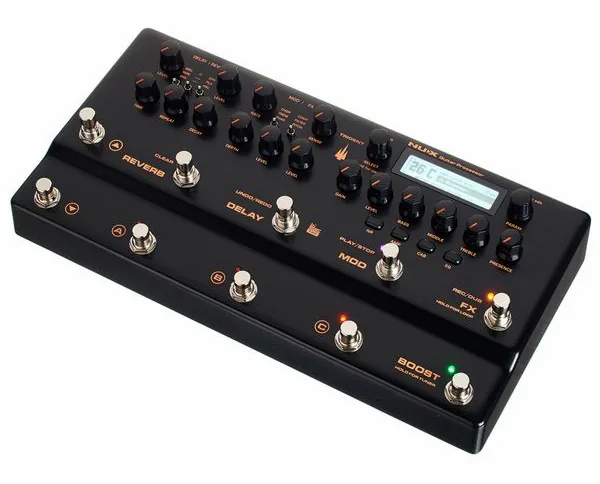
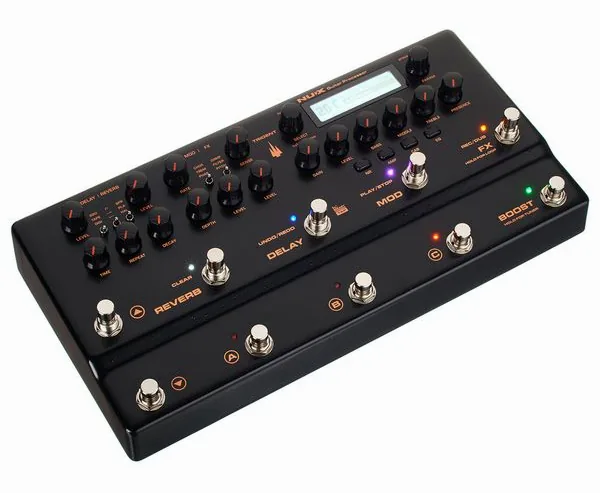
The chassis is metal and sturdy. Several users highlight the compact footprint, noting it saves space compared to large pedalboards or amp heads. All essential connections are clearly labeled on the rear, and the overall enclosure feels well assembled given the price. At 1.65 kg, the pedal is portable enough for gig bags.
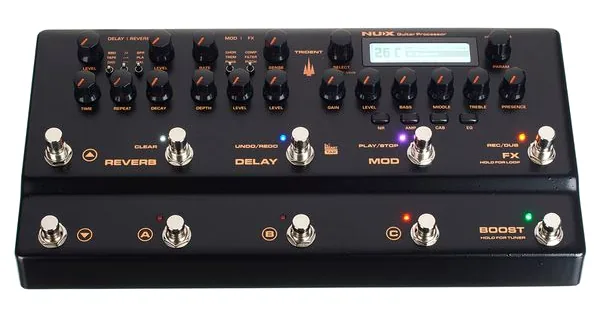
The built-in footswitches are laid out in a straightforward way. Even guitarists with larger shoe sizes report no major trouble hitting switches, though using "footswitch toppers" does improve tactile response for repeated gig use.
Sound Quality: Amps and Effects
The 27 amplifier models cover most classic tones. According to regular users, the amp and cabinet simulations stand up well against much more expensive modeling units. Amp classics like the solid recreation of a Soldano SLO 100 get particular praise, and several reviewers say the direct sound works well with in-ear monitoring rigs, requiring little additional tweak. For sound straight to a mixing console, the Trident's balanced XLR outputs are an advantage.
Regarding the effects, the basics, reverberation, delay, compression, and classic chorus, generally satisfy expectations at this price. Phase shifter and flanger effects fare worse; most testers either avoid them entirely or swap in dedicated external pedals for those sounds. Overdrive and boost options are limited: the classic clean boost and Tube Screamer models are usable, but fuzz is completely missing, and most other drive settings can sound less organic or lack interaction with amp models. Firmware updates have improved some of these areas, but limitations remain, especially for players who rely on nuanced or aggressive modulation or drive effects.
Workflow and Editing: Onboard and Software
The onboard LCD display, while bright enough, is small and not particularly intuitive. The signal chain flows from right to left on hardware, contrary to what most editing software and other brands use. Attention is needed when making quick edits on the unit itself to avoid misplacing effects, especially if you're used to other modeling platforms.
The Trident Editor software (for PC/Mac) is preferable for detailed work. Editing via USB is mostly stable, but the app itself appears outdated, with a non-adjusting square interface that refuses to scale to widescreen. Useful functions like cut, copy, and paste for presets are missing, as is the ability to add custom notes to presets, a real drawback for guitarists juggling multiple setlists. Importantly, users report that profile volumes are not matched, leading to unwanted level spikes when switching between presets, which can be disruptive in performance.
One plus is the ability to assign parameters of effects (such as repeats or decay) to an external expression pedal, even though not all parameter curves are fully customizable. A built-in looper with up to 30 seconds recording time is present, though the control layout is fiddly during live use, especially with larger feet or on a crowded board.
Reliability and Product Support
Most user reports land positive on reliability, but a handful describe units freezing and needing repair or replacement. A larger concern for some users is the lack of regular firmware updates or patches from Nux, along with limited official preset sharing online. This has led to frustration among players hoping to see ongoing improvements or bug fixes after purchase. Nux's product policy appears to lean toward releasing new hardware revisions rather than updating software for existing devices.
Practical Use Cases
On stage, the Trident's direct amp and microphone simulations, compact form factor, and multiple output choices make it easy to travel light, a key reason several owners switched from bigger and pricier rigs. The rapid boot time and low power requirement mean it works equally well as a backup or main unit, with some users suggesting it could even run off a power bank in emergencies. At home or in project studios, it fits easily on a desk and doubles as a USB audio interface for low-latency monitoring and recording.
Despite its many features, the Trident is not a do-everything box. Players who frequently rearrange effect chains on the fly or expect intricate modulation will find the interface and effect quality limiting. Similarly, musicians banking on robust online preset sharing or continuous software improvement may find Nux's support model lacking. Still, for anyone seeking reliable amp simulations, essential effects, and rugged hardware at an affordable price, the Trident remains a strong recommendation, particularly as an entry point into digital guitar processing.
Conclusion
The Nux Trident offers strong value, balancing a solid set of amp and cabinet simulations with usable effects and a tough, gig-friendly chassis. Compromises exist at the level of advanced effect detail, preset management, and ongoing software updates, but for everyday musicians prioritizing tone, flexibility, and price, the Trident gets most of the essentials right. It holds its place as one of the most competitive floor-based amp modelers available in 2024 for under $300.
Shipping and duties
The retailer ships from its warehouse in Germany. Prices are shown in US dollars and do not include import duties. Orders under roughly $800 usually clear US customs without duty; above that, a duty of a few percent may be collected on delivery. 30-day money-back and a 3-year warranty apply.
Scores by area
Where it shines, where it stumbles
What convinced me
- Excellent amp and cabinet simulations with realistic sound quality
- Highly compact, lightweight, and desk-friendly design
- Fast boot-up and straightforward operation
- Comprehensive connectivity: balanced and unbalanced outputs, MIDI, USB-C, effects loop
- Outstanding value for the price
What bugged me
- Limited updates and lacking in software product maintenance
- Some effects (especially phaser, flanger, fuzz) are subpar or missing
- Tiny display with a right-to-left signal chain may confuse users
- Footswitches cannot be freely assigned, limiting flexibility
- PC editor interface lacks polish and has workflow restrictions
Is it the right one for you?
Good pick if
Ideal for home players, budget-conscious gigging musicians, and those seeking a no-fuss all-in-one solution with strong amp and cabinet sounds. Suits users who want a portable processor for direct recording or silent practice and are not reliant on frequent feature updates.Look elsewhere if
Not for effect tweakers or professionals needing advanced editing, flexible footswitch assignment, or top-tier modulation effects. Also less suited to users who expect regular software maintenance and expansive effect libraries.Suggested level: Intermediate
Specifications
- Design
- Floor Effect
- Tube(s)
- No
- Amp modeling
- Yes
- Effects
- Yes
- Headphone output
- Yes
- Direct out
- Yes
- Midi interface
- Yes
- Integrated expression pedal
- No
- Connections for pedals or switches
- Yes
- Aux-input
- Yes
- Integrated tuner
- Yes
- Usb-port
- Yes
- Drum-computer
- No
What other players say
Customer feedback highlights the Trident's compact size, impressive amp and cabinet modeling, and solid sound quality at an affordable price. General usability is praised, especially for home practice and straightforward setups. Common drawbacks include underwhelming modulation effects, a small and sometimes confusing display, and minimal firmware updates. Some experienced users would have preferred more assignable footswitches and a more refined software editor, but general satisfaction is high for its core features and simplicity.
It's awesome. So many different amps and effects. Great build quality and an affordable price. Highly recommended.
Amp and cab sims are very successful here! The SLO 100 clone especially surprised me positively.
The display is tiny and using it is not intuitive...chance of making things worse is high if you change presets on the device rather than with the PC editor.
Up close
Watch and listen
Before you decide
Questions players ask
Does the Nux Trident allow custom effect chain ordering?
You can rearrange effect groups, but not individual effects inside a group, which limits in-depth customization.
How is the build quality of the Nux Trident?
Users note solid build quality and compact dimensions, making it suitable for both desk setups and pedalboards.
Are regular firmware or software updates available?
Firmware updates are infrequent and many users report a lack of ongoing support compared to competing brands.
Is the headphone output suitable for silent practice?
Yes, the headphone output works well for silent practicing at home or during travel.
Can I use the Nux Trident effectively with external pedals?
With its effects loop and multiple inputs/outputs, integrating external pedals is possible and sometimes recommended for certain effects.
The last word from the bench
Nux Trident stands out with convincing amp simulations and impressive value for the money, packaged in a highly portable form factor. While its core sounds are solid, the processor suffers from mediocre modulation effects, a cramped display, and minimal ongoing software support. Power users may feel limited by the fixed footswitch assignments and quirks of the signal chain UI. Still, for players seeking plug-and-play versatility on a tight budget, the Trident delivers where it matters most.
Hanging next to it
Nux Trident
Today's price and delivery time are shown at the retailer.
 Guitar Gear Reviews