Neural DSP Quad Cortex Mini
A portable powerhouse offering top-tier digital amp modeling and effects without compromise on sound quality, though not fully replacing every analog or larger model feature.
★★★★★ 4.7/5 · 20 buyer reviews · 7 min read · updated 2026-10-07 · Tested by Cal Whitaker
Overview: Compact Powerhouse for Guitarists and Producers
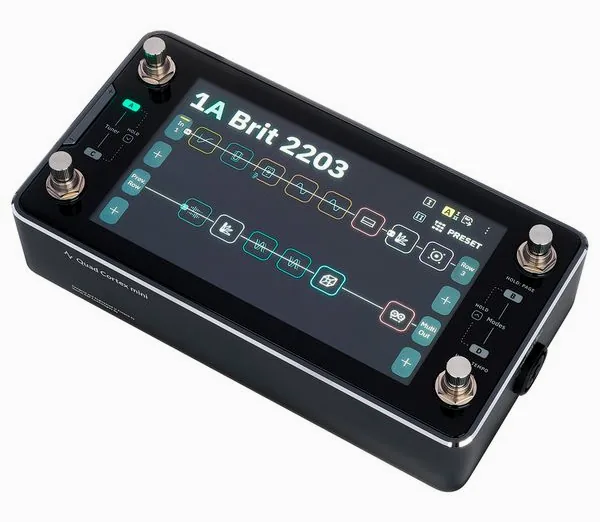
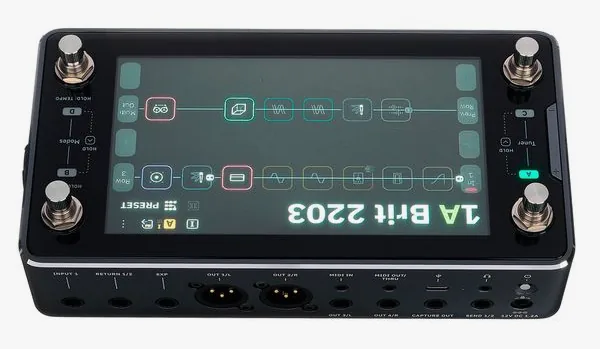
The Neural DSP Quad Cortex Mini enters the floorboard amp modeling scene as a smaller sibling to the flagship Quad Cortex. Packing their latest modeling and effects technology into a form factor measuring 228 x 118 x 65 mm and weighing just 1.5 kg, the Mini aims to deliver no-compromise sound and workflow for both home and live applications. At $1,259, it targets musicians who need full connectivity, professional-grade amp and effect modeling, but also demand portability and a streamlined rig.
Connectivity and Controls
The Mini's design supports a wide range of scenarios, from desktop recording setups to complex pedalboard integration. Inputs comprise a standard quarter-inch jack and a combo quarter-inch/XLR input (dedicated for capturing impulses or running microphones). Dual stereo send and return jacks allow for 4-cable method integration with amplifiers or the routing of external pedals.
- Four outputs: Two balanced XLR and two quarter-inch jacks for maximum flexibility (front-of-house, monitors, re-amping).
- MIDI I/O over dual 3.5 mm stereo jacks, adequate but dated, compared to DIN ports found on competitors.
- USB-C connectivity for audio interface duties, firmware updates, and preset management, a welcome update over the original's USB-B.
- Auxiliary input, dedicated headphone out (3.5 mm), and a locking barrel connector for power, which now guards against accidental disconnects.
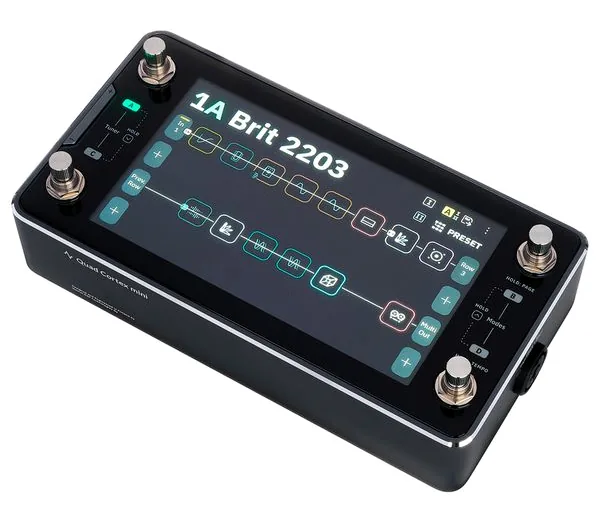
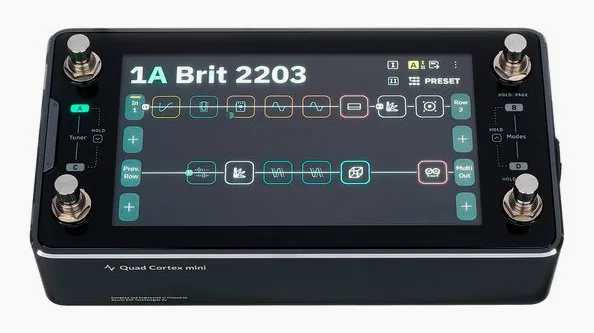
Four combination footswitches function as both rotary dials and stomp controls. Users can assign primary and (limited) secondary functions, although some preset behaviors are locked, restricting customization compared to larger, more flexible boards.
Build Quality and Ease of Use
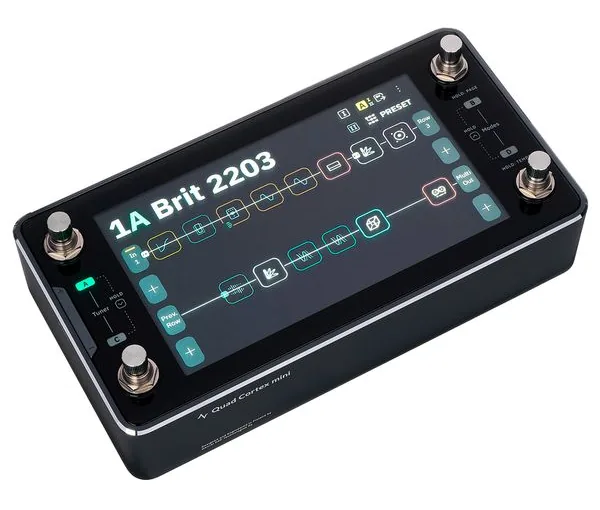
The enclosure is solid aluminum with reinforced edges and minimal seams, an intentional change that makes the device more resilient against spills and easier to keep clean. The seven-inch multi-touch display has received praise for increased durability and improved integration compared to previous models. The interface is fundamentally built for foot control, with the touch screen supplementing editing and patch management.
Frequent user feedback highlights the standalone experience: there is no need for a PC or mobile app to access deep editing, and the device can be fully managed from the unit. The workflow leverages familiar smartphone gestures, tap, swipe, press-and-hold, and makes complex signal routing intuitive. This enables quick changes in a rehearsal setting or on stage, where menu-diving is not practical.
Modeling and Effects
The Mini uses Neural DSP's latest digital signal processing for amp and effects modeling. The overall sound quality is described as "flagship-level," with convincing dynamic response, especially noticeable when playing with lower gain models or using guitar volume controls for organic cleanup. The reverbs are singled out for their realism, translating better through real amplifier FX returns than competing products like the Line 6 Helix, which can sound metallic in comparison. The device supports complex signal chains, users can run up to four amplifier models in parallel without notable DSP strain.
Captures and impulse responses are easily integrated, letting users clone real amp and pedal tones or swap between a diverse library of third-party and Neural community presets. The built-in tuner is accurate and fast, and the looper (though not mentioned in the core specs) is referenced by multiple players as a practical tool for home practice or songwriting.
Limitations and Points of Friction
No unit in this price range is without quirks. The Mini loses the integrated expression pedal of some rivals. Secondary footswitch functions are pre-programmed, with no user override possible, frustration for those with specific needs. Some users lament the "Gigview" interface; despite the large screen, it offers less flexible live control layouts than the larger Quad Cortex.
Other details: The onboard microphone preamp is limited to 30 dB of gain, restricting optimal use with low-output dynamic mics. The MIDI implementation, though present, is less sophisticated than on some much older devices, impacting those with advanced control needs or rigid live setups. Power supply is included and now lockable, but the device still demands careful attention when powering from a battery or third-party mobile rig, owing to its somewhat high draw (1.2 A at 12V).
Finally, the Mini is not 1:1 backup-compatible with full-size Quad Cortex units: bank structures and hybrid modes differ, frustrating those who want perfect redundancy.
User Experience: Live and Studio
On the plus side, the Mini easily finds a place on small pedalboards and desktops. Most users agree its modeling quality and compact footprint make it a category leader. For gigging, expanding with external MIDI foot controllers is recommended to unlock more flexible preset switching on stage. The unit's ruggedness and modern interface are strong bonuses for heavy touring or studio transport.
On the downside, "amp in the room" purists seeking the exact punch and feel of high-gain analog heads may find the overdriven models somewhat flat or two-dimensional. This is a common critique of all modelers but remains a subjective hurdle for some. Still, versatility, ease of use, and consistency overshadow these concerns for most.
Verdict
The Neural DSP Quad Cortex Mini delivers a high-performance alternative to bulkier modelers. Its sound quality, build, and effective interface design justify the price for those needing desktop or tight-pedalboard solutions. For best usability, pair with an external expression pedal or MIDI switcher if you plan to gig heavily. It might not satisfy every amp traditionalist, and the MIDI features could use an update, but for power, flexibility, and modern workflow within a portable frame, the Mini is a stand-out contender.
Shipping and duties
The retailer ships from its warehouse in Germany. Prices are shown in US dollars and do not include import duties. Orders under roughly $800 usually clear US customs without duty; above that, a duty of a few percent may be collected on delivery. 30-day money-back and a 3-year warranty apply.
Scores by area
Where it shines, where it stumbles
What convinced me
- Extremely realistic amp and effect simulations with excellent dynamics
- Highly compact and robust construction for portability and durability
- Intuitive 7-inch multi-touch display with quick interface navigation
- Wide range of input/output options and flexible routing
- High DSP power allows complex signal chains and simultaneous amp blending
What bugged me
- Some software limitations: inconsistent bank system compared to larger model, certain secondary footswitch functions non-editable
- Four footswitches can limit live flexibility without external controllers
- Preamp gain limited to 30dB for microphone input
- MIDI implementation considered outdated relative to competitors
- Some users find the overdrive sounds less convincing than analog amps
Is it the right one for you?
Good pick if
Ideal for recording musicians, gigging guitarists or bassists who want high-quality tones in a small, reliable unit, and producers needing maximum flexibility. Great for those seeking a standalone processor with broad connectivity who value high-fidelity digital modeling.Look elsewhere if
Not suited for analog amp purists who dislike digital overdrive sounds, or players needing more than four footswitches onboard for live setup flexibility without external controllers. Those on a tight budget or wanting a minimal learning curve may prefer alternatives.Suggested level: Professional
Specifications
- Design
- Floorboard
- Tube(s)
- No
- Amp modeling
- Yes
- Effects
- Yes
- Headphone output
- Yes
- Direct out
- Yes
- Midi interface
- Yes
- Integrated expression pedal
- No
- Connections for pedals or switches
- Yes
- Aux-input
- Yes
- Integrated tuner
- Yes
- Usb-port
- Yes
- Drum-computer
- No
- Incl. tuner
- Yes
What other players say
Customer reviews report that the Quad Cortex Mini delivers exceptional sound quality and amp simulation, with a compact form well suited to both studio and live use. The touch display and interface are praised for ease of use, and build quality receives consistently positive remarks. Some software-related complaints arise, such as footswitch configuration and a few missing advanced features from the larger model. Most users express satisfaction with the device's performance, though a minority note dissatisfaction with its artificial distortion sounds or rare hardware issues. The price, while high, is seen as justified by the level of quality provided.
The sound leaves nothing to be desired and is simply state of the art.
Placed an order within the first 5 minutes when it popped up. What a variety of tones, routing capabilities, DSP power, you can blend in four amps and it still handles.
The compact size is another big advantage, I can fit it on my pedalboard without any issues.
Up close
Watch and listen
Before you decide
Questions players ask
Does the Quad Cortex Mini lose any core functionality compared to the larger Quad Cortex?
No significant functionality is lost; it retains the modeling, capturing, effects, and connectivity features of its bigger sibling, though footswitch quantity and some minor software differences may affect workflow for certain users.
Can the Quad Cortex Mini be used standalone without a computer or app?
Yes, the unit operates fully standalone, including all sound editing and performance controls, thanks to its multi-touch display and versatile onboard interface.
What are the main input and output options available?
It offers multiple inputs (guitar, mic/line combo), stereo sends/returns, four main outputs (XLR and 1/4 inch), headphone out, MIDI, USB-C, and connections for pedal switches.
Is the device suitable for live use and stage performance?
Yes, it is robust and capable for live performance, though those needing more footswitches for hands-free operation may want to add external MIDI controllers for best workflow.
Are there any known issues with reliability or build quality?
Overall construction is robust and high-quality, though a rare report mentions a dead-on-arrival unit, which was handled via return and replacement. The screen and enclosure are considered particularly tough.
The last word from the bench
The Neural DSP Quad Cortex Mini is one of the most advanced and compact digital guitar processors currently available, delivering outstanding sound quality, extensive connectivity, and robust construction. Its modeling and capturing technology, user interface, and portable form factor make it an excellent choice for both studio and live use. Some limitations in software flexibility and live footswitch operation may matter to advanced users, and the price is premium, but the overall value remains high for those seeking best-in-class digital tone. This unit sets a new standard for gig-ready modelers and desktop recording alike.
Hanging next to it
Neural DSP Quad Cortex Mini
Today's price and delivery time are shown at the retailer.
 Guitar Gear Reviews