Meris LVX Modular Delay System
Meris LVX redefines delay pedals, offering unmatched modular power and sound quality for adventurous musicians.
★★★★★ 4.7/5 · 15 buyer reviews · 7 min read · updated 2026-10-07 · Tested by Cal Whitaker
Introduction: Boundary-Pushing Delay Hardware
The Meris LVX Modular Delay System marks a distinct shift from conventional delay pedals, bringing a modular approach with extensive signal processing, deep modulation capabilities, and true stereo architecture. At $679 and weighing in at 680 grams, it is positioned as a serious tool for experimental musicians, sound designers, and producers who demand more than classic repeats.
Construction and Interface
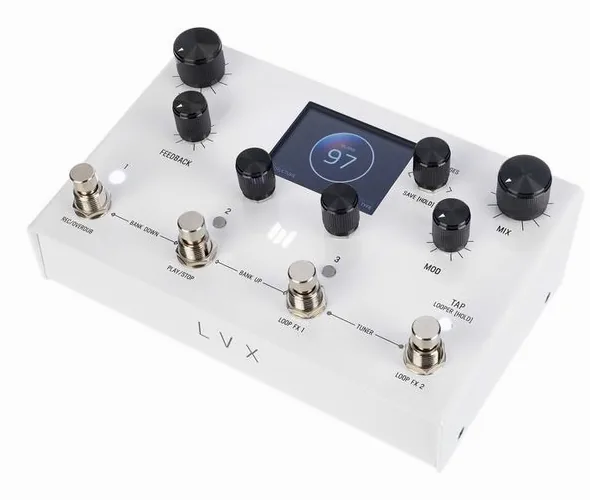
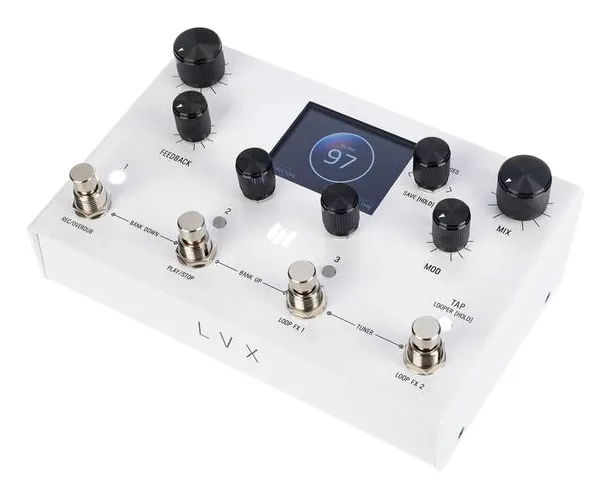
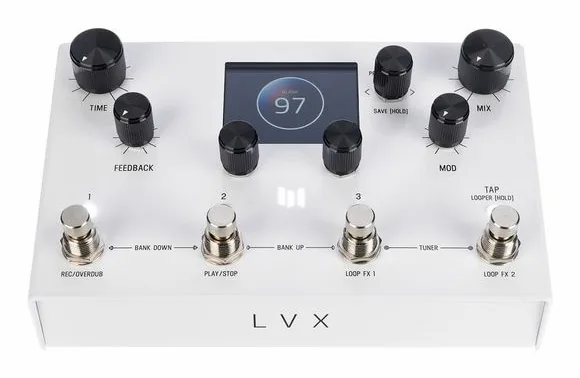
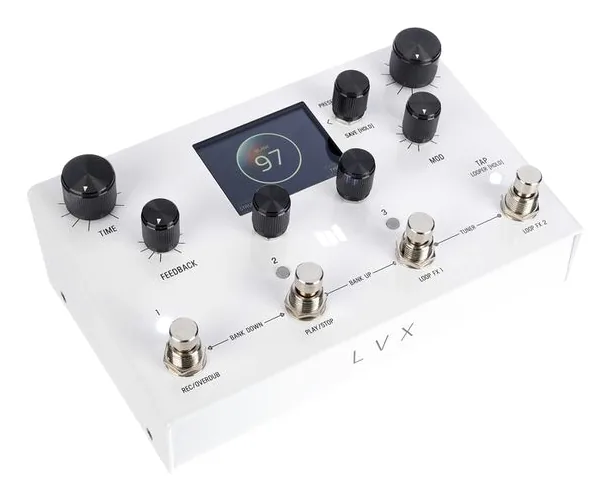
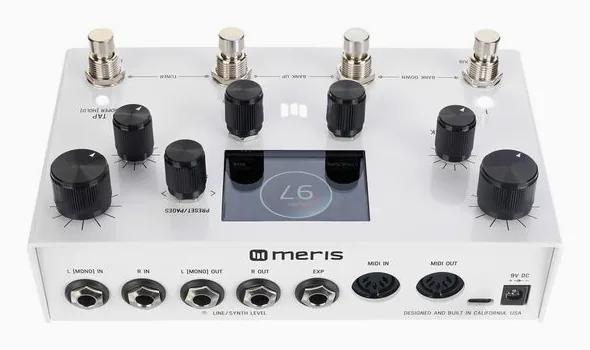
The LVX sports a robust metal enclosure (184 x 114 x 51 mm), exuding the durability seen in studio-grade devices. Controls are abundant, with dedicated knobs for time, feedback, modulation, mix, and multiple assignable parameters, plus four footswitches for bypass, looper, and tap tempo (desktop users also benefit from four LED preset/tap buttons). The color display, paired with text edit mode, lets users navigate its parameter-rich environment, crucial, given that there are easily over 50 adjustable controls per patch.
Core Architecture: Modular Delay Engine
Central to the LVX is its configurable dual delay engine with up to 2540 milliseconds per side, embedded within a flexible modular architecture. Users can arrange not just traditional delay blocks, but also insert modules like filters, pitch shifters, modulation, and even preamp stages at multiple points in the virtual signal chain: before, after, or within the feedback loop. These modules draw on algorithms from Meris designs like the Polymoon and Ottobit Jr., opening up textures well beyond standard repeats.
Selectable note divisions for each stereo side and digitally controlled analog mix bus allow precise rhythmic and tonal sculpting. Delay times range from a crisp 1 millisecond up to a stretched 4000 milliseconds, more than enough for everything from slapback to expansive ambient trails.
Sound Quality and Creative Range
What sets the LVX apart is the headroom and fidelity of its sound path: a high-quality analog signal route with a field-effect transistor input, 24-bit A/D and D/A converters, and floating point digital signal processing at 48 kHz. The frequency response is linear from sub-bass through sparkle (20 Hz, 20 kHz), supporting both instrument and line-level sources (switchable). In practice, the pedal delivers lush, noise-free repeats and artifacts: pitch shifting stays smooth unless deliberately driven to lo-fi, filters resonate without metallic harshness, and stereo imaging is exceptionally wide, on par with high-end studio processors.
The modifier section is a standout, letting you target nearly any parameter with up to two low-frequency oscillators, an envelope follower, a sixteen-step sequencer, and sample & hold. Automation and morphing between settings is fluid, making it possible to create random glitches, rhythmic patterns, or evolving atmospheres with little effort, especially once you master the routing matrix.
Factory presets offer a tour of shimmering multi-tap delays, granular soundscapes, crystalline pitch-inflected reverbs, and overdriven or glitchy textures. While some voicings may be too experimental for bread-and-butter use, they provide reference points for building your own. The ability to save up to 99 presets (across 33 banks), as well as assign three favorites for direct access, is indispensable for live or studio work.
Stereo Looper and Connectivity
Unique among delay pedals, the LVX's stereo looper is always available, up to 60 seconds, with undiminished fidelity. Looping can be engaged on the fly, letting you layer motifs or experiment with sound-on-sound techniques without leaving performance mode. Inputs and outputs are dual quarter-inch mono jacks (true stereo); MIDI IN and THRU, USB-C (for updates), and assignable expression pedal ensure integration with modern rigs. There is also a tuner available at all times, with configurable reference and output.
Workflow, Editor, and User Experience
The LVX is intentionally deep. Onboard programming is efficient for surface-level edits thanks to clear navigation and real-time controls, but sculpting advanced patches, especially complex routings or automation, demands patience. For many, especially live players, this learning curve is a challenge. The recent arrival of a computer editor is a genuine relief: presets can now be managed, saved, and edited on Mac or PC, smoothing workflow and reducing menu-diving. The LOX thrives with a tweak-and-listen approach, but those who thrive on recallable workflows or familiar effect chains should expect an acclimation period.
Performance and Applications
- Unmatched flexibility for sound design, ambient, experimental, and modern pop production
- Immaculate stereo processing with ultra-wide imaging and pristine signal integrity
- Viable for guitar, synthesizer, voice, wind instruments, and outboard applications (e.g., via audio interface aux send)
- Responsive to expression pedal assignments and MIDI automation: several parameters can be controlled simultaneously
- Live use is dominated by presets, parameter diving in real time is possible, but less practical without preparation
- Headroom and output resolution cater equally to pedalboard and studio desk scenarios
Limitations and User Suitability
This is not a beginner's tool: even with dedicated knobs and a logical interface, the depth of the architecture can overwhelm. Battery power is not supported, and the required 9V adapter is not included. The price is undeniably premium, but build quality and sonic flexibility reflect the investment. Some users may prefer classic, single-knob delays for immediacy; for everyone else, especially those coming from modular synthesis or audio production, the LVX serves as a creative accomplice ready to shape entirely new sound worlds.
Conclusion
The Meris LVX Modular Delay System is a remarkable sound design machine, delivering studio-grade delay, modulation, and looping features in a single pedal. It blurs the line between stompbox and modular processor, making it as capable in the studio as it is on a pedalboard. For experimentalists and forward-thinking artists, the LVX is a new standard, complex but ultimately rewarding.
Shipping and duties
The retailer ships from its warehouse in Germany. Prices are shown in US dollars and do not include import duties. Orders under roughly $800 usually clear US customs without duty; above that, a duty of a few percent may be collected on delivery. 30-day money-back and a 3-year warranty apply.
Scores by area
Where it shines, where it stumbles
What convinced me
- Extremely flexible modular delay architecture supports deep sound design
- Intuitive color display and text edit mode help manage complex editing
- Pristine, studio-quality stereo sound path with robust build quality
- Modifier section enables extensive parameter automation and creative routing
- Versatile enough for use beyond guitar, synths, vocals, saxophone, studio applications
What bugged me
- Steep learning curve; advanced editing can feel overwhelming
- Expensive, positioning it as a boutique device
- No included power supply and lacks tap tempo function
- Factory presets may not suit everyone; strong reliance on user presets
- Editing on the hardware alone can be tedious without PC/Mac editor
Is it the right one for you?
Good pick if
Ideal for experimental musicians, studio professionals, and sound designers seeking deep sonic sculpting and modular routing, with an appetite for exploring innovative effects. Works extremely well in setups involving synthesizers, vocals, and creative instrument processing. Suits those who prioritize sound quality and are comfortable diving into advanced editing.Look elsewhere if
Not recommended for beginners or players wanting instant, simple delay sounds or plug-and-play usability. Musicians unwilling to spend time learning a complex interface or those on a tight budget may struggle to reap its full benefits.Suggested level: Professional
Specifications
- Analog
- No
- Delay time
- 1 - 4000 ms
- Tap feature
- No
- Battery operation
- No
- Psu included
- No
What other players say
Customer feedback highlights the LVX's unparalleled modular capabilities, spectacular sound quality, and robust construction. Many note its complexity requires patience to master, but the payoff is limitless sonic potential and customization. While seen as intimidating for beginners, users praise the intuitive display and recent software editor, pointing out its effectiveness across various instruments and in studio environments. Criticism centers on the steep learning curve and premium cost, with most agreeing these are justified by the creative potential.
This is not just an Echo machine it’s a real organic creation tool. Very difficult to get your head around, but worth the effort.
The LVX beats all comparable delays at the moment. The only flaw is how easy it is to change a sound, since you need to get into the heart of its parameters, so not always obvious live, better for using presets!
Its sound quality seems flawless, the learning curve is real but the software logic makes it intuitive, I quickly felt 'at home'.
Up close
Watch and listen
Before you decide
Questions players ask
Is the Meris LVX suitable for live settings?
It is possible to use the LVX live, but quick sound changes can be challenging due to deep menu diving; using presets and the new editor greatly helps for stage use.
Does the LVX come with a power supply?
No, the required 9V DC adapter is not included and must be purchased separately.
Can the LVX be used with other instruments aside from guitar?
Yes, users report excellent results on synthesizers, vocals, saxophone, and in studio routing, thanks to true stereo I/O and flexible gain staging.
Is the editor software essential for operation?
The unit functions fully standalone, but the recent PC/Mac editor simplifies deep editing, making complex programming much more manageable.
Can expression pedals and MIDI be used to control parameters?
Yes, the LVX allows mapping of multiple parameters to expression pedals and supports extensive MIDI control, ideal for on-the-fly performance tweaks.
The last word from the bench
The Meris LVX Modular Delay System stands far above traditional delays, catering to inventive musicians and sound designers. Its architecture and modifier section push creative boundaries, yielding exceptional stereo effects and textures. While it's not beginner-friendly and demands time to master, the payoff is immense sonic versatility and inspiration. A powerhouse for studios and boundary-pushing performers able to invest in its complexity.
Hanging next to it
Meris LVX Modular Delay System
Today's price and delivery time are shown at the retailer.
 Guitar Gear Reviews