Harley Benton RB-612BK Classic Series
The Harley Benton RB-612BK delivers an appealing electric 12-string jangle and impressive value for its price. Expect some setup compromises, especially around intonation and restringing, and make sure a wide 12-string neck suits your hands.
★★★★★ 4.6/5 · 80 buyer reviews · 7 min read · updated 2026-10-07 · Tested by Cal Whitaker
Harley Benton RB-612BK Classic Series review
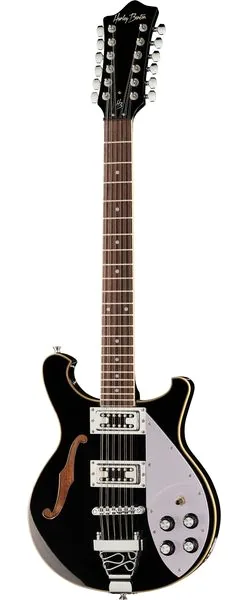
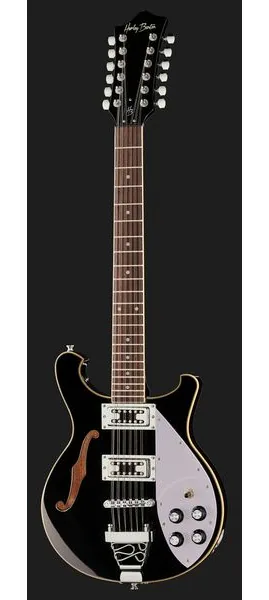
The Harley Benton RB-612BK Classic Series is an electric 12-string built around a familiar semi-hollow silhouette, with a black finish, body and neck binding, dot inlays, and a decorative tailpiece. At a listed price of $255, it makes the jangling sound of a 12-string more accessible than many established alternatives. Owner reports suggest that the value can be striking, though the setup and hardware details deserve a closer look.
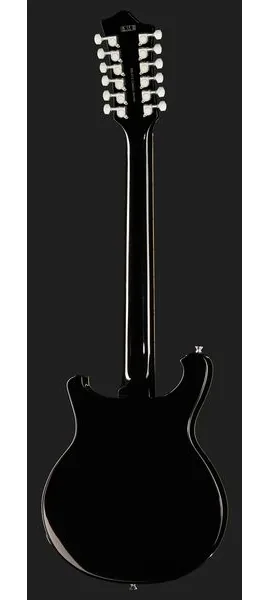
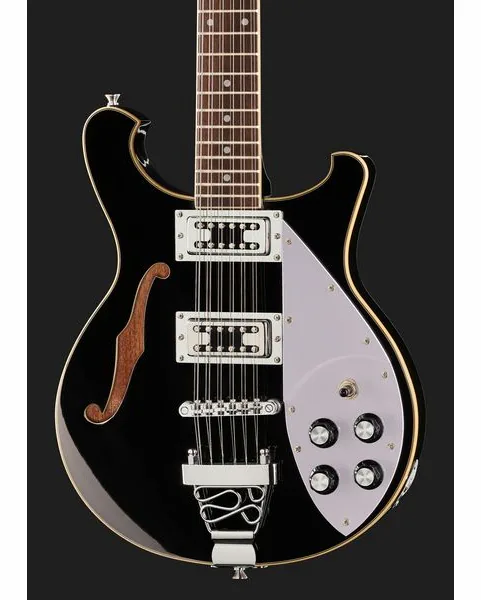
There is a specification discrepancy worth flagging: the supplied product details list both mahogany and okoume for the body, and both amaranth and laurel for the fingerboard. The information does not establish which materials apply to the reviewed version. The stated construction otherwise includes a maple set neck, C-shaped neck profile, 22 frets, a 628 mm scale length, a 350 mm fingerboard radius, and a 48 mm nut width. It has two Artec Classic mini humbuckers, two volume and two tone controls, and a three-way pickup selector.
Build, balance, and playability
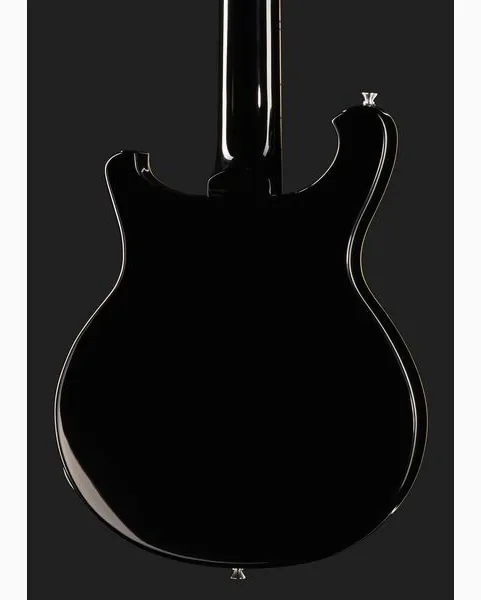
Many owners describe a clean-looking instrument with a smooth black finish and convincing vintage styling. Reports on individual examples are not uniform: some arrived in excellent condition with very little adjustment needed, while others had cosmetic blemishes, rough fret ends, or setup issues. That variation makes an inspection on arrival sensible, especially at this price.
The compact body keeps the guitar lighter and smaller than some players expect from a semi-hollow 12-string. That can make it comfortable to handle, but balance is more divisive. Some players find it well balanced, while others report neck dive when standing. A secure strap may help, and anyone who mainly plays seated may be less affected.
The neck is wider than a typical six-string neck, as the paired strings require room. Players often adjust quickly, but close-set chord shapes can feel cramped, and sustained playing may take more hand pressure. The reported factory setup ranges from very playable to needing a truss rod adjustment, lower action, or intonation work. A dual-action truss rod is included, but players who are not comfortable with adjustments may want a technician to check the instrument.
Sound and tuning
The two mini humbuckers are a strong part of the appeal. Owners commonly praise the clear, ringing character in clean settings, with the familiar layered shimmer that gives a 12-string its place in arpeggios, chord work, and recording. The pickup selector offers three positions, and the volume and tone controls are reported to respond smoothly. Some players find the pickups darker or less forceful than higher-end options, particularly on the lower strings. Others are happy with the stock sound and see no need to replace them.
Effects and amplifier settings can shape the result. Players report good results with compression, chorus, and equalization, while moderate overdrive can work for rhythm parts and melodic lines. Dense distortion may make the closely spaced string pairs sound less defined. The guitar's acoustic, unplugged voice also earns positive comments, although the hollow body should not be mistaken for a substitute for an acoustic 12-string.
Tuning a 12-string takes patience, and this model is no exception. Several owners say the tuners hold pitch well once the strings have settled. Others have found the tuning machines imprecise or needed to retune frequently. Intonation also involves a compromise: each saddle serves a pair of strings, so the two strings cannot be adjusted independently. Some players report a small discrepancy between paired strings, particularly on the G strings.
The main compromise: restringing
The Tune-o-Matic-style bridge is straightforward in concept, but the Casino-style tailpiece draws repeated criticism for making restringing fiddly. Feeding two strings through the shared openings can take time, and the bridge saddles may not provide separate grooves for every string on some examples. If you change strings regularly, this is a practical drawback to consider. Checking the string seating and tuning stability after restringing is especially important.
Verdict
The RB-612BK is a compelling low-cost route to electric 12-string tones. Its strongest points are the distinctive chime, attractive styling, compact body, and generally capable electronics. Its limitations are the potentially laborious restringing process, paired-string intonation compromises, and inconsistent reports about setup, finish, and balance. Treat it as a budget instrument that may need attention rather than assuming every example is ready for immediate stage use.
For recording, occasional songs in a set, or exploring a new sound at home, the Harley Benton offers a lot for its listed price. Players who need flawless intonation, easy string changes, or consistently refined setup may prefer to budget for professional adjustments or consider a higher-priced 12-string.
Shipping and duties
The retailer ships from its warehouse in Germany. Prices are shown in US dollars and do not include import duties. Orders under roughly $800 usually clear US customs without duty; above that, a duty of a few percent may be collected on delivery. 30-day money-back and a 3-year warranty apply.
Scores by area
Where it shines, where it stumbles
What convinced me
- Distinctive electric 12-string chime with clear, sustained tones that work well for arpeggios, rhythm parts, recording, and classic rock sounds.
- Strong value at the listed price, with many owners praising the finish, feel, and overall build for a budget instrument.
- Two mini humbuckers, independent volume and tone controls, and a three-way switch provide useful tonal options.
- Compact, lightweight body and a comfortable neck make it an appealing alternative to larger 12-string guitars.
What bugged me
- The paired-string saddles limit precise intonation adjustment, and restringing can be slow and frustrating.
- The wide neck and twelve strings demand more finger strength and accuracy than a six-string guitar.
- Some owners report neck dive, inconsistent setup, stiff tuners, fretwork issues, or cosmetic flaws on arrival.
- The pickups may sound subdued or mid-focused to some players, and the tone is not identical to a Rickenbacker.
Is it the right one for you?
Good pick if
A good fit for players who want electric 12-string shimmer for classic rock, indie, pop, or recording. Also suited to budget-conscious buyers who are comfortable checking or adjusting a guitar setup.Look elsewhere if
Not ideal for players who need effortless restringing, fully independent string intonation, or a narrow six-string-style neck. Look elsewhere if you expect premium-level consistency or an exact Rickenbacker sound.Suggested level: Intermediate
Specifications
- Color
- Black
- Body
- Mahogany
- Top
- Mahogany
- Fretboard
- Amaranth
- Frets
- 22
- Scale
- 628 mm
- Pickups
- HH
- Including case
- No
- Incl. gigbag
- No
- Design
- ES-Style
- Neck
- Maple
- Pickup system
- HH
What other players say
Customer feedback is mostly positive, especially about the distinctive 12-string sound, attractive appearance, and value for money. Many owners describe good playability after setup and use the guitar for recording, home playing, or selected live songs. Critical comments focus on the wide neck, occasional headstock imbalance, variable factory adjustments, tuning and intonation compromises, and the awkward tailpiece during restringing. Reports of finish or fret issues vary between individual instruments.
it's just so much fun to play.
The tailpiece is a nightmare for restringing.
The guitar sounds great, and it plays decently enough.
Up close
Watch and listen
Before you decide
Questions players ask
Does it sound like a Rickenbacker?
It produces the bright, ringing character associated with electric 12-string guitars, but owners note that it is not an exact tonal match. Compression and equalization can help move the sound closer to that familiar jangle.
Is it comfortable for someone used to a six-string guitar?
The neck is wider and the paired strings require more accurate fretting and finger pressure. Many players adapt quickly, but dense chords can feel tiring, particularly near the nut.
Will it need a professional setup?
Some owners received examples that played well straight out of the box, while others needed neck relief, action, or intonation adjustments. A careful setup is advisable, and buyers who do not make adjustments themselves may want a technician to check it.
Is tuning and restringing difficult?
Tuning any 12-string takes care, and the shared saddles prevent independent intonation adjustment for every string. Several owners also found the tailpiece fiddly when fitting new strings.
Is it suitable as a main gigging guitar?
It can work on stage, and some owners use it regularly for performances. However, its 12-string tuning demands and possible neck dive make it better suited to players who specifically need its sound than as an all-purpose primary guitar.
The last word from the bench
For players seeking the shimmering sound of an electric 12-string without spending heavily, the RB-612BK is a compelling option. Owners often report satisfying tones, attractive looks, and good playability once the guitar is properly set up. The shared saddles make exact intonation a compromise, while the tailpiece can make string changes tedious. Buy it for its sound and value, not as a flawless substitute for a premium 12-string.
Hanging next to it
Harley Benton RB-612BK Classic Series
Today's price and delivery time are shown at the retailer.
 Guitar Gear Reviews