Harley Benton R-458MN WH Progressive Series
The R-458MN WH offers a comfortable, low-cost introduction to eight-string guitar, with a maple neck and a finish that many owners praise. Expect possible setup work, and treat the stock pickups and tuners as budget components rather than guaranteed strengths.
★★★★★ 4.5/5 · 109 buyer reviews · 7 min read · updated 2026-10-07 · Tested by Cal Whitaker
Harley Benton R-458MN WH Progressive Series review
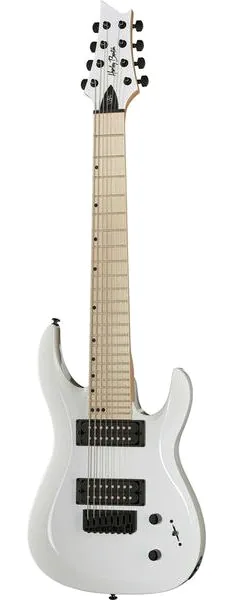
The Harley Benton R-458MN WH Progressive Series is an eight-string electric guitar aimed at players who want to explore extended-range playing without spending heavily. Its listed price is 169, and its straightforward specification makes the goal clear: a poplar body, maple bolt-on neck and fingerboard, two high-gain humbuckers, and a 673 mm scale. There is no tremolo, case, or gig bag included.
That basic formula has earned the guitar a strong following among first-time eight-string buyers. Owners regularly praise the comfortable neck, manageable weight, and value. Reports about setup and electronics are less consistent. Some guitars arrive ready to play, while others need fret polishing, wiring checks, or adjustments before they meet the owner's expectations. That variation matters more than the simple specification sheet suggests.
Comfort and construction
The maple neck has a Speed D profile, with a 355 mm fingerboard radius and 24 medium-jumbo frets. Reviewers often describe the neck as smooth and surprisingly comfortable for an eight-string instrument. Players coming from six-string guitars may need time to adjust to the wider fretboard and closer string spacing, but several owners found the transition manageable. The non-fanned fret layout also feels familiar to players who have not used multiscale guitars.
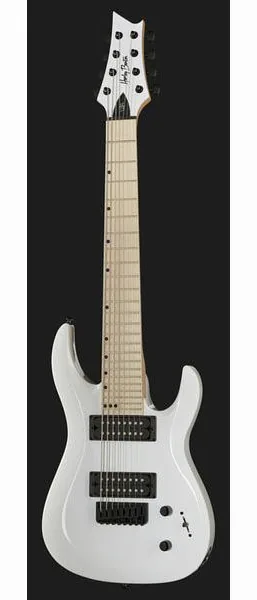
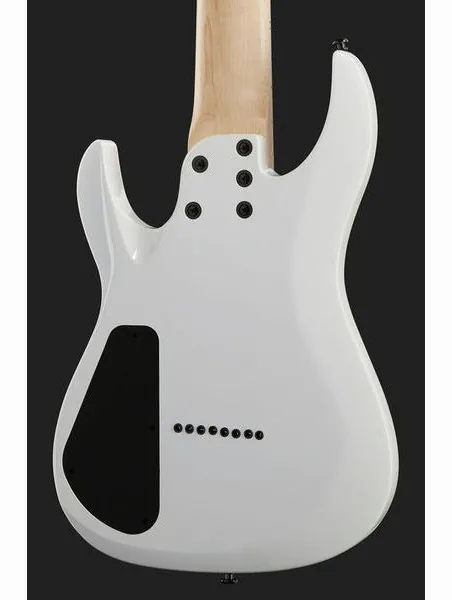
The white, high-gloss finish, black hardware, and offset dot inlays give the guitar a distinctive look. Owners frequently report that it feels lighter and better balanced than they expected. Many examples arrived with good action and intonation. Others had rough fret surfaces, dry fingerboards, minor finish blemishes, or setup problems such as buzz and uneven response on higher frets. These are not universal faults, but the owner reports make a basic inspection and setup a sensible part of the purchase.
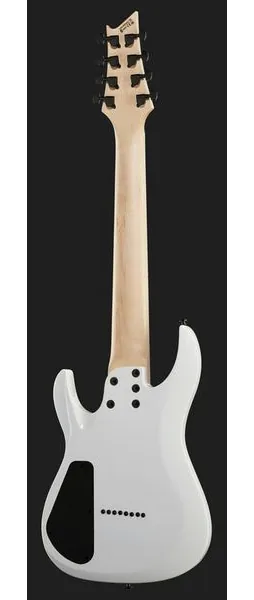
The 24 frets provide access across a useful range, and the fixed DLX bridge keeps the hardware uncomplicated. The tuning machines receive mixed comments: some owners say their guitar holds pitch well, while others report backlash, imprecise adjustment, or difficulty maintaining tuning with lower tunings. A fresh string set, careful stretching, and a proper setup can help, though players seeking dependable performance for regular recording or live use may consider a hardware upgrade.
Pickups and amplified sound
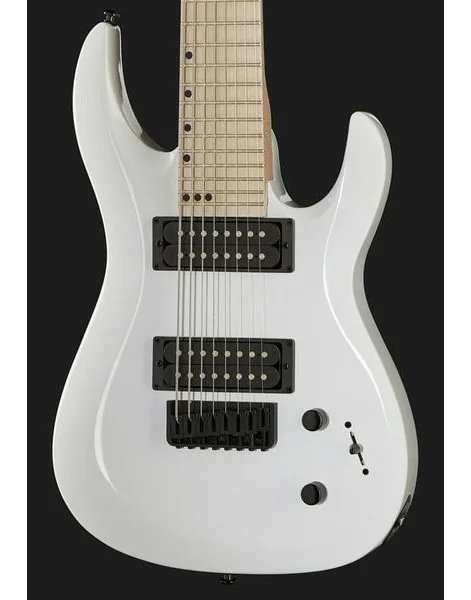
The two high-gain humbuckers, master volume, master tone, and three-way toggle switch provide a minimal control layout. Sound reports vary considerably. Some players find the pickups clear enough for clean playing and useful for heavier music, especially after adjusting pickup height and shaping the signal with equalization. Others describe the neck pickup or the low strings as muddy, noisy, or lacking definition under distortion. The bridge pickup is often considered the more useful of the two, though not every owner agrees.
One recurring issue in owner reports is that some units appeared to have the humbucker coils wired in parallel rather than in series. Players who changed the wiring describe a fuller, more forceful sound afterward. That is an account from individual owners, not a confirmed condition on every guitar. If the tone seems unusually thin or weak, have the wiring checked by a qualified technician before assuming the pickups need replacement.
Replacement pickups can be an option, but fitting them may take more work than expected. Some owners found that standard eight-string pickups did not match the original pickup frames or cavity dimensions. Check measurements before buying replacement parts. The stock strings are also a common point of discussion: several players prefer a heavier gauge for the seventh and eighth strings, particularly when tuning below the supplied F-sharp low note. The 673 mm scale can make the lowest strings feel less firm in those tunings, so string choice and setup affect clarity and tuning stability.
Who should buy it?
The R-458MN WH makes the most sense as an affordable way to find out whether eight-string playing suits you. Its comfortable neck and accessible price are real strengths, and many owners have been pleased with the instrument after minimal adjustments. It can also work as a home practice guitar, a project platform, or a backup instrument for players who are comfortable checking setup and electronics.
Buyers expecting consistent factory setup, polished frets, premium tuners, or refined low-string definition should temper their expectations. The reviews show both excellent out-of-box examples and instruments needing attention, so inspect yours carefully and budget time for adjustments. If you plan to record dense, high-gain parts or tune substantially below F-sharp, a heavier string set, equalization, and possibly pickup or tuner changes may be part of the process.
Verdict: The Harley Benton R-458MN WH Progressive Series offers a comfortable, approachable entry into eight-string guitar at a low listed price. Its playability and value win praise, but inconsistent setup reports and variable pickup performance keep it from being a dependable professional choice without checking the individual instrument.
Shipping and duties
The retailer ships from its warehouse in Germany. Prices are shown in US dollars and do not include import duties. Orders under roughly $800 usually clear US customs without duty; above that, a duty of a few percent may be collected on delivery. 30-day money-back and a 3-year warranty apply.
Scores by area
Where it shines, where it stumbles
What convinced me
- Comfortable Speed D neck and relatively light, balanced body
- Often arrives with playable action and good intonation for the price
- Very affordable way to explore eight-string guitar
What bugged me
- Factory pickups can sound muddy, noisy, or weak, and some examples may be wired in parallel
- Tuning machines and fret finish are inconsistent and may need attention
- The 26.5-inch scale and supplied strings can limit clarity and tension on the lowest strings
Is it the right one for you?
Good pick if
A strong fit for budget-conscious guitarists curious about eight-string playing, home practice, or a modding project. Also suits players who enjoy setup work and can adapt their strings or signal chain to their tuning and tone goals.Look elsewhere if
Not the best choice for players who need dependable professional performance straight from the box or want consistently precise low-tuning stability. Skip it if you expect premium pickups and hardware, or do not want to inspect or adjust a new instrument.Suggested level: Intermediate
Specifications
- Color
- White
- Body
- Poplar
- Top
- None
- Neck
- maple
- Fretboard
- maple
- Frets
- 24
- Scale length
- 673 mm
- Pickup
- HH
- Tremolo
- No
- Including case
- No
- Incl. gigbag
- No
What other players say
Customer feedback is broadly positive about the price, comfortable neck, appearance, and value as an entry point to eight-string playing. Many owners say their guitars arrived playable, but experiences with setup and quality control vary. The most common reservations concern the stock pickups, tuning machines, fret polishing, and low-string performance, especially in lower tunings. Some buyers address these issues with setup work, heavier strings, rewiring, or component upgrades.
What I didn't expect was how playable it was out of the box.
The neck is very comfortable and easy to get used to when transitioning to extended range.
The pickups aren't the nicest sounding things on earth, but they're not a deal breaker.
Up close
Watch and listen
Before you decide
Questions players ask
Is this a good first eight-string guitar?
Yes, if you want to explore extended-range playing without spending much. The neck and overall playability receive frequent praise, but allow time for adjustment to the wide fretboard and possible setup work.
Are the stock pickups suitable for metal?
They are usable, but opinions vary. Some owners get workable high-gain tones with amplifier adjustments or equalization, while others report muddy sound, noise, or wiring that benefits from correction.
Will it stay in tune in F-sharp or drop E?
Some owners report stable tuning, while others find the tuners imprecise or the lowest string unclear and loose. Heavier strings and a careful setup can help, but the 26.5-inch scale is a constraint for very low tuning.
Does it need work immediately after delivery?
Not always. Some buyers report excellent setup out of the box, while others mention rough frets, dry fretboards, wiring issues, or bridge and neck adjustments. Check the individual instrument before relying on it for recording or performance.
Can standard replacement pickups be installed easily?
Not necessarily. Multiple owners report that the pickup size or cavity dimensions do not match some standard eight-string replacements, so confirm measurements before buying parts and expect possible fitting work.
The last word from the bench
For its price, this is a compelling way to find out whether an eight-string guitar suits your playing. Owners frequently praise the neck, light feel, and playability, though reports on fret finishing, tuning stability, wiring, and setup vary considerably. The stock pickups can work for practice and recording with suitable amplification or equalization, but some players choose to rewire or replace them. Players targeting very low tunings should budget for a setup and heavier strings, and may need to check whether the tuning machines accept them.
Hanging next to it
Harley Benton R-458MN WH Progressive Series
Today's price and delivery time are shown at the retailer.
 Guitar Gear Reviews