Fender Tone Master Deluxe Reverb
The Tone Master Deluxe Reverb delivers near-tube tone with superb portability and modern convenience, at the cost of some sonic nuance.
★★★★★ 4.8/5 · 33 buyer reviews · 9 min read · updated 2026-10-07 · Tested by Cal Whitaker
Overview: A Lightweight Classic Reimagined
The Fender Tone Master Deluxe Reverb promises the essence of a mid-1960s Blackface tube combo, crystal cleans, lush spring reverb, musical tremolo, in an ultra-light format through modern digital modeling. With a weight just over 11 kilograms (about 25 pounds) and advanced features like integrated cabinet simulation, power scaling, and direct output, this amp aims to satisfy stage, studio, and home players who crave genuine tube tones but not the maintenance and heft of classic valve equipment.
With a price at $1059, its value hinges on two questions: does it truly sound and feel like the original tube amp, and does its streamlined feature set suit real-world musical needs?
Construction, Controls, and Gig-Readiness
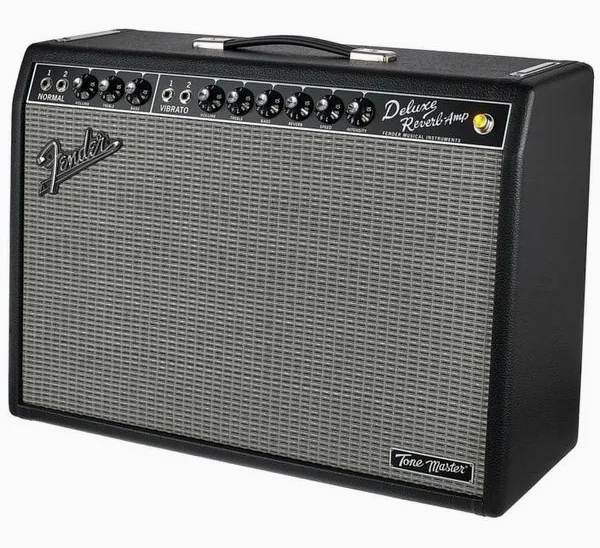
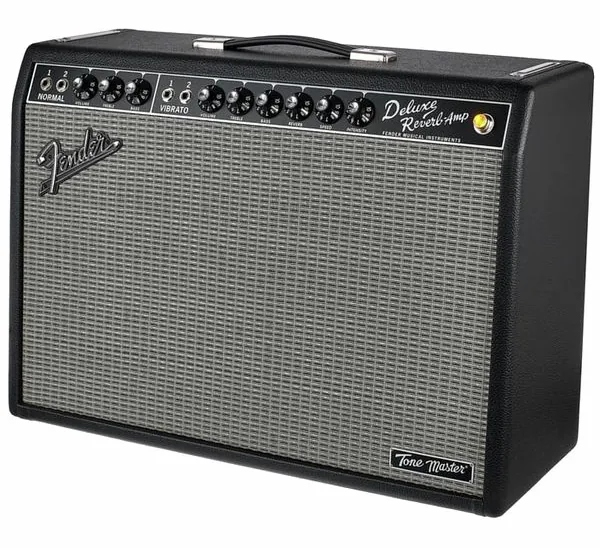
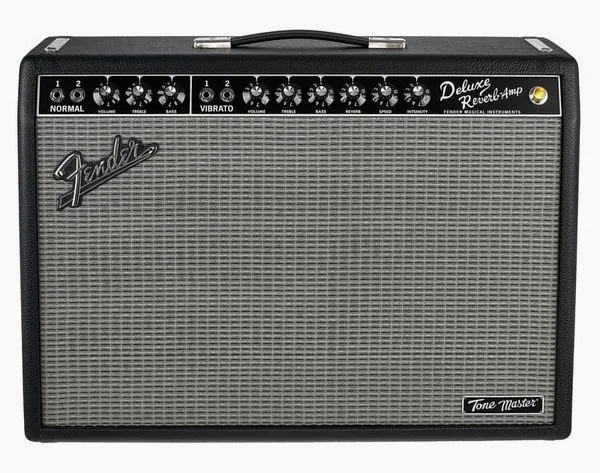
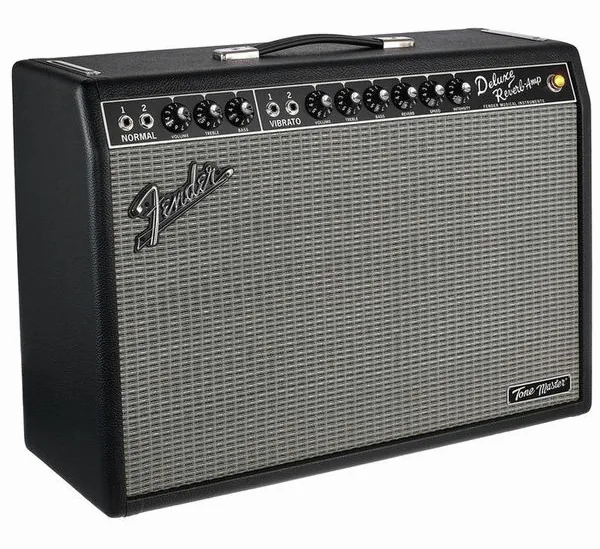
Fender's visual attention to detail remains strong. At a glance, the Tone Master Deluxe Reverb is almost indistinguishable from the tube version, with its period-correct black vinyl, silver grille, and control panel layout. The included cover and footswitch (black, LED-lit, not chrome as on the tube reissue) add solid touches for practical use.
Controls mimic the classic: two channels, Normal and Vibrato, each with their own volume, treble, and bass. The Vibrato channel includes reverb and tremolo controls: reverb, speed, and depth. These function just as expected for a Fender Blackface. There's no effects loop or Bluetooth, no MIDI or line input, functionality focuses closely on traditional amp behavior.
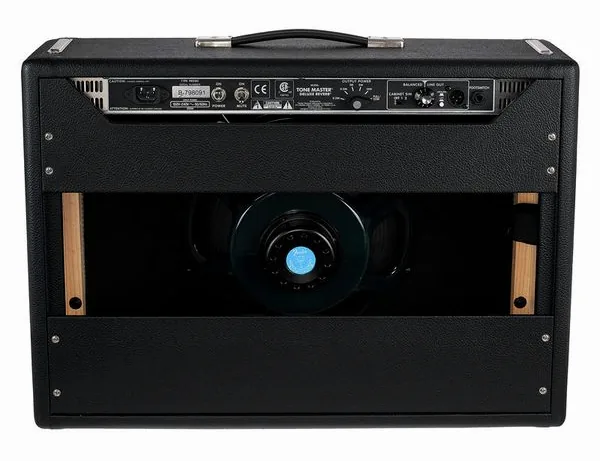
The digital side is nearly invisible unless you peek at the back, where you find a rotary power attenuator (full, 22W, 12W, 5W, 1W, 0.5W, 0.2W), USB port for firmware updates, an XLR recording output with speaker simulation, a mute switch, and a single memory slot for settings. There's no headphone out or external speaker jack. With a single twelve-inch Jensen N-12K neodymium speaker and 100-watt digital power section (voiced to mimic the 22-watt tube output), it's built for plug-and-play reliability.
Sound and Feel: Does the Digital Circuit Deliver?
- Clean Channel: The amp is instantly recognizable for its scooped Fender voice, bell-like highs, defined low end, and clear note separation. Out of the box, some users report a slightly pronounced top-end and loose bass. After a "break-in" period with the speaker, trebles mellow and the sound fills out. Setup tweaks and firmware updates (especially the "Blonde" and "no bright cap" revisions) have made the top end smoother and mids more present for many players. It holds up across classic single-coil and humbucking guitars.
- Touch Sensitivity and Dynamics: The Tone Master's modeling genuinely captures much of the touch responsiveness of good tube amps, pick softly for glassy clean, dig in for breakup. Purists and side-by-side testers note a slight reduction in the harmonic richness and "bloom" compared to all-tube originals, especially under high volume or heavy pick attack. Still, the difference is subtle and in context, the Tone Master's feel is closer to a real tube amp than most digital competitors. Headroom is generous but not endless, at max output, original tube Deluxe Reverbs remain punchier and a hair more dynamic, but for most club and stage situations, the difference is negligible.
- Volume Scaling: This is the killer feature. The integrated power attenuator lets you crank the preamp to "sweet spot" breakup at any output volume. Most players agree tone remains full and present from the 1-watt setting upward. The minimum 0.2-watt mode, designed for silent apartment or bedroom use, thins the sound and loses some body, usable for practice, but the best tones live at 0.5 watt and above. Unlike modding a tube amp, the tone barely collapses at lower settings. For live use, the attenuation is "game-changing": the amp keeps its Fender sparkle and touch at any practical volume.
- Reverb and Tremolo: Reverb quality is lush and convincing, sometimes becoming intense above dial position two. Firmware updates have helped refine control range, but players used to analog spring tanks may find adjustments less nuanced. The tremolo responds nearly identically to old tube circuits, with only the fastest rates criticized for being excessive; many users end up adding an external tremolo pedal for greater control if needed.
Direct Output, Recording, and Limitations
A key modern feature is the XLR direct out with two selectable speaker simulations (impulse responses). This makes recording or PA integration simple, users report authentic Deluxe Reverb sound at the board when used clean, rivaling reactive load/miked tube amps. However, replicating the amp's signature overdrive through the DI, especially with power section crunch above volume 5, can sound harsh and less organic than the mic'd speaker itself. For best results, pair the Tone Master with pedals and run the amp mostly clean for the DI path.
Other limitations: there's no headphone out (requiring an external interface for silent practice), no effects loop, and only stock cabinet IRs, custom IR loading is not available. The Normal channel omits reverb and tremolo, unlike some vintage reissues. Feature-seekers may find the amp's minimalism frustrating, but traditionalists will appreciate the absence of distracting menus or deep editing.
Real-World Use: Playing, Gigging, and Maintenance
The Tone Master wins broad praise for transportability, carrying with one hand, less physical stress, and much less heat and fragility than any tube combo. It's a gigging amp you don't fear to power up even for short sessions; no tube warm-up, no biasing, no blown glass. Firmware updates are straightforward via USB and open the door to improved sounds over time.
In band contexts, the amp is more than loud enough for clubs or small venues, with un-compromised tones and no harshness even at moderate volumes. For pure clean sounds and as a pedal platform, especially for drive, delay, and chorus, the Tone Master competes with boutique tube combos. It is less convincing than a high-end tube amp for fuzz or amp-driven crunch, but works well for most overdrive pedals once dialed in. Some users report even using it for harmonica via microphone with gratifying results.
Physical build is robust, though not indestructible; longevity of digital amp sections is still to be proven over decades. Component repairs may be trickier down the line than with easy-to-source tube sockets and resistors. Still, the absence of ongoing tube costs is a long-term benefit.
Conclusion: For Whom Does It Work?
The Fender Tone Master Deluxe Reverb excels for players seeking classic Fender sounds without the weight and maintenance of real tube combos. It is a compelling gig amp with an authentic voice, takes pedals well, and lets you play authentic Blackface cleans at living room or stage volumes. Pure tube purists and dynamic obsessives may notice what's missing in extreme headroom and harmonic complexity, but the majority will find the digital recreation "close enough." Limitations include the lack of headphones, effects loop, and limited IR flexibility, but its strengths in feel, simplicity, portability, and reliability make it a leading option for working musicians.
Ultimately, if you want the best of vintage tone and modern convenience, and can accept some tradeoffs, the Tone Master Deluxe Reverb delivers on nearly all its promises, far better than most digital amps before it. Fender's foray into digital Blackface is no mere marketing trick; it's a real contender with staying power.
Shipping and duties
The retailer ships from its warehouse in Germany. Prices are shown in US dollars and do not include import duties. Orders under roughly $800 usually clear US customs without duty; above that, a duty of a few percent may be collected on delivery. 30-day money-back and a 3-year warranty apply.
Scores by area
Where it shines, where it stumbles
What convinced me
- Genuine Fender clean sound, highly faithful to the original tube model
- Power attenuator allows great sound at any volume, from home to stage
- Exceptionally lightweight and portable for its format
- Very good pedal compatibility, especially with overdrives and modulation effects
- No maintenance or tube replacement, firmware upgrades available
What bugged me
- Normal channel lacks reverb and vibrato, no option to enable via firmware yet
- Only two built-in speaker simulations for XLR out; no third-party IR import
- No headphone output, limiting quiet/late-night practice options
- At lowest attenuator settings (0.2W), tone and feel suffer noticeably
- Less dynamic range and harmonic richness than vintage tube amps
Is it the right one for you?
Good pick if
Ideal for guitarists needing classic Fender cleans and edge-of-breakup at any volume, those playing gigs, home studio musicians, and anyone tired of hauling or maintaining heavy tube amps. Perfect for players who rely on pedals and need reliable direct output for live or recording use.Look elsewhere if
Not for tube purists seeking maximum dynamics and nuanced harmonic content, or for those needing high flexibility with speaker IRs or a headphone out. Metal or high-gain players, as well as those seeking maximum feature count or true studio-grade ambiance, should look elsewhere.Suggested level: Intermediate
Specifications
- Power rating
- 100 W
- Speaker
- 1x 12"
- Channels
- 2
- Reverb
- Yes
- Effects processor
- No
- Bluetooth
- No
- External fx loop
- No
- Line input
- No
- Recording output
- Yes
- Midi interface
- No
- Connection for external speaker
- No
- Headphone output
- No
- Footswitch connection
- Yes
- Incl. footswitch
- Yes
What other players say
Customers overwhelmingly praise the Tone Master Deluxe Reverb's light weight, portability, and authentic Fender tone, finding it highly practical for both stage and home use. Many note the sound closely resembles the tube original, particularly after firmware updates and speaker break-in. The amp excels as a pedal platform and offers invaluable direct recording and power attenuation features. Despite some reservations about digital feel, restricted channel features, and minimal speaker IR support, satisfaction is very high, with most buyers happy to recommend it for clean and classic Fender tones without the burden of tube maintenance.
I have a side-by-side comparison with my handwired Princeton reissue, while the Tone Master can't match the dynamic and harmonic richness, it's not at all outclassed and has better projection.
The DI is fantastic and easy to use. With the right volume, you get a clean, very usable signal to the mixer, the sound is classic Fender Deluxe Reverb.
I'm a tube snob, and yet with the right speaker break-in and adjusting my pick, I now love the tone, gone is the harsh top end, and lows are much nicer.
Up close
Watch and listen
Before you decide
Questions players ask
How close does the Tone Master Deluxe Reverb sound to the original tube model?
Most users and reviewers agree the sound is impressively close, offering the signature Fender cleans and breakup, though some find it less dynamic or harmonically rich than true tube amps.
Can the power attenuator really deliver good sound at low volumes?
Yes, the attenuator allows convincing tone at home or quiet levels, but the best results generally start from the 0.5W or 1W settings; the 0.2W mode can sound thin.
Is the amp suitable for use with pedalboards?
Absolutely, most overdrive, distortion, and modulation pedals function well, with some adjustments. Fuzz pedals can be hit-or-miss, as with many digital amps.
Does the Direct Out (XLR) with speaker simulation sound natural for live or recording?
The XLR out is highly praised for clean tones and pedal platform use, but less so when the amp is pushed into natural breakup, a common critique is that the DI gets harsh or unnatural at high drive settings.
Are there major differences between the Jensen and Celestion speaker versions?
Yes; users report that the Celestion version ('Blonde') delivers more midrange punch and less pronounced highs, while the Jensen ('Black') is brighter. Some owners swap speakers according to preference.
The last word from the bench
The Fender Tone Master Deluxe Reverb is the most playable and practical way to access classic Fender clean and edge-of-breakup tones without the weight, upkeep, or volume constraints of the tube original. Its power attenuator and XLR out with cabinet emulation make it ideal for any environment, while firmware upgrades extend its flexibility. Some digital artifacts and a less lively feel compared to all-tube predecessors may bother purists, but for many, the benefits far outweigh the drawbacks. It's a strong recommendation for gigging, recording, and practice alike, provided tube-level authenticity is not mandatory.
Hanging next to it
Fender Tone Master Deluxe Reverb
Today's price and delivery time are shown at the retailer.
 Guitar Gear Reviews