Danelectro Back Talk Reverse Delay
Danelectro Back Talk offers authentic reverse delay in a compact, vintage-styled package, ideal for creative sound exploration.
★★★★★ 4.8/5 · 8 buyer reviews · 6 min read · updated 2026-10-07 · Tested by Cal Whitaker
Danelectro Back Talk Reverse Delay: Detailed Test
The Danelectro Back Talk Reverse Delay is a faithful reissue of their legendary 1990s pedal, returning just as chasing the original has become prohibitively expensive on the used market. Priced at $194, this new version promises a distinctive spin on delay, pairing analog richness with the ability to conjure experimental, psychedelic textures. In this hands-on review, I dive into its construction, sound, and usability to determine where it fits in today's crowded pedal landscape.
Construction and Pedalboard Integration
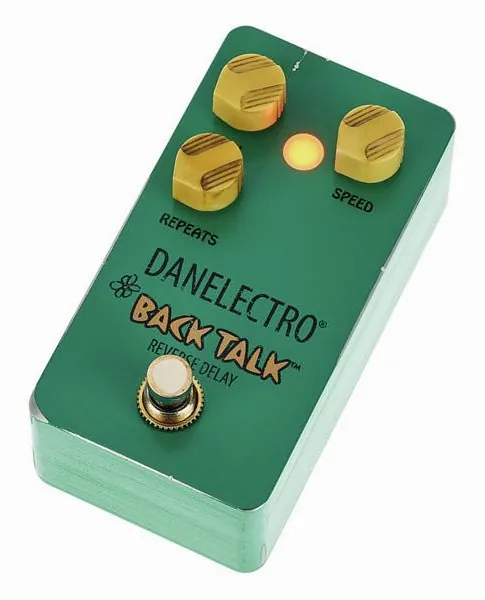
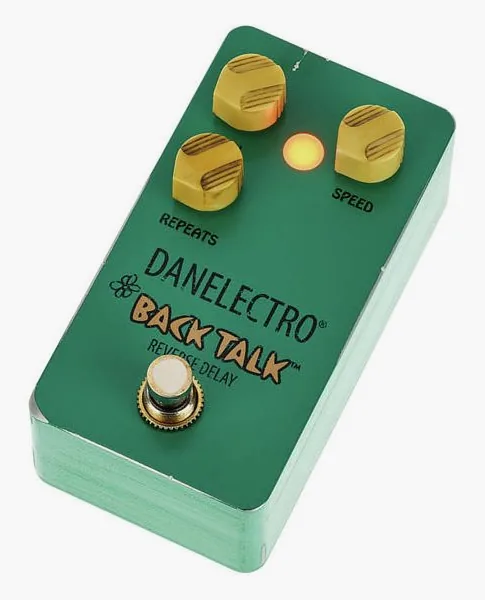
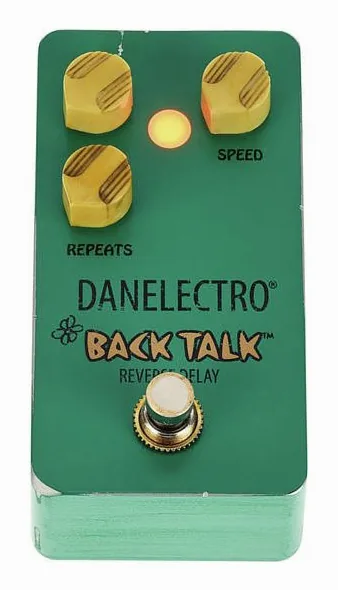
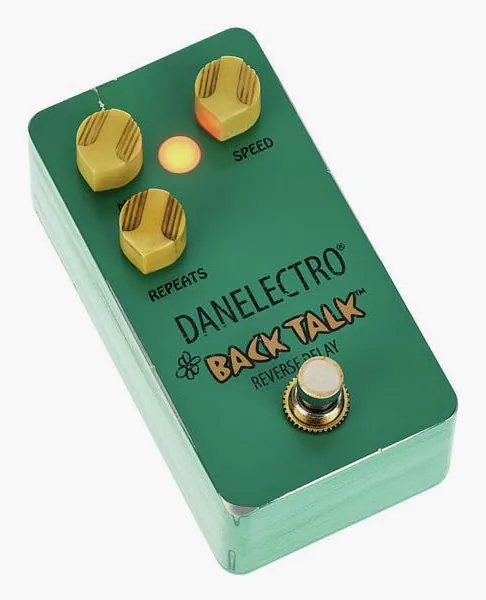
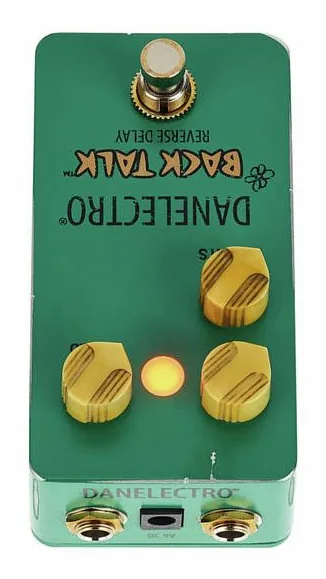
The enclosure features an aged metal finish that immediately stands out on a pedalboard. Danelectro kept the dimensions similar to familiar MXR or Catalinbread stompboxes, a notable improvement over the bulkier original. If pedalboard real estate is at a premium, this is a real benefit, especially since reverse delays from other brands are often built into larger, multi-effect units.
All connections are standard: quarter-inch mono input and output jacks. The Back Talk Reverse Delay runs exclusively on a standard 9V external power supply (not included). There is no option to power it by battery. This is worth remembering for mobile setups or if you prefer not to daisy-chain too many plugs. Danelectro includes true bypass switching, so you can expect a quiet signal chain when the pedal is disengaged.
Controls and Features
- Mix: Sets the dry to wet ratio, from subtle combing to full-on reversed signal.
- Speed: Adjusts the length of the reversed segment, acting similarly to a delay time knob.
- Repeats: Controls how many times the reversed snippet is repeated.
The backlit soft footswitch feels reliable and resistant enough to prevent accidental presses, yet isn't stiff. It might seem odd at first but proves practical over time, especially for barefoot or light-touch players.
Sound: Reverse Delay in Practice
The real draw is the sound. The Back Talk combines two circuits, one analog, one digital, resulting in repeats with a character sitting between the classic warmth of vintage analog delays and the clarity of digital units. Compared directly with an Electro-Harmonix Deluxe Memory Man and an older digital Boss delay, the Back Talk carves out a middle ground. The reversed repeats remain organic, yet defined, distinct from purely digital reverse delays, which often sound cold or artificial in comparison.
This pedal is not designed as a do-it-all delay. Reverse delay effects are inherently niche: they excel at delivering swirling, dreamlike soundscapes and blending into held notes or experimental leads rather than providing dotted-eighth echoes or traditional slapback. That said, there is enough versatility to find a quick slapback if you set the speed and repeats low, but the real power lies in pushing the mix and exploring atypical reverse textures.
Players mention that the mix knob is very sensitive, responding dramatically even by 10 o'clock. While this is great for dramatic changes, it can make fine-tuning the blend from dry to wet a bit fiddly, especially if you want the reverse effect tucked just beneath your main signal. Some users would also have liked a tap tempo option; its absence means syncing the reverse delay with song tempo is only possible with manual adjustment.
Pedalboard Experience and Limitations
Noise is generally low, but a few users found adding the Back Talk at the start or end of an effects chain could introduce hiss, depending on amp and context. In a studio environment, this was less noticeable. Its signature voicing asks for a musical backdrop that allows the reverse tails to breathe; complex or dense passages can quickly become muddy as reversed signals overlap and harmonic structures blend together.
The Back Talk's aging exterior and compact footprint deliver a charming vintage appeal. Build quality feels robust, and the pedal invites hours of experimentation with both textural and percussive playing styles. The lack of battery power, no included PSU, and no tap tempo are weak spots at this price, especially for a pedal manufactured in China. Still, for many, these complaints fade when factoring in the inspiring sound and relative rarity of dedicated analog reverse delays on the current market.
Use Cases and Final Thoughts
- Perfect for psychedelic, folk, country, and progressive players who want a dedicated reverse delay sound.
- Encourages soundscape creation, from floating pads to tape-like reverse runs.
- Not a first-choice delay for those seeking everyday echo or multi-mode flexibility.
The Danelectro Back Talk Reverse Delay stands out for doing one thing very well: providing lush, analog-flavored reverse delay with minimal fuss and maximum musicality. If experimental textures or retro character drive your playing, this pedal is hard to match. Those needing tap tempo, battery power, or extreme versatility will need to look elsewhere. For reverse heads and vintage gear fans, the Back Talk is an inspiring, and addictive, studio and stage tool.
Shipping and duties
The retailer ships from its warehouse in Germany. Prices are shown in US dollars and do not include import duties. Orders under roughly $800 usually clear US customs without duty; above that, a duty of a few percent may be collected on delivery. 30-day money-back and a 3-year warranty apply.
Scores by area
Where it shines, where it stumbles
What convinced me
- Unique reverse delay sound with a characterful vintage vibe
- Solid metal enclosure with an appealing aged finish
- Compact footprint compared to the original version
- True bypass preserves signal integrity
- Simple and effective controls for blend, speed, and repeats
What bugged me
- No battery operation, external power supply required
- No tap tempo feature
- Mix control has a limited and sensitive adjustment range
- Not a versatile general-purpose delay
- May introduce noise depending on placement in effects chain
Is it the right one for you?
Good pick if
Ideal for players seeking a dedicated reverse delay effect, musicians interested in atmospheric, psychedelic, or experimental sounds, and those who appreciate vintage-inspired gear. Also a good choice for guitarists who already have a standard delay and want something more distinctive on their board.Look elsewhere if
Not for users needing a versatile general-purpose delay, or those who require features like tap tempo or battery operation. Also less suited for genres or settings where reverse delay would not be musically relevant.Suggested level: Intermediate
Specifications
- Analog
- Yes
- Tap feature
- No
- Battery operation
- No
- Psu included
- No
What other players say
Customer feedback highlights the Back Talk's vintage reverse delay as inspiring and distinct, offering a sound that stands apart from typical digital delay units. Users commend its robust build, retro styling, and the creative possibilities unlocked by its characteristic effect. While the pedal is praised for tone and looks, buyers point out drawbacks like the lack of tap tempo, requirement for external power, and a limited mix control. Some also mention minor noise depending on placement and wish for more versatility at its price, noting its appeal is strongest for those seeking experimental textures.
This is quite unique as I have only come across 100% digital (cold an inorganic) reverse delay options...
The aged finish is a lovely feature.
The Reverse Effekt is super and I have, until the worn edges on the housing;), nothing to complain about.
Up close
Watch and listen
Before you decide
Questions players ask
Does the Danelectro Back Talk accept batteries?
No, it requires an external 9V power supply (not included) and does not support battery operation.
Is the reverse delay effect suitable for all genres?
Reverse delay is generally more suited for ambient, psychedelic, or experimental styles rather than as a traditional delay in most mainstream genres.
How does the size compare to other pedals?
The Back Talk is only slightly taller than standard pedals, fitting a typical pedalboard footprint similar to MXR or Catalinbread units.
Can I use tap tempo with this pedal?
No, there is no tap tempo function or input on the Back Talk, so timing must be set manually.
Does it work well with other effects in the chain?
Some users report increased noise when placing it first or last in the effects loop, so placement may require experimentation for optimal performance.
The last word from the bench
The Danelectro Back Talk Reverse Delay stands out for its distinctive reverse effect and quality analog sound, filling a niche often lacking in multi-delay pedals. Its unique tone inspires experimentation, though it's best used in specific musical contexts. The absence of tap tempo and battery operation are notable downsides, and the pedal's price may feel steep for some. Still, for those seeking a dedicated reverse delay with a vintage aesthetic, Back Talk delivers.
Hanging next to it
Danelectro Back Talk Reverse Delay
Today's price and delivery time are shown at the retailer.
 Guitar Gear Reviews