Boss GM-800 Guitar Synthesizer
The Boss GM-800 offers vast sonic flexibility and improved tracking, but demands significant setup and playing precision.
★★★★☆ 4.4/5 · 17 buyer reviews · 7 min read · updated 2026-10-07 · Tested by Cal Whitaker
Boss GM-800 Guitar Synthesizer: In-Depth Test & Technical Verdict
The Boss GM-800 offers a new approach to guitar synthesis, equipped with the Roland ZEN-Core synthesis engine and a serial "GK" interface designed to unlock the expressive potential of any guitar or bass. Announced in July 2023 at $599, it sits as a flagship for those seeking deep sound design, scene layering, and reliable live or studio performance. After extensive hands-on testing, the real-world pros and cons are clear.
Hardware & Connectivity
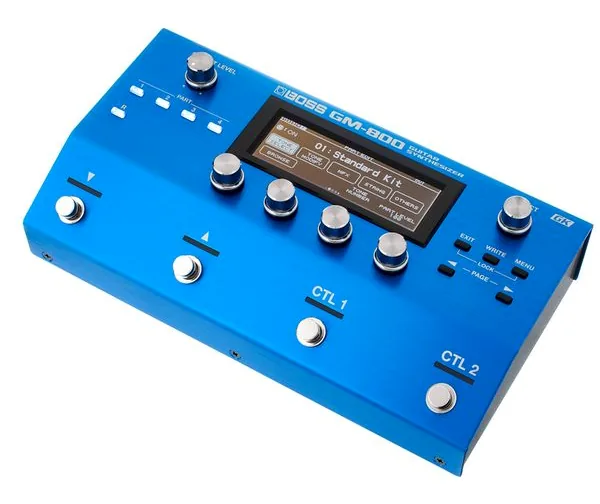
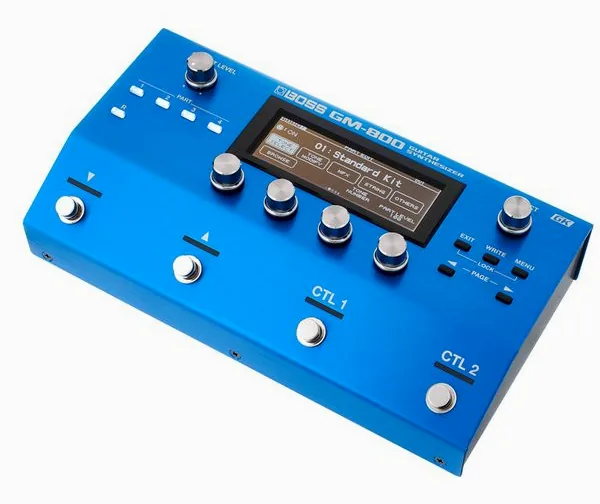
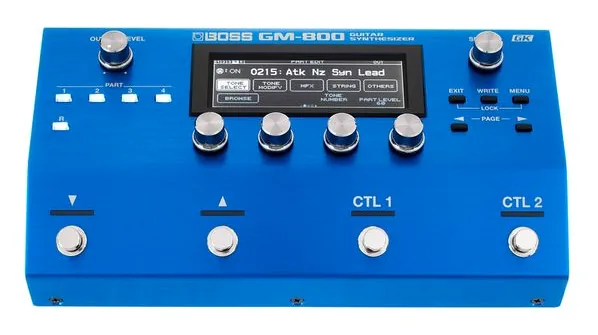
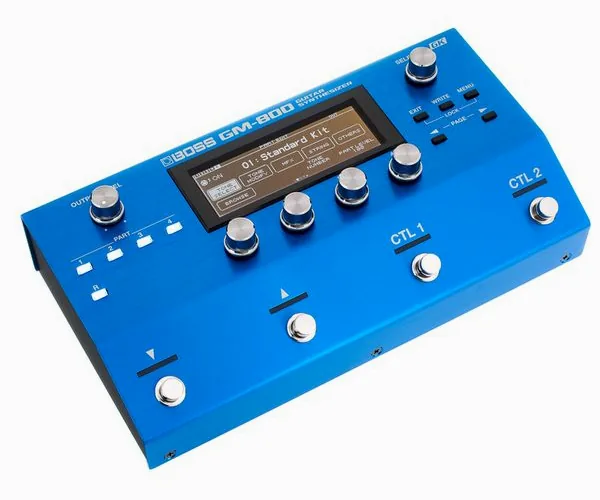
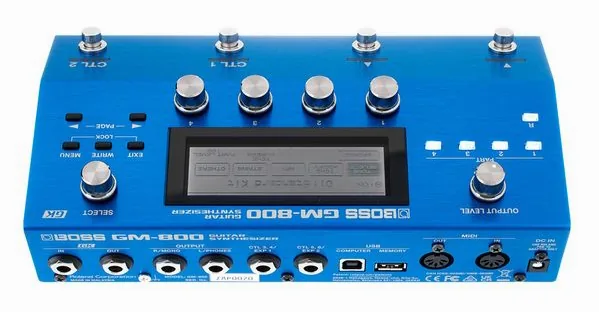
- Interface and Build: The GM-800 is compact (9.7x5.3x2.5 inches, 2.6 lbs) with a robust chassis and a simple but effective 256x80 pixel graphical LCD. Sixteen dedicated buttons (including four sound-select, menu, and scene navigation), plus four programmable footswitches, deliver tactile control.
- Connections: The focal point is the new serial "GK" input and output (stereo 1/4" jack, for use exclusively with Boss's new pickups and cables). It features standard left/right outputs, headphone out, MIDI in/out, two pairs of external control expression pedal/footswitch jacks, classic USB-B for audio/MIDI, and a barrel connector for 9V DC power.
- Compatibility: The GM-800 only works with the Boss GK-5 pickup or GK-5B for bass. Neither is included, and the required stereo cable isn't either. Legacy 13-pin Roland setups need an additional Boss converter.
- Power and Reliability: Current draw is 840mA; a power adapter is included. Reports indicate the power jack can wear over time with frequent on/off cycles, so caution is advised if used frequently on stage or in the studio.
Sound Engine & Capabilities
- ZEN-Core Sound Library: With over 1,200 tones and 70 rhythm kits on board, the sound palette covers classic and modern synths, orchestral elements, organs, world instruments, and more. Four sound layers plus a drum layer per scene enable intricate setups and creative arrangements.
- Effects: Over ninety different effects are available per scene. Each user scene (up to 150 available) can hold complex routing or custom setups, and each part is individually editable.
- Expandability: Users can add new sounds and scenes via Roland Cloud, and the GM-800 can act as a MIDI sound module for keyboards or as a DAW sound source via USB. However, the process for expanding onboard memory is trial-and-error, as there is no clear documentation on available capacity for new sound packs and wave expansions.
- Editing: Boss Tone Studio, the official PC/Mac editor, is the preferred tool for deep editing and organization. The hardware display and menu system feel outdated and unintuitive for fast navigation, making software use almost mandatory for complex setups.
Real-World Tracking & Playability
- Initial Setup Demands: Most users report the GM-800 is far from plug-and-play. The initial experience can be disappointing: out-of-the-box default settings often produce ghost notes and unpredictable triggering. Proper setup, including precise pickup placement, string sensitivity, dynamic settings, and velocity thresholds, is essential. Even then, clean, deliberate technique is a must, as the system is quick to reveal sloppy playing.
- Performance: Once dialed in, tracking is a standout feature. Latency is minimal and performance is vastly improved over past generations such as the GR-55 or GP-10. Fast passages may still trip up the system (especially on lower strings and in the first few frets), but for moderate tempos and pad/lead synth work, the GM-800 is reliable. Occasional glitches remain, a persistent challenge for all hexaphonic guitar systems.
- Expression and Control: The GM-800 does not include an onboard expression pedal, and the GK-5 pickup omits the legacy volume and patch controls. For on-the-fly control, an external pedal or footswitch is essentially necessary, raising the all-in cost. Assigning sounds per string or fret is possible and can be highly creative, but requires extra time learning the editor.
Software & Workflow
The Boss Tone Studio editor is praised for depth but criticized for slow response and lack of certain basic features, such as search functions among presets. Transferring sounds or updating firmware via USB flash drive, instead of the USB cable, seems archaic and frustrates many users, especially as no drive is included. Roland Cloud expands sounds impressively but suffers from poor documentation and confusing organization of soundpacks and expansions.
Strengths and Weaknesses
- Strengths:
- Extensive, high-quality sound library and effects
- Excellent tracking/stability after careful setup
- Deep MIDI/audio connectivity
- Flexible scene and layer architecture
- Weaknesses:
- Essential accessories not included (pickup, cable, expression pedal)
- Demanding setup and learning curve
- No built-in pedal or quick control on guitar
- Editor is powerful but slow and missing organizational features
- Cumbersome firmware and sample management
Conclusion: Who Should Choose the Boss GM-800?
The Boss GM-800 excels once thoroughly configured, offering professional-grade sounds and live or studio flexibility. For guitarists ready to invest time learning, experimenting, and tailoring both hardware and playing technique, it opens up new sonic territories well beyond past Boss synth units. However, it is not for those expecting instant results or simple plug-and-play operation. Accessories and the initial setup effort can quickly inflate the price and patience needed.
Players seeking maximum creative control and deep sound customization will find the GM-800 unmatched in this price tier, but casual users and gig-focused musicians may be frustrated by the complexity and quirks. Either way, the GM-800 signals a new era for serious synth guitarists willing to engage and experiment with the technical possibilities.
Shipping and duties
The retailer ships from its warehouse in Germany. Prices are shown in US dollars and do not include import duties. Orders under roughly $800 usually clear US customs without duty; above that, a duty of a few percent may be collected on delivery. 30-day money-back and a 3-year warranty apply.
Scores by area
Where it shines, where it stumbles
What convinced me
- Extensive sound library and high-quality tones with over 1,200 synth sounds and 70 rhythms
- Reliable tracking and reduced glitches compared to earlier models after careful setup
- Impressive customization options, including assigning sounds per string or fret
- Sturdy build and compact form factor enhance portability
- Seamless integration with PC/Mac editors for scene management and sound editing
What bugged me
- Complex setup process; not plug and play, especially with the GK-5 pickup
- No integrated expression pedal, must purchase separately for advanced live control
- Documentation is poorly organized and confusing, especially for MIDI features
- Latency issues and tracking faults with lower strings or certain sounds remain
- Some bundled and expansion sounds are outdated or less usable
Is it the right one for you?
Good pick if
Ideal for studio guitarists, experimental players, and producers wanting seamless guitar-to-synth integration and advanced sound sculpting. Suits users comfortable with technology, detailed configuration, and deep-diving into extensive parameter editing for custom sounds. Great for those seeking to expand guitar possibilities far beyond standard effects.Look elsewhere if
Not for plug-and-play beginners, gigging musicians needing immediate, unerring response, or those uncomfortable with digital menus and parameter tweaking. Demanding live performers may be frustrated by the nuanced tracking requirements, lack of expression pedal, and inconsistent results on lower strings without extra setup.Suggested level: Intermediate
Specifications
- Display
- Graphic LCD 256 x 80 pixels
- Controls
- 1 - 4, Select, Output Level
- Push buttons
- Part 1 - 4, Part R, Exit, Write, Menu, Page Left and Right
- Foot switch
- Scene Up, Scene Down, CTL 1, CTL 2
- Led
- Scene Up, Scene Down, CTL 1, CTL 2
- Current consumption
- 840 mA
- Dimensions
- (W x D x H): 246 x 134 x 63 mm
- Weight
- 1200 g
- Gk input and output
- 2 x 6.3 mm stereo jack (only for BGK cable)
- Output l / headphones
- 6.3 mm stereo jack
- Output r / mono
- 6.3 mm stereo jack
- Ctl3 and 4 / exp 1
- 6.3 mm stereo jack
- Ctl5 and 6 / exp 2
- 6.3 mm stereo jack
- Power supply connection
- Barrel connector 5.5 x 2.1 mm, center negative
What other players say
Users highlight the GM-800's immense sound palette, advanced customization, and notably improved tracking over older models like the GR-55, though their satisfaction often depends on meticulous installation and setup. Some found the initial experience frustrating due to ghost notes, latency issues, and insufficient documentation, especially with new hardware interfaces. Many recommend patience and clean playing technique, noting the synth unlocks its full potential only after adjustment and exploration. The editor software is praised for its utility but criticized for sluggishness and lack of advanced features. The lack of an integrated pedal and requirement for pricey accessories were frequent gripes, but most agree the creative possibilities and sound quality reward those willing to invest the time.
Great sounds, tracking is super and the unit is easy to use especially when linked to Boss Tone Studio.
You really need to take the time to properly set up the unit in order to get the best out of it.
Straight out of the box, after mounting the new GK5 on my guitar, i immediately encountered so many ghost notes and hanging notes that the GM-800 was barely playable.
Up close
Watch and listen
Before you decide
Questions players ask
Does the GM-800 work with older 13-pin pickups and cables?
Not directly, Boss GM-800 uses a new serial interface. You need the GKC-AD converter to use legacy 13-pin pickups and cables.
How easy is the initial setup out of the box?
Setup can be challenging. Correct pickup installation and deep parameter adjustment (sensitivity, velocity, dynamics) are crucial for optimal performance.
Is the GM-800 suitable for live performance?
It's capable but not flawless; some users report latency and tracking inconsistencies, especially on bass strings, so trial and adaptation are advised before gig use.
Can I edit and organize sounds from my computer?
Yes, Boss Tone Studio allows detailed editing and management via USB, though users note slow performance and limitations in the software interface.
Are expression pedals and controllers included?
No, you'll need to purchase compatible Boss expression pedals or foot controllers separately for advanced live control and quick parameter changes.
The last word from the bench
Boss GM-800 is a powerful tool for creative guitarists ready to invest serious time in setup and learning its nuances. Its synth engine and flexible routing unlock dramatic tonal possibilities, but the experience isn't instant or hassle-free. Latency and tracking imperfections linger, especially on low strings, and the lack of an integrated expression pedal limits live flexibility. Still, for ambitious players seeking studio-level sound design, it stands apart.
Hanging next to it
Boss GM-800 Guitar Synthesizer
Today's price and delivery time are shown at the retailer.
 Guitar Gear Reviews