Behringer Flange with no name
An experimental analog flanger rich in features, but with questionable durability and a specific creative focus.
★★★★★ 4.7/5 · 3 buyer reviews · 6 min read · updated 2026-10-07 · Tested by Cal Whitaker
Behringer Flange with no name: Analog Flanger for Modern Sound Designers
The Behringer Flange with no name distinguishes itself as a newly developed analog flanger, clearly inspired by classic 1990s stompboxes. Priced at $95 per unit, this pedal targets musicians who crave complex modulation and exploratory working methods. Despite drawing both admiration and controversy for its affordable reinterpretation of discontinued classics, this model brings a feature-rich set of controls and genuinely vintage sound, with some compromises along the way.
Circuit Design and Connectivity
This flanger relies entirely on analog circuitry, promising a vintage flavor far removed from digital emulations. Hookup is straightforward, with standard 1/4 inch input and output jacks compatible with pedalboards and studio setups alike. Power is provided via a 9V direct current adapter, using a barrel connector (5.5 x 2.1 mm, negative pole inside). No battery compartment is included, maintaining a low-profile form factor.
Control Layout: Classic and Unusual Options
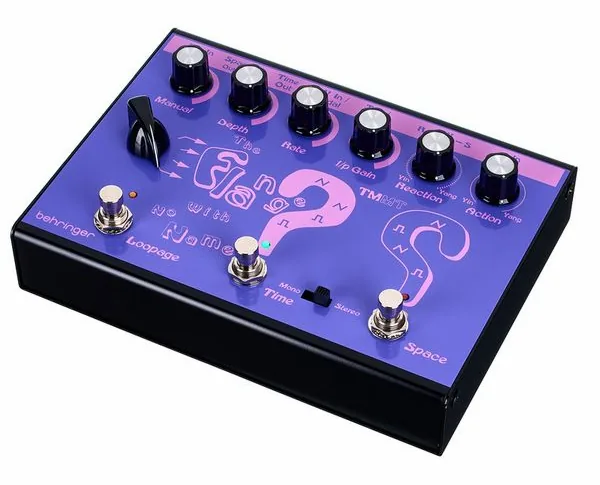
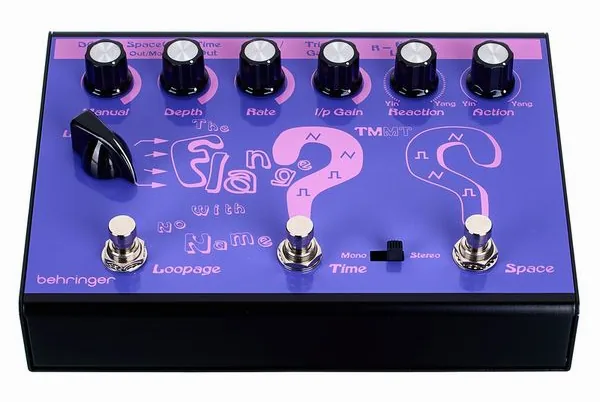
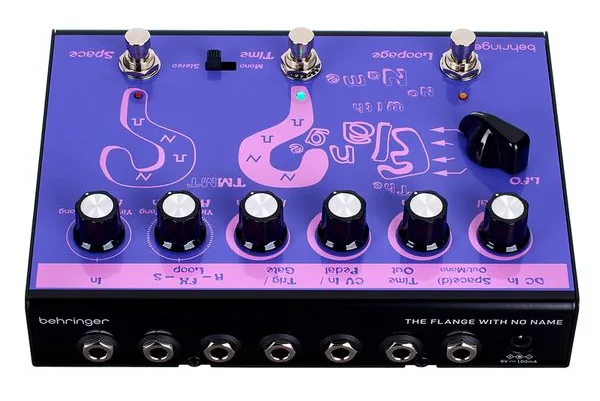
Six rotary knobs, Manual, Depth, Rate, Up Gain, Reaction, and Action, provide scope for both traditional and experimental flanging. Manual sets the fundamental delay time for the effect sweep, while Depth and Rate let you shape the breadth and speed of modulation. Up Gain influences signal drive, allowing for more intense saturation if desired.
The Reaction and Action controls are Behringer-specific interpretations. Users report that Action not only affects modulation intensity but functions as a wet mix control, something rarely found on flangers. For those who like to dial back the processed signal or lean heavily into wild effects, this detail will not go unnoticed.
- LFO/Mono/Stereo Switch: These toggles expand the pedal's range. The Low Frequency Oscillator (LFO) setting changes the shape or source of modulation, or places the circuit in direct/manual mode for static comb filtering textures. Mono and Stereo selection brings flexibility for different signal chains, though true stereo output requires external routing, the pedal's hardware supports only a single output jack.
- LED Effect Indicator: A straightforward light signals when the effect is active.
Multifunction Footswitches: Beyond Bypass
Where most stompboxes offer a simple effect on/off, the Behringer Flange with no name adds three footswitches: Loopage, Time, and Space. In practice, Loopage engages the built-in effects loop which invites further sound experiments, think envelope filter, distortion, or more modulation inserted directly into the flanger's feedback path. The "Time" and "Space" switches yield less obvious results; user feedback confirms that patience and creativity in exploration will be rewarded, especially with the idiosyncratic Space circuit. These footswitches position the pedal as a playground for musicians who like to push boundaries.
Sound and Versatility
In blind tests, the pedal produces a genuinely analog sound with clear throwbacks to 90s devices. Typical sweeping flange and "jet-plane" modulation are present, but some users feel the standard effect lacks the subtlety or warmth of pricier boutique options. Where the pedal earns high praise is in its experimental sounds: pitch dives, robotic textures, self-oscillating feedback, and noise-driven effects. The upshot is a tool suited less to mainstream chorus or classic "whoosh" flanging, and more to sound designers and adventurous guitarists or synthesizer players.
- Action and Reaction: These dual controls let you invert the wet or feedback path (sometimes labeled as Yang and Yin). This phase manipulation unlocks tones ranging from subtle expansion to swirling chaos, invaluable for deep studio work and live manipulation.
- Effects Loop: Though not every user integrates outboard gear into modulation circuits, those that do will find the Loopage footswitch a route to new textures not easily available in traditional pedals.
Build Quality and Reliability
While the circuit design impresses, the enclosure and interface bear the marks of typical Behringer cost-saving: lightweight materials, somewhat slack knobs, and plasticky switches. Field reports consistently mention the feeling that, while perfectly serviceable for home use and experimentation, robustness under heavy stage use may be limited. For gigging musicians, carrying a backup pedal is recommended.
Final Assessment
The Behringer Flange with no name is a complex and layered analog flanger best suited to experimentalists, studio sound crafters, and musicians looking to extend the boundaries of conventional pedalboard effects. On classic flanging alone, the pedal faces strong competition. But its price, depth of control, and willingness to accommodate sound design experimentation make it a standout among similarly priced modulation units, and a potential creative hotspot for those willing to spend time learning its secrets. If vintage charm and tonal unpredictability tempt you more than pristine construction or classic simplicity, this Behringer offering is a tool worth exploring.
Shipping and duties
The retailer ships from its warehouse in Germany. Prices are shown in US dollars and do not include import duties. Orders under roughly $800 usually clear US customs without duty; above that, a duty of a few percent may be collected on delivery. 30-day money-back and a 3-year warranty apply.
Scores by area
Where it shines, where it stumbles
What convinced me
- Extensive sound design capabilities suited for experimental use
- Fully analog circuit provides authentic vintage character
- Unique controls for manipulating wet signal and phase options
- Affordable price compared to boutique alternatives
What bugged me
- Standard flanger sounds may lack depth for traditionalists
- Build quality (knobs and switches) feels unreliable for regular gigging
- No power supply included
- Not much innovation compared to the original design
Is it the right one for you?
Good pick if
Ideal for sound designers, experimental musicians, and producers seeking a versatile analog flanger with distinct modulation options. Great for those interested in unique, unconventional, and evolving effects textures, or for anyone exploring atypical pedalboard setups on a budget.Look elsewhere if
Not for players seeking solely classic flanger tones or uncompromised build quality, such as touring professionals. Also unsuited to those who want plug-and-play simplicity or a pedal focused on subtle, traditional modulation.Suggested level: Intermediate
Specifications
- Chorus
- No
- Flanger
- Yes
- Phaser
- No
What other players say
Customer reviews highlight the pedal's versatility for experimental sound design, pointing out its ability to produce bizarre and unique effects. Opinions are divided on standard flanger tones, with some underwhelmed by its classic sounds. Durability concerns are raised regarding hardware, but the range of available parameters and competitive price earn praise. Users find its features extensive, with some discovering new creative uses as they spend more time with the pedal.
If you are looking for classic analog flanger sounds, this pedal will be an overkill. It actually shines for experimental, weird, odd and strange sounds.
The build quality is what you get from Behringer though. Wobbly knobs and switches. If you plan to gig with this thing, I would suggest getting a spare one right away.
Full 5 star ranking for me. Very sophisticated, many parameters, many nuances, I think you can get a lot out of this pedal.
Up close
Watch and listen
Before you decide
Questions players ask
Is the Behringer Flange with no name suitable for traditional flanger effects?
It can provide classic analog flanging, but its normal mode is less impressive compared to its experimental functions.
Does the pedal include a power supply?
No, a compatible 9 V DC power adapter must be purchased separately.
How robust is the pedal for live performance?
The build quality is average, with wobbly knobs and switches, so a spare unit is recommended for gigging.
What unique features does this flanger offer?
Dedicated wet path and phase controls, FX loop, and an extensive range of parameter adjustments set it apart from standard flangers.
Can the pedal be used for conventional rock or pop settings?
While possible, its strength lies in experimental and creative contexts rather than straightforward, traditional applications.
The last word from the bench
The Behringer Flange with no name stands out for experimental sound manipulation, offering a breadth of modulation possibilities uncommon at this price point. While standard flanger tones may underwhelm purists, this pedal rewards those keen to explore its deeper functions. Build quality could be a concern for rugged stage use, but the price justifies taking the plunge for home studios or creative sound designers.
Hanging next to it

Behringer Flange with no name
Today's price and delivery time are shown at the retailer.
 Guitar Gear Reviews