 Guitar Gear Reviews
Budget Electric Guitars: Where the Money Goes and Where It Doesn't
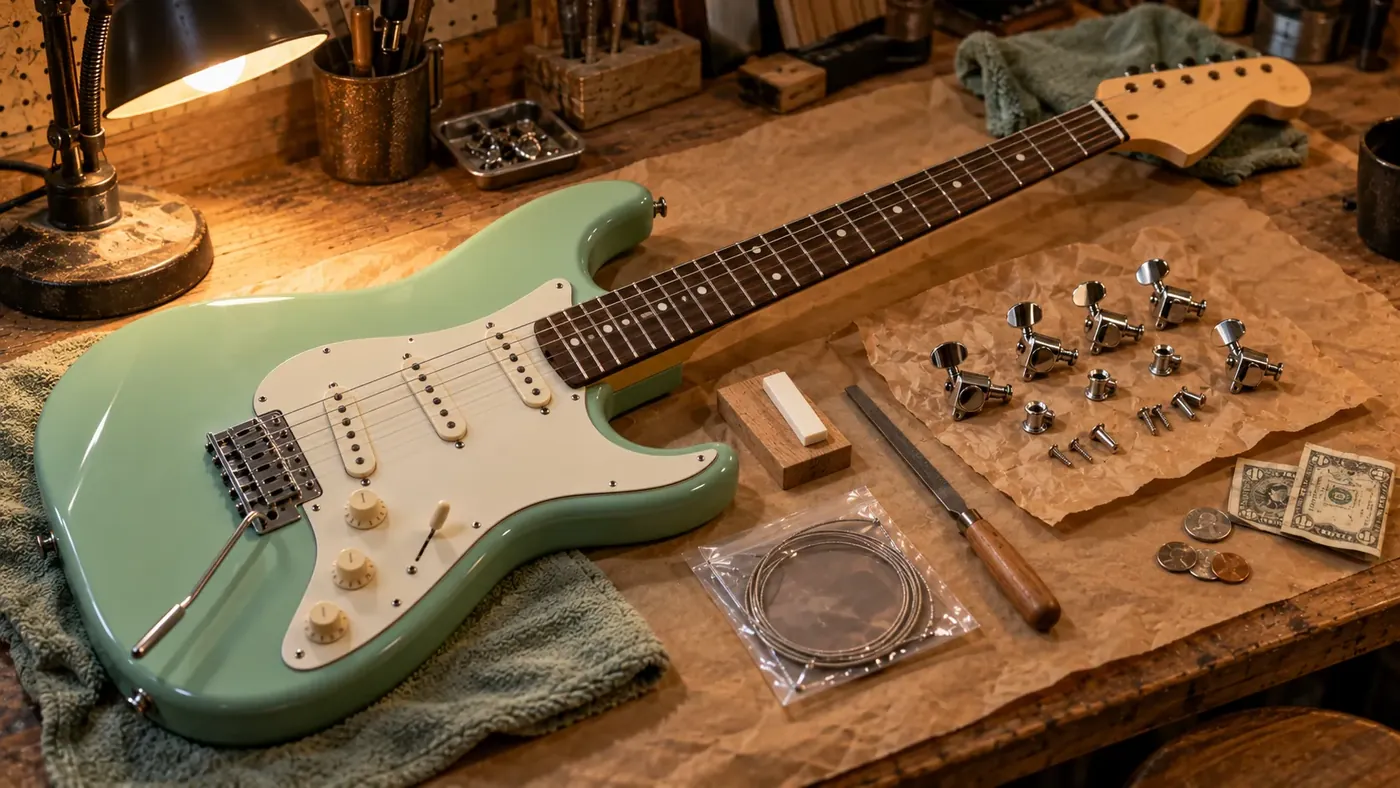
The cheap guitars my students bring in today are better than the mid-priced guitars I learned on in the 1990s. I still have the old ones to compare. Modern factory tooling makes a straight neck and level frets almost automatic, so a $250 instrument can play well. What it cannot do is hide where the money was saved, and if you know where to look, you can spend a little to fix the parts that matter and ignore the rest.
What cheap guitars get right now
- Necks are straight and truss rods work. Twenty years ago that was not a given.
- Fret leveling is generally good from the factory, thanks to automated machines.
- Bodies are properly shaped and the finishes are durable, if a little thick.
- Basic electronics work. The wiring is fine; the parts are where corners get cut.
- The overall design is often copied closely from far more expensive instruments, so the ergonomics are sound.
A student with a $250 guitar and a $60 setup is not held back by the instrument for years. I have taught hundreds of them.
Where the corners get cut
The nut. Most budget guitars ship with a plastic nut whose slots are cut too high and sometimes too narrow. That causes tuning problems and makes the first three frets stiff and sharp. This is the number one issue on cheap guitars and it costs almost nothing to fix.
Fret ends. The frets are level but the ends are often left slightly proud, and after the neck dries out in a US living room they feel sharp. A tech can dress them in twenty minutes.
Tuners. Cheap tuners have slop in the gears and the guitar drifts. They work, but you will retune more often.
Pickups. Budget pickups are usually ceramic-magnet units with a lot of output and not much nuance. They sound loud and a little harsh, especially single-coils, which can be very bright and noisy.
Pots, switch, and jack. The controls are the cheapest available. They crackle sooner and the volume taper can be abrupt. The output jack loosens.
Wood and weight. Budget bodies are often several pieces of a heavier, cheaper wood under a thick finish. It affects weight more than tone.
Hardware plating. Bridges and saddles are made of softer metal with thin plating. Saddles can wear grooves and break strings.
Cheap upgrades that actually matter
In the order I recommend them to students, with rough US prices:
- A professional setup, $50 to $90. Relief, action, intonation, fret end dressing, and nut slots cut correctly. This transforms a budget guitar more than any part. The guide on setup basics covers what you can do yourself.
- A bone or synthetic bone nut, $15 to $40 installed. Fixes tuning and first-position feel for good.
- Fresh strings in the right gauge, $6 to $10. Factory strings are often old and mystery-gauge.
- Tuners, $30 to $60. Sealed die-cast tuners that drop in without new holes make the guitar stay in tune and feel far more expensive.
- Pickups, $60 to $200. Only after the above, and only if you know what sound you are chasing. A pickup swap on a guitar with a bad nut is money in the wrong place.
- Pots and switch, $20 to $40 in parts. Worth doing when they start to crackle, not before.
You can put $150 into a $250 guitar and end up with something that plays like an instrument costing three times as much. Past that, the returns drop fast.
Upgrades that do not matter much
New knobs, a fancy pickguard, brass saddles, or a “tone-enhancing” cable. These are fun and harmless, but they will not change how it plays or sounds in any way you would notice on a recording.
When to step up instead
If you find yourself wanting a different neck shape, a different scale length, or a lighter body, those are not upgrades. They are a different guitar. That is the point where you should look at the $500 to $900 range, where the reviews on this site can help you compare, and where the money starts going into wood and craftsmanship instead of parts you can swap.
A cheap guitar with a good setup is a real instrument. Fix the nut, put on fresh strings, and play it until you outgrow it. Plenty of people never do.