 Guitar Gear Reviews
Friedman Jose Arredondo Head
The Friedman Jose Arredondo Head delivers exceptional rock tones with impressive flexibility, but single-channel limitations and lack of live-comfort features may deter some users.
★★★★★ 5/5 · 3 buyer reviews · 7 min read · updated 2026-09-14 · Tested by Cal Whitaker
Shipping and duties
The retailer ships from its warehouse in Germany. Prices are shown in US dollars and do not include import duties. Orders under roughly $800 usually clear US customs without duty; above that, a duty of a few percent may be collected on delivery. 30-day money-back and a 3-year warranty apply.
Scores by area
Where it shines, where it stumbles
What convinced me
- Extensive tonal flexibility with wide palette of rock sounds from late 1970s to late 1980s
- Authentically reproduces Jose Arredondo's famous modifications with vintage and modern characters
- Rich harmonics and plentiful gain, usable at both high and low volumes
- Interactive gain and presence controls provide highly customizable response
- Handmade build quality and robust 100-watt output
What bugged me
- Single channel limits on-the-fly switching for live performance
- No footswitch or second master volume for easy transitions or solo boosts
- Noticeable transformer hum (not in signal path)
- Heavy and cumbersome for gig transport
Is it the right one for you?
Good pick if
Ideal for rock guitarists seeking classic late 70s to late 80s sounds, studio owners and recording artists who value tone sculpting, and enthusiasts interested in vintage-voiced high-gain amplifiers. Also recommended for users prioritizing sound quality over stage convenience.Look elsewhere if
Not for musicians needing fast channel switching on stage, players requiring onboard solo boosts or footswitch functionality, or those seeking lightweight amplifiers for frequent gig transport.Suggested level: Professional
Specifications
- Power rating in w
- 100 W
- Power amplifier tubes
- EL34
- Channels
- 1
- Reverb
- No
- Footswitch
- No
What other players say
User feedback highlights the amp's exceptional flexibility in shaping rock tones, ranging from vintage Plexi-inspired sounds to high-gain modern drive. Players appreciate its organic harmonic structure, practical for both home and studio use. However, its single-channel architecture and lack of live switching tools are noted as significant inconveniences for gigging musicians. Transformer hum is reported but not viewed as disruptive. The amp is praised for recording and tonal shaping, while portability and stage versatility are its primary drawbacks.
Super flexible options for Marshall-inspired sounds, all very usable. Compared to the JEL-50, it’s less aggressive but offers even more overtones.
The various presence controls can change the sound character significantly, and both hi-gain diode clipping options give different flavors.
For me, this is the ideal rock amp if you can live with a single-channel design. It’s a true work of art with a rich harmonic tone and just the right amount of drive and distortion as needed.
Up close
Watch and listen
Questions players ask
Does the Friedman Jose Arredondo Head allow for easy switching between different sounds during a live set?
No, it is a single-channel amplifier with no footswitch option, so changing tones on the fly requires using pedals or manually adjusting controls between songs.
Is the amp suited for home recording at reasonable volume levels?
Yes, the amp can achieve a range of high-quality tones at lower volumes, but the master volume is sensitive at lower settings. A power soak is recommended for extreme gain tones at low volumes.
What type of sounds can I get with the Jose Arredondo Head?
It covers everything from classic Plexi tones to aggressive high-gain rock, capturing the late 1970s to late 1980s sound spectrum, including rich harmonics and dynamic response.
Is there any noticeable noise or hum when using this amp?
There is a faint transformer hum detectable when idle, but it is not present in the audio signal path and generally does not interfere during playing.
How portable is the Friedman Jose Arredondo Head for frequent gigging?
At 21.3 kg and sizable dimensions, it is hefty and not the most transport-friendly option, particularly compared to lighter, multi-channel amps.
First Look: Friedman's Take on a Legendary Modded Amplifier
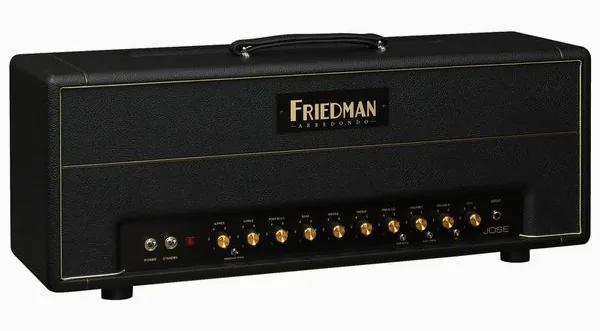
The Friedman Jose Arredondo Head is a 100-watt, single-channel tube amplifier aiming to capture the essence of Jose Arredondo's iconic modifications to classic British amps. At $4,599, this head is designed and handmade in the US, targeting players after that late '70s to late '80s rock sound. Friedman's goal: bring the famous overdriven clarity, musical overtones, and explosive dynamics of Arredondo-modded circuits into a modern, flexible amp head for serious guitarists.
Tubes, Layout, and Legacy
- Power: 100 watts, driven by four EL34 power tubes for classic British crunch and authority
- Preamplification: Four 12AX7 tubes handle the gain stages and shape the amp's signature response
- Channels: One, with multiple gain and voicing options accessible through dedicated switches
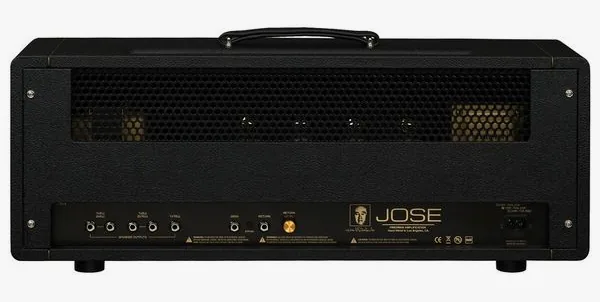
- Speaker Outputs: Multiple impedance options: 1x 4-ohm, 2x 8-ohm, 1x 8-ohm, 2x 16-ohm, 1x 16-ohm (all via quarter-inch jacks)
- Dimensions: 73.7 x 21.6 x 29.2 centimeters, 21.3 kilograms
- Handmade in the USA
This head is developed specifically to emulate and expand on Jose Arredondo's famed amp tweaks, think of those venerable Marshall circuits but with hot-rodded gain, more harmonic richness, and tweaks to suit classic and high-gain players alike.
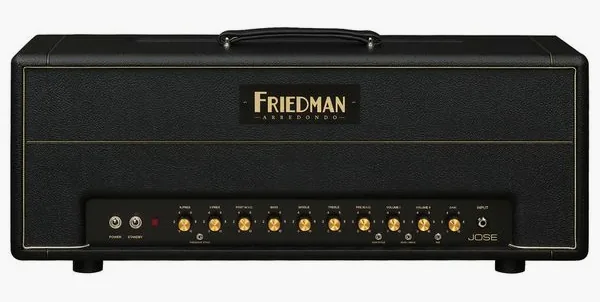
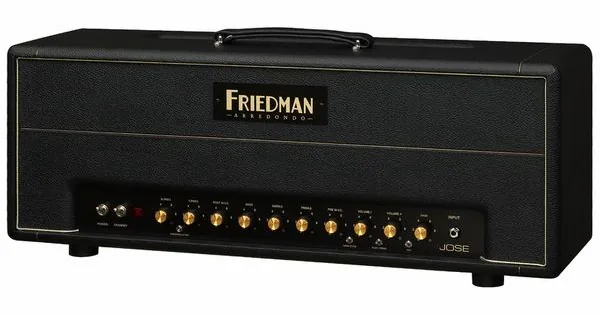
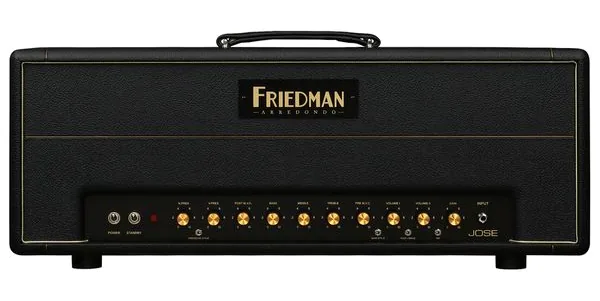
Control Panel: Switches and Features
The control layout is designed for flexible sound shaping:
- Gain, Volume I, Volume II: Manage preamp drive and channel flavoring
- Treble, Middle, Bass: Precise, musical EQ section to fine-tune frequencies
- Two Master Volumes: "Pre" and "Post" Master Volume Controls, letting you choose distortion behavior pre- or post-EQ, a feature affecting both gain structure and overall loudness; crucial for matching different environments
- Presence Controls: "V.Pres" (Vintage Presence) and "N.Pres" (Modern Presence), toggling between rounder retro and tighter contemporary high-end response
- 3-way Gain Style Switch: Move among three distinct clipping and gain voicings, from chewy vintage drive to saturated high-gain
- Fat Switch: Engages more low-end thickness
- Plex/Drive Switch: Moves the feel from classic Plexi territory into more aggressive, compressed tones
- Gain Style, Presence Style Switches: Refine the amp's breakup and upper-frequency detail
- Internally Bridged Inputs: No jumper cables needed to get the cross-linked gain of vintage heads
- Bypassable Transparent Effects Loop: Two quarter-inch return/send jacks for integrating pedals or rack units. This loop can be fully bypassed to preserve tone purity
What's missing? There's no onboard reverb and no footswitch support. Sound shaping is comprehensive, but recall and real-time channel swapping are strictly manual. Some users noted that moving between gain structures or presence modes often requires recalibrating the master volume to avoid level jumps. This is a product of the single-channel format, fine for studio work but a consideration on fast-paced stages.
Sound and Performance: From Plexi to Brown Sound
This Friedman head covers a surprising span of tones, from crisp classic rock to tightly focused high-gain. The amp excels at everything from rich, dynamic low-gain British breakup to saturated, harmonics-rich distortion reminiscent of Eddie Van Halen's "brown sound." The three-position gain switch and flexible presence section allow for genuine variety, each voicing delivering usable, inspiring results. Compared to models like the Friedman JEL-50, the Arredondo Head feels slightly more aggressive and packed with added harmonic detail, though it features just one channel versus two on the JEL-50.
Users praise the sheer range of drive on tap. There's as much gain as you'll ever need, but when dialed back, the circuit remains responsive and nuanced. Still, this isn't a split-channel gig machine. The lack of onboard switching and external footswitch means live players must commit to a core tone and work pedals around it; in the studio, though, the amp's breadth shines, especially for layering tracks from '70s crunch to late-'80s stadium rock.
One specific note: to achieve the full-blown "brown sound" with compressed sag and singing overtones, the master volume needs to be fully raised, sending the power section into saturation. At that point, a power soak or reactive load is highly recommended, unless you have tolerant neighbors or are tracking in a pro studio. That said, the amp delivers convincing drive even at lower master settings, though the master volume becomes very touchy at bedroom levels.
Build Quality and Practical Considerations
- Build: The Jose Arredondo Head feels sturdy and purpose-built, true to Friedman's reputation
- Weight: At over 21 kilograms, it's substantial, definitely not a lightweight travel option
- Operational Noise: There is a minor transformer hum, reported as inaudible in the audio signal and not a source of concern
- No onboard footswitching: Players needing channel-switching live may need to look elsewhere or rely on external solutions for boosting solos
Conclusion: Who Is the Friedman Jose Arredondo Head For?
This amp is an ideal studio workhorse and a purist's dream for late-'70s and '80s rock tones. Its flexibility and breadth of harmonically rich distortion stand out, though the absence of practical gig features like footswitching or dual channels makes it a focused tool for recording, boutique collectors, or those with a dedicated stage setup. The build quality and tonal authenticity are hard to fault, and the sound lives up to the legacy it's designed to honor.
The last word from the bench
The Friedman Jose Arredondo Head stands out for its accurate reproduction of iconic modified amplifier sounds and brings immense tonal versatility in a robust, handmade package. It excels at both vintage and high-gain tones for recording and studio work, but lacks conveniences like channel switching or a built-in solo boost for stage use. A faint transformer hum is present yet remains inaudible in use. For those willing to work around its single-channel nature, it's a reference-grade amp for classic and modern rock styles.
Hanging next to it
Before you decide
Friedman Jose Arredondo Head
Today's price and delivery time are shown at the retailer. Affiliate link, your price does not change.