Squier Tele Custom Baritone BK
The Squier Tele Custom Baritone BK offers an affordable route to extended-range Telecaster tones, with a finish and playing feel that many owners appreciate. Budget time for a careful setup, and consider whether its three-saddle bridge and single-coil sound suit your needs.
★★★★☆ 4.4/5 · 18 buyer reviews · 7 min read · updated 2026-10-07 · Tested by Cal Whitaker
Squier Tele Custom Baritone BK review
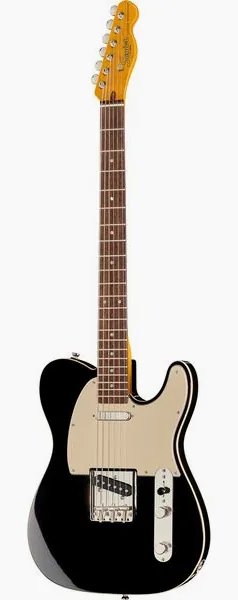
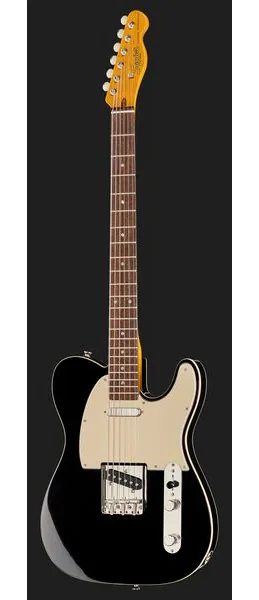
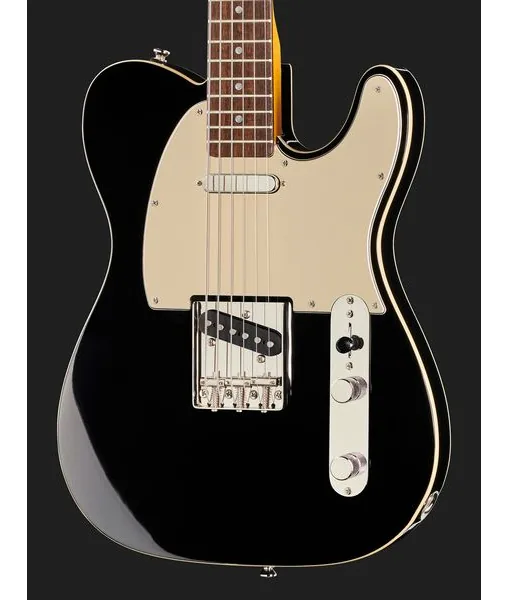
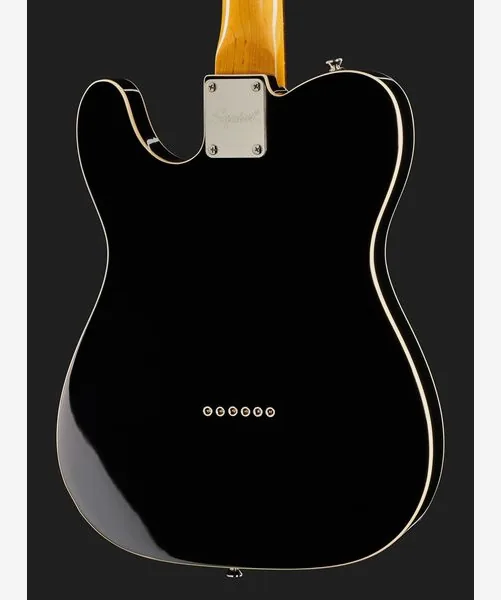
The Squier Tele Custom Baritone BK takes the familiar Telecaster format into lower tunings with a 686 mm (27-inch) scale. Its black finish, three-ply parchment pickguard, and body binding give it a dressed-up look, while the longer neck and heavy.014 to.068 string set mark it out as a baritone. Listed at $439, it offers an accessible way to explore a lower register without moving to a seven- or eight-string guitar.
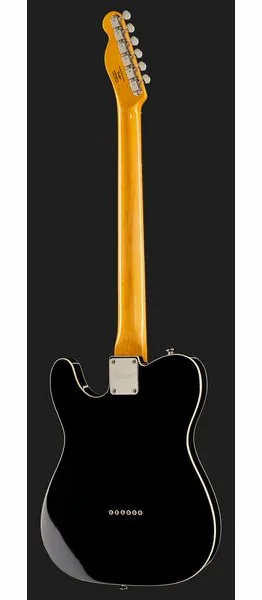
The body is nyatoh, with a maple neck and Indian laurel fingerboard. A tinted gloss urethane finish covers the C-shaped neck, which has a 241 mm (9.5-inch) fingerboard radius, a 42 mm nut, pearloid dot inlays, and 22 narrow-tall frets. Two Fender-designed Alnico single-coil pickups feed master volume and tone controls. The bridge is a three-saddle, vintage-style, string-through-body design, with chrome barrel string holders. There is no tremolo, case, or gig bag included.
Build, feel, and setup
Owners commonly praise the finish and fretwork. Reports describe clean fret ends, a smooth playing surface, and a glossy black finish that can show some of the body's grain. The neck generally feels comfortable, and the long scale does not appear to make ordinary fretting or bends unmanageable. Several players also find the guitar balanced while seated and report that it sits naturally on a strap.
There are exceptions to that favorable first impression. Some owners received examples that needed adjustment to neck relief, action, and intonation before they played well. Others found their guitar properly set up straight out of the box. That variation makes an initial setup a sensible part of the buying decision, especially if you are new to baritone strings or do not normally adjust your own instruments. One owner also reported that the guitar arrived with a lighter string set than the listed.014 to.068 gauge, then needed a full setup after fitting baritone strings.
Reports on the three-saddle bridge are mixed. Some players found intonation acceptable, while others struggled to get each string accurately intonated, particularly when comparing open notes with fretted notes higher up the neck. The shared saddles limit independent adjustment for each string. Check intonation across the fingerboard during setup, and factor in the possibility of a bridge change if precise compensation matters to your playing. This is a recurring concern, not a guarantee that every example will have the same problem.
Sound and playing range
The two single-coil pickups deliver a recognizable Telecaster character, with a clear contrast between the bridge and neck positions reported by many players. The middle position can provide a broad, clean sound with substantial low notes. The tone control is useful for shaping the top end, and players have found the guitar effective for clean parts, spacious textures, and rock. With suitable amplification and effects, some owners also use it for heavier styles, including low-tuned metal.
The neck pickup draws more criticism than the bridge pickup. Several players describe it as weaker or less clearly voiced, and some prefer the combined pickup setting. Those impressions are subjective, and the stock pickups work for plenty of owners, but players who rely on a strong neck-pickup sound may want to audition the guitar first. The single-coil design also has a different output and response from a humbucker-equipped instrument, so existing amp or modeler settings may need adjustment.
The longer scale helps keep low notes firm compared with taking a standard-scale guitar into similarly low tunings. Players report using tunings around standard B, Drop A, and lower, though the result depends on setup, string choice, and playing style. The factory-listed string set provides a useful starting point, not a universal answer for every tuning. If you change gauge or tuning substantially, expect to check the neck relief, action, and intonation again.
Value and verdict
At $439, the Squier Tele Custom Baritone BK makes a compelling case for players who want a six-string baritone with a familiar control layout and Telecaster styling. Its finish and basic construction earn strong praise, and the long scale opens up low-register parts without requiring a different instrument format. It can stay stock for players who like its single-coil voice, while the straightforward design also leaves room for upgrades.
Budget for a careful setup, and inspect the bridge intonation and tuning hardware rather than assuming every instrument will arrive ready to play. A few owners have replaced tuners or the bridge, while others have been satisfied without modifications. The neck pickup may also be a limitation for some tastes. There is no case or gig bag in the package.
For clean, atmospheric playing and Telecaster-style twang in a lower register, this is a strong value. It can cover heavier music too, but players seeking a precise, high-output metal sound may prefer different pickups or another bridge design. Buy it for the baritone feel and extended range, then judge any upgrades after a proper setup.
Shipping and duties
The retailer ships from its warehouse in Germany. Prices are shown in US dollars and do not include import duties. Orders under roughly $800 usually clear US customs without duty; above that, a duty of a few percent may be collected on delivery. 30-day money-back and a 3-year warranty apply.
Scores by area
Where it shines, where it stumbles
What convinced me
- Distinctive Telecaster character with a long 686 mm baritone scale
- Several owners praise the finish, fretwork, and comfortable C-shaped neck
- Alnico single-coil pickups deliver clear clean tones and a recognizable Telecaster sound
- A relatively affordable way to explore baritone guitar
What bugged me
- Many owners report needing to adjust the setup, including action, neck relief, or intonation
- The paired-saddle bridge limits individual string intonation adjustments
- Some reviewers find the neck pickup weak or poorly balanced against the bridge pickup
- Several owners report neck dive or say the tuners could be better
Is it the right one for you?
Good pick if
A good fit for players exploring baritone guitar, Telecaster fans seeking lower tunings, and budget-minded players comfortable checking or adjusting a guitar setup.Look elsewhere if
Not ideal for players who require individually adjustable bridge saddles or expect a flawless setup straight out of the box. Players seeking a high-output humbucker sound may prefer another instrument.Suggested level: Intermediate
Specifications
- Color
- Black
- Body
- Nyatoh
- Top
- None
- Neck
- Maple
- Fretboard
- Indian Laurel
- Frets
- 22
- Scale
- 686 mm
- Pickup system
- SS
- Tremolo
- No
- Including case
- No
- Incl. gigbag
- No
What other players say
Customer feedback is broadly favorable about the guitar's appearance, finish, value, and baritone sound, with several owners praising its comfortable neck and clean tones. Experiences with setup vary: many mention adjustments to action, neck relief, or intonation, and some criticize the limited bridge adjustment or the neck pickup's balance. A number of players are happy with it as delivered after setup, while others view it as a good platform for hardware or pickup upgrades.
Looks great, wonderful finish, fretwork, body, electronics, all seems fine.
As completely original it was a normal downtuned tele without any intonation issues.
So bottomline: If you like the sound of a downtuned tele then get this.
Up close
Watch and listen
Before you decide
Questions players ask
Does this guitar arrive ready to play?
Owner experiences vary. Several report needing to adjust the neck relief, action, or intonation, so check the setup after delivery or have a technician inspect it.
Can the bridge provide precise intonation for every string?
The vintage-style bridge has three saddles shared by pairs of strings, so each string cannot be adjusted independently. Some owners report intonation concerns, especially when comparing open strings with higher fretted notes.
Is it suitable for heavy music?
Some owners use it successfully for aggressive, low-tuned styles, while others prefer it for clean tones and rock. Its two single-coil pickups have a different output and character from humbuckers, so amplifier or patch adjustments may be needed.
Are the pickups well balanced?
Feedback is mixed. Some owners enjoy the sound across positions, while several describe the neck pickup as comparatively thin or weak. The master volume and tone controls provide basic adjustment.
Is the long scale difficult to play?
Owners generally describe the 686 mm scale as manageable, though it is longer than a standard guitar scale. The supplied string gauge is.014 to.068, which supports the instrument's baritone setup.
The last word from the bench
At $439, this is an appealing baritone for players who want low-register Telecaster character without a major investment. Owner reports highlight its looks, comfortable neck, and satisfying clean tones, while setup quality and intonation consistency appear variable. The bridge's paired saddles limit precise adjustment, and the neck pickup receives mixed feedback. It is strongest as a distinctive baritone platform for players comfortable making adjustments or planning upgrades.
Hanging next to it
Squier Tele Custom Baritone BK
Today's price and delivery time are shown at the retailer.
 Guitar Gear Reviews