Engl Savage 60 E630 II
The Engl Savage 60 E630 II stands out for its versatile sound palette, robust construction, and advanced control features, making it a serious contender for demanding guitarists.
★★★★★ 5/5 · 3 buyer reviews · 8 min read · updated 2026-10-03 · Tested by Cal Whitaker
Engl Savage 60 E630 II: High-Gain Powerhouse With Precision Control
The Engl Savage 60 E630 II sits at the top end of mid-powered tube amplifiers, offering players 60 watts of Class AB output through two integrated Engl EL34 power tubes with a full tube signal path, six preamp tubes, and deeply customizable switching and MIDI options. At a current street price of $2049, it is clear that Engl are targeting guitarists who demand more than just crushing gain, they want flexibility, reliability, and crystal-clear signal integrity. Let's dive into a hands-on test to see how this amp measures up in real-world studio and stage scenarios.
Construction and Build Quality
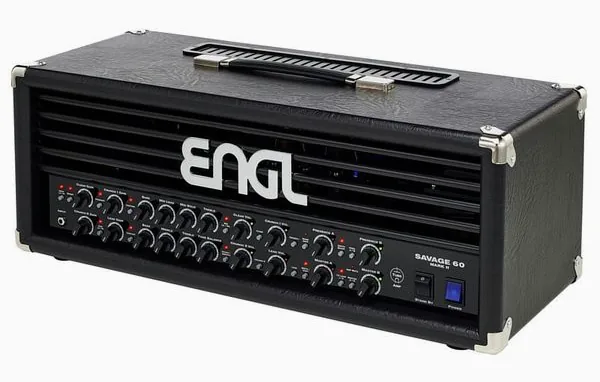
At 21 kilograms and 71 centimeters wide, the Savage 60 E630 II is not a lightweight or compact lunchbox head. Instead, it exudes the solid, precision-built feel that's often associated with German engineering. The all-metal chassis, rugged switches, and substantial knobs lend a sense of permanence and reliability. Internally, the design follows a philosophy of purity: there are no semiconductors in the primary signal path, ensuring that the tone remains uncolored by anything but quality vacuum tubes and transformers.
Channel Layout and Features
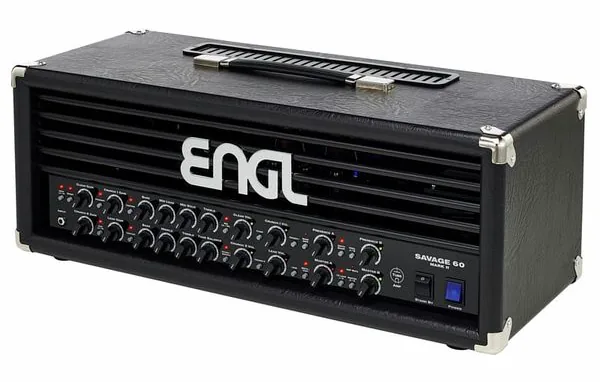
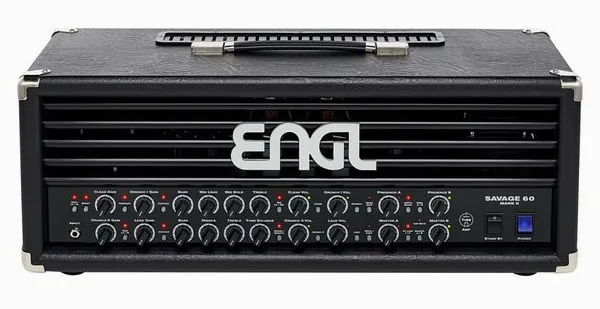
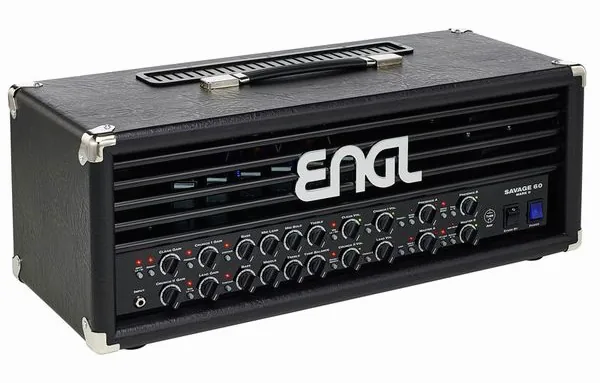
Four fully-independent channels, Clean, Crunch I, Crunch II, and Lead, are available. Each has its dedicated gain and volume control, as well as shaping tools designed for both subtle and drastic tonal shifts. Clean and Crunch I share the Bright and Preshape functions and are tailored via a classic equalizer set with bass, mid ("Mid Lean"/"Mid Bold"), and treble. Crunch II and Lead introduce the Tone Balance control, letting players further sculpt high and low harmonics to preference. Presence and master controls are available in dual, switchable (A/B) layouts, which can be useful for on-the-fly volume and EQ changes when moving between different performance needs or guitar setups.
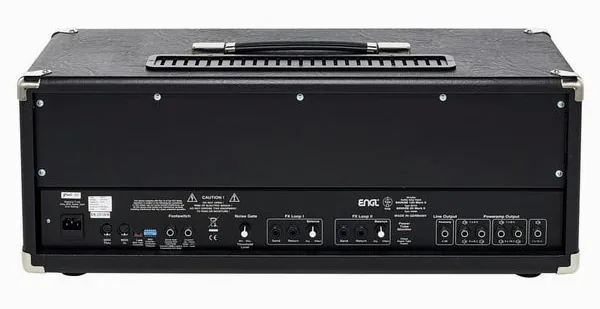
The extensive MIDI integration sets the Savage 60 II apart from the majority of valve heads. Every channel change, sound-switching function (input sensitivity, contour, depth boost, gain level, rough/smooth textures, and FX loop routing), and preset can be stored and recalled via MIDI. This turns a head that could seem daunting with its row of buttons and toggles into a highly controllable rig centerpiece, especially when paired with an external MIDI footswitcher. The Serial Amp Control port provides additional integration options for more complex stage setups. The inclusion of phantom power for MIDI devices also simplifies pedalboard connections.
Effects Loops and Noise Management
The amp includes two tube-driven effects loops, each with balance controls accessible from the rear panel. This setup allows the routing and mixing of wet and dry levels independently, ideal for blending time or modulation effects with high-gain rhythm or lead tones. The built-in noise gate is notable for being adjustable (with threshold available on the rear) and footswitchable, providing tight and responsive muting of residual or pedalboard-generated hum. Field reports confirm that the noise gate is effective for most usage cases, but extreme pedal chains may still require a dedicated front-end gate for absolutely silent performance on the highest gain settings.
EL34 Tone Signature and Power Differences
The Savage 60 E630 II is driven by a pairing of EL34s, a classic British tube known for producing pronounced upper midrange and a focused, dry low end. In practice, this gives the amp a "tighter" response compared to American-voiced amps with 6L6 or 6550 tubes. User feedback, especially from those also familiar with the Savage MK2 120-watt version (which uses 6550s), highlights that volume differences between the 60W and 120W iterations are less significant than expected, the real sonic variation lies in the voicing of the power amp. The Savage 60 pushes the low-mids in a way that's immediately satisfying for aggressive percussive rhythms while preserving clarity for lead or complex chord work. Both models are characterized by a modern and articulate sound, suitable for everything from traditional thrash to contemporary progressive metal. The amp's maximum real-world output holds up in loud rehearsal and gig settings, showing little practical limitation unless you routinely play venues that demand enormous clean headroom at punishing volumes.
Practical Use and Sound Quality
One common misconception is that high-gain heads like this will be weak on clean tones. The Savage 60 II upends that with a Clean channel that delivers impressive headroom and sparkle, especially with single-coil-equipped guitars like a Telecaster. Moreover, Channel 2 (Crunch I) allows for alternative clean or edge-of-breakup voicings easily tailored with the Bright and Contour controls.
Of course, the amp's high-gain crunch and lead channels are its calling card. The four stages of gain structure, MIDI recall, and deep EQ allow for a range of signature tones. Tight modern metal rhythm, saturated yet controlled solos, and even mid-gain blues or fusion tones are readily dialed in. Preset storage via MIDI is essential for those who require quick changes between nuanced sounds, without this, cycling through front panel buttons for every tweak would quickly grow tiresome on stage.
Compared directly to other flagship all-tube heads such as Mesa Mark V or modern EVH amps, the Savage 60 II holds up in both versatility and outright sound quality. While it may not provide the same American-style panel switching, the German approach to channel options and routing offers a uniquely deep level of customization. The price is justified by the build, features, and the ability to fit seamlessly into both analog pedalboard and MIDI-driven digital rigs.
Footswitch and Accessories
The amp does not come with a dedicated footswitch in the box, and while all primary switching can be MIDI-controlled, some players may need to account for this additional cost when budgeting. The MIDI ecosystem, however, ensures compatibility with a wide range of controllers for those who want seamless program changes and live integration.
Summary: Who Is the Savage 60 II For?
- Players looking for a modern high-gain head with real clean tone capacity
- Tinkerers who want total recall and MIDI integration
- Studio and gigging guitarists needing programmable flexibility and easy rig changes
- Anyone who wants European build quality with a focus on reliability and maintenance
In conclusion, the Engl Savage 60 E630 II is a premium, no-compromise head designed for discerning guitarists. Its real-world output, control options, and tonal breadth mean it slots seamlessly into both versatile live rigs and demanding studio environments. The decision between Savage 60 and 120 comes down almost entirely to tube preference; either delivers the signature Savage sound with minimal practical difference in volume for most use cases. Provided you invest the time in programming and setup, the Savage 60 stands out as one of the most intelligent and musically satisfying modern tube amplifiers in its class.
Shipping and duties
The retailer ships from its warehouse in Germany. Prices are shown in US dollars and do not include import duties. Orders under roughly $800 usually clear US customs without duty; above that, a duty of a few percent may be collected on delivery. 30-day money-back and a 3-year warranty apply.
Scores by area
Where it shines, where it stumbles
What convinced me
- Extremely versatile full tube amplifier covering a wide range from clean to high-gain sounds
- Tailored tonal options thanks to four independent channels with comprehensive controls
- Robust build quality and precise German engineering
- Advanced MIDI integration for easy preset switching and control
- Excellent noise gate performance directly integrated
What bugged me
- No included footswitch, requiring an additional purchase for optimal live use
- Can be overwhelming to program manually without MIDI, frequent button presses needed for channel switching
- Heavy and relatively bulky at 21kg, limiting portability
- Lacks built-in reverb, which some players may miss at this price point
Is it the right one for you?
Good pick if
Ideal for session guitarists, metal and rock players, and anyone needing a vast sound palette from one amplifier. Those seeking deep MIDI control, live performance flexibility, or high-quality studio tones will find unmatched versatility and performance.Look elsewhere if
Not well suited for apartment practice or highly portable rigs due to its size and weight. Players expecting onboard reverb or simplified plug-and-play operation without extra MIDI gear may find it less convenient.Suggested level: Professional
Specifications
- Power rating in w
- 60 W
- Power amplifier tubes
- EL34
- Channels
- 4
- Reverb
- No
- Footswitch
- No
What other players say
Customer feedback highlights the amp's versatility, superb build quality, and wide sound palette, from clean to thrash metal. Many note its tight, modern character and customizable tonal shaping. Users appreciate the flexibility and reliability, though some find manual channel switching tedious without a MIDI controller, and the absence of bundled footswitch or reverb is a mild downside. Generally, buyers are overwhelmingly satisfied and consider it a smart investment versus more expensive competitors.
The unit oozes quality and looks cool as anything. German engineering at its best.
Build is second to none. The built in noise gate works amazingly.
Go for it !! Sound quality and possibilities are incredible for this price (compared to a Mesa Mark V or now VII for example...)
Up close
Watch and listen
Questions players ask
Is the Savage 60 E630 II suitable for both studio and live use?
Yes, its robust construction, broad tonal range, and elaborate MIDI control make it ideal for both studio recording and demanding live environments.
How does the 60-watt model compare to the 120-watt version in terms of sound and volume?
Despite lower wattage, both heads offer similar output volumes and tonal options. The main difference lies in the power tube types, with the 60-watt using EL34 tubes for focused midrange and the 120-watt using 6550 tubes for slightly deeper lows and smoother mids.
Does the amp come with a footswitch or MIDI controller?
No footswitch or MIDI controller is included; these must be purchased separately to fully utilize the amp's extensive switching capabilities.
Can you achieve quality clean tones as well as high-gain sounds on this amp?
Absolutely, the Clean and Crunch I channels offer sparkling cleans, while Crunch II and Lead channels provide modern, tight high-gain tones. Channel 2 can also be shaped for alternative clean sounds.
Is the noise gate effective, especially for heavy genres?
Yes, the integrated noise gate works efficiently to tame unwanted noise on high-gain settings, though some players still pair an external gate for added tightness.
The last word from the bench
The Engl Savage 60 E630 II delivers professional-grade performance with tonal flexibility that rivals much more expensive amps. With four truly independent channels and in-depth programmability, it adapts effortlessly to any genre from clean pop to modern metal. Top-tier build and advanced MIDI options make operation reliable both in the studio and on stage, though the lack of a bundled footswitch and onboard reverb may be drawbacks for some. All things considered, it is a powerhouse head offering true value for discerning players.
Hanging next to it
Before you decide
Engl Savage 60 E630 II
Today's price and delivery time are shown at the retailer. Affiliate link, your price does not change.
 Guitar Gear Reviews